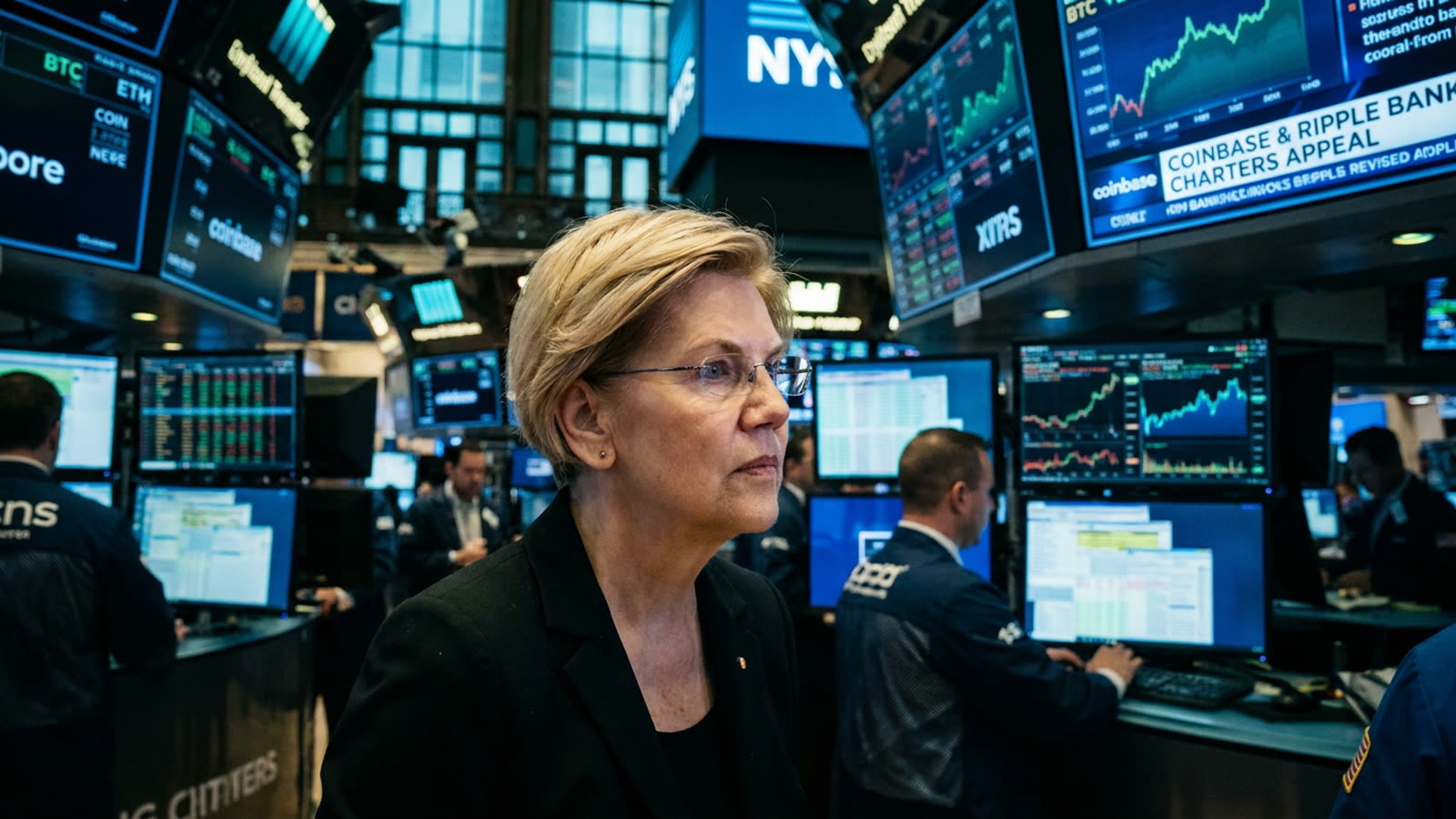
Senator Elizabeth Warren has never been mistaken for a crypto ally, but her latest salvo marks an escalation that the industry cannot afford to ignore. The Massachusetts Democrat is now arguing that recent bank charter approvals granted to Coinbase and Ripple were issued in violation of federal law, a claim that—if it gains traction—could unwind months of regulatory progress and cast a shadow over the sector's hard-won legitimacy.
The crypto industry is not taking the accusation lying down. A coalition that includes Coinbase, Ripple, and several trade associations has launched a coordinated counter-offensive, deploying lobbyists, commissioning legal analyses, and flooding congressional offices with talking points. The message is simple: these charters were granted through proper channels by regulators acting within their statutory authority, and Warren's objections are political theater dressed up as legal argument.
The charter question
At issue is whether the Office of the Comptroller of the Currency and state banking regulators exceeded their authority when they approved charter applications from crypto-native firms. Warren contends that the approvals skipped required steps and failed to adequately assess risks related to anti-money-laundering compliance and consumer protection. Her office has requested formal reviews and hinted at legislative action to claw back the approvals.
The industry's legal experts counter that the charters followed the same procedural path as those granted to traditional fintech companies in recent years. They point to extensive comment periods, risk assessments, and capital requirements that Coinbase and Ripple satisfied. The argument, in essence, is that Warren is applying a crypto-specific standard that exists nowhere in statute.
Political math
The timing matters. Crypto companies spent heavily in the 2024 election cycle and emerged with a Congress more sympathetic to digital assets than any in memory. Several pro-crypto bills have advanced further than ever before, and the industry's lobbying apparatus has matured considerably. Warren's challenge is a test of whether that political infrastructure can hold under pressure from one of the Senate's most effective communicators.
Yet Warren retains significant influence, particularly within the Democratic caucus and among progressive advocacy groups that view crypto with suspicion. Her ability to slow-walk nominations, hold up legislation, and generate negative headlines should not be underestimated. The industry may have more friends in Washington than it once did, but it has not yet neutralized its most persistent critic.
Our take
Warren's legal theory is a stretch, but her political instincts are sharp. She understands that crypto's legitimacy remains fragile in the public imagination, and that a well-timed controversy can shift the narrative even if it never produces a courtroom victory. The industry's response—swift, coordinated, and well-funded—suggests it has learned from past defeats. Whether that is enough to outlast a senator who has made crypto skepticism a personal brand remains an open question. For now, both sides are dug in, and the charters hang in a limbo that benefits neither.