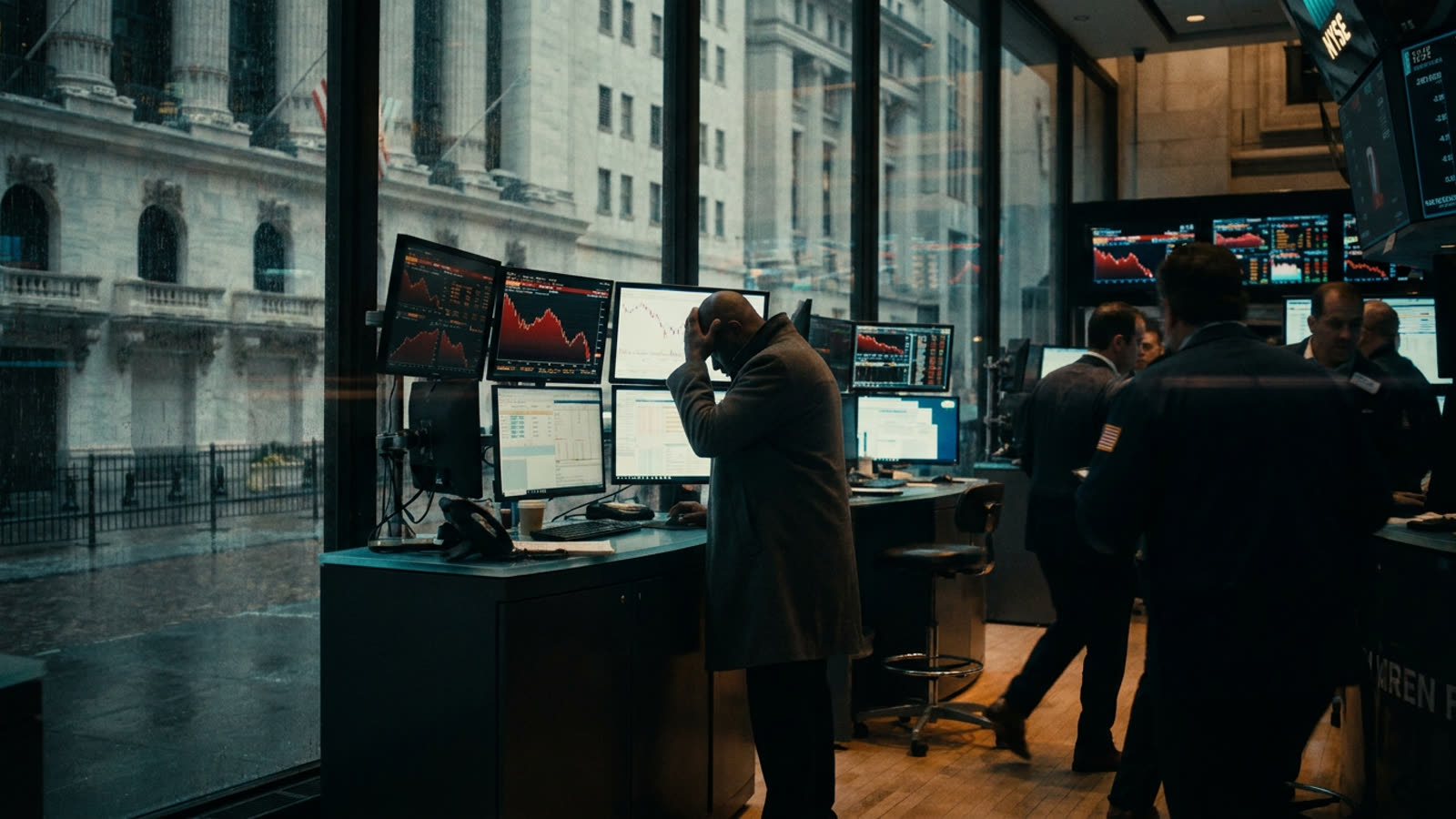
For two years, the semiconductor trade was the closest thing to a sure bet in global finance. Nvidia alone accounted for roughly a quarter of the S&P 500's gains in 2024 and 2025. AI-adjacent chipmakers became the market's center of gravity, pulling indexes upward through sheer weight. That gravitational pull has now reversed, and the damage is staggering: $1.3 trillion in market value vaporized in a matter of days.
The proximate cause is familiar—strong U.S. jobs data has convinced markets that the Federal Reserve will resume rate hikes this summer, making growth stocks less attractive on a discounted-cash-flow basis. But the deeper story is structural. The chip sector had become so dominant, so overweighted in passive funds and momentum strategies, that its correction was always going to be violent. This is what happens when a single thesis—AI will eat everything—becomes consensus.
The concentration problem
At its peak, the "Magnificent Seven" tech stocks represented more than 30% of the S&P 500's total market capitalization. Nvidia, AMD, and Broadcom together accounted for an even larger share of the index's volatility. When these names move in unison, as they did this week, the entire market follows. The chip slump didn't just hurt tech investors; it dragged down diversified portfolios that were never intended to be semiconductor bets.
This concentration is partly mechanical. Index funds must buy what's rising, and momentum strategies amplify the effect. But it's also a function of narrative capture. For the past two years, every earnings call, every analyst note, every CNBC segment has circled back to AI. Companies that mentioned "artificial intelligence" in their filings saw their multiples expand; those that didn't were punished. The result was a market that priced in a future where AI adoption would be immediate, universal, and enormously profitable for hardware suppliers.
The valuation reset
That future may still arrive, but markets are now pricing in the possibility that it arrives later, or that the profits accrue differently than expected. Nvidia's forward price-to-earnings ratio, which briefly exceeded 40x, is now compressing toward historical norms for capital-intensive manufacturers. AMD and Broadcom face similar recalibrations. The question is no longer whether AI is transformative—it almost certainly is—but whether chip companies will capture the value or see it competed away.
Meanwhile, the macro backdrop has shifted decisively. The Fed's hawkish pivot, driven by persistent inflation and a labor market that refuses to cool, makes duration-sensitive assets less appealing. High-growth tech stocks are, by definition, duration-sensitive: their value depends on profits projected years into the future. When discount rates rise, those future profits shrink in present-value terms. The chip sector, which had been priced for perfection, is now being priced for reality.
Our take
The $1.3 trillion evaporation is less a crisis than a correction—a painful but necessary recalibration of a market that had become dangerously lopsided. The AI thesis isn't dead; it's being stress-tested. What's dying is the lazy assumption that buying semiconductors was a substitute for actual investment analysis. For the past two years, the chip trade worked so reliably that it bred complacency. That complacency is now being punished, and the punishment is far from over.