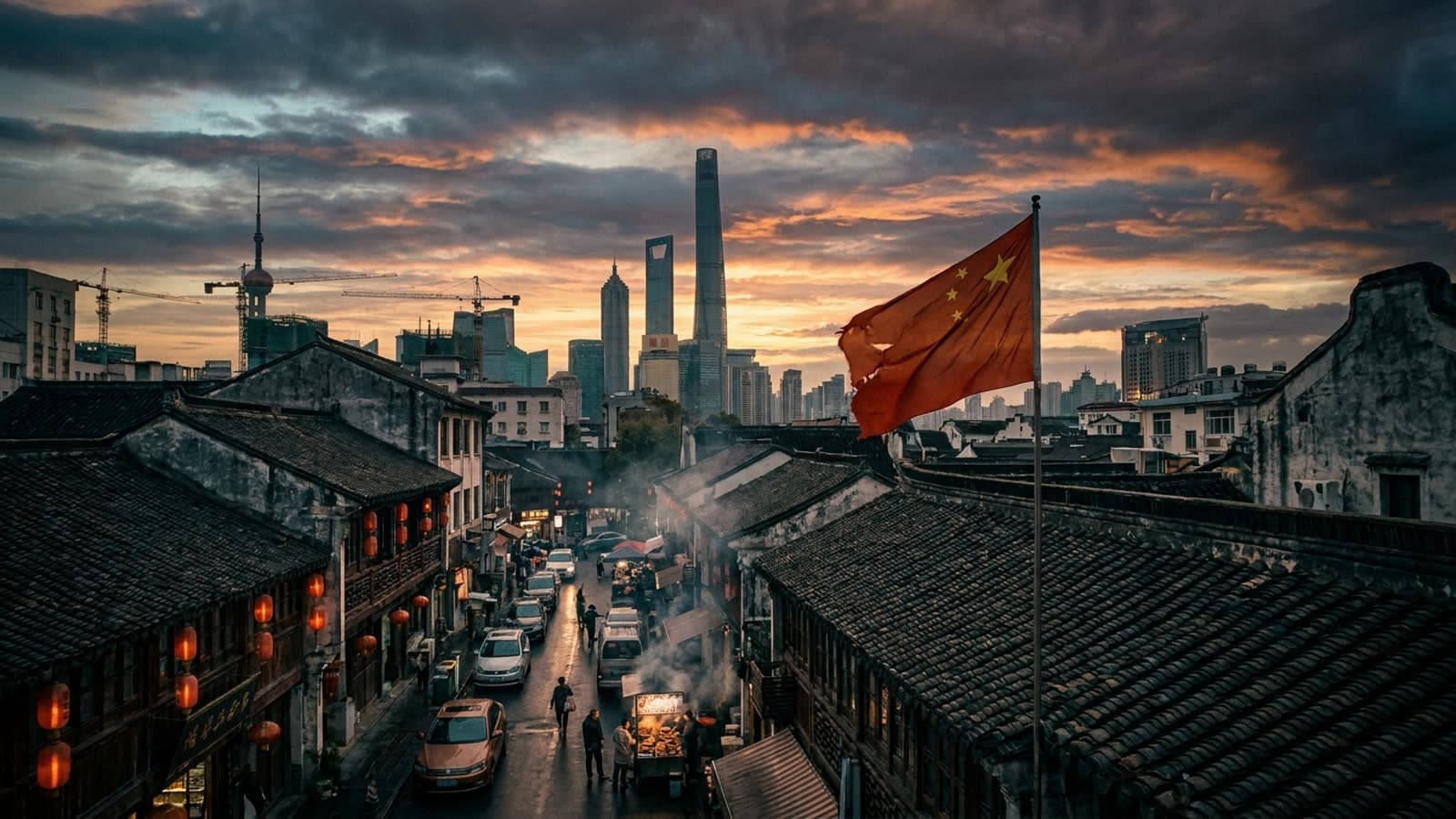
The numbers out of Beijing tell two stories that cannot coexist indefinitely. China's economy continues to expand, posting growth figures that remain the envy of most developed nations. Yet the engine driving that growth is not the domestic consumption that Xi Jinping has spent a decade promising, but rather a flood of exports that has made China's trading partners increasingly hostile and its own economic foundations increasingly brittle.
The housing market—once responsible for roughly a quarter of Chinese GDP when accounting for related industries—has entered its fourth year of contraction. Consumer spending remains stubbornly weak despite repeated stimulus attempts. Fixed-asset investment, the old standby of Chinese growth accounting, has turned negative in real terms. What remains is the factory floor, churning out electric vehicles, solar panels, and industrial equipment for customers from São Paulo to Stuttgart.
The export dependency trap
China's trade surplus has ballooned to levels that would have been unthinkable a decade ago. The country now runs monthly surpluses exceeding $100 billion with regularity, a figure that represents not economic health but economic desperation. When domestic demand cannot absorb production, the surplus must go somewhere.
This creates a geopolitical problem that compounds the economic one. The European Union has imposed tariffs on Chinese electric vehicles. The United States maintains Trump-era duties while adding new restrictions. Even developing nations that once welcomed cheap Chinese goods are beginning to erect barriers to protect nascent industries. Beijing's solution to weak domestic demand—export more—is generating the very protectionist response that threatens to close off its remaining growth avenue.
The property overhang
The housing crash is no longer news, but its persistence is. Chinese households hold an estimated 70 percent of their wealth in property, and that property has been losing value for years. The wealth effect works in reverse: families who feel poorer spend less, which weakens domestic demand, which forces more production into export channels, which invites foreign retaliation.
Beijing's attempts to stabilize the property market have been characteristically cautious. Officials fear that aggressive bailouts would reward speculation and moral hazard. But the alternative—a slow bleed that saps consumer confidence for years—may prove more corrosive to the social contract that keeps the Communist Party in power.
Our take
China has solved its immediate growth problem by exporting it to everyone else. This is clever in the short term and catastrophic in the medium term. The world's second-largest economy cannot indefinitely depend on customers who are actively trying to buy less from it. At some point, Beijing must either engineer the domestic consumption boom it has promised for years or accept that the growth model has reached its terminus. The export machine is running hot precisely because everything else has stalled.