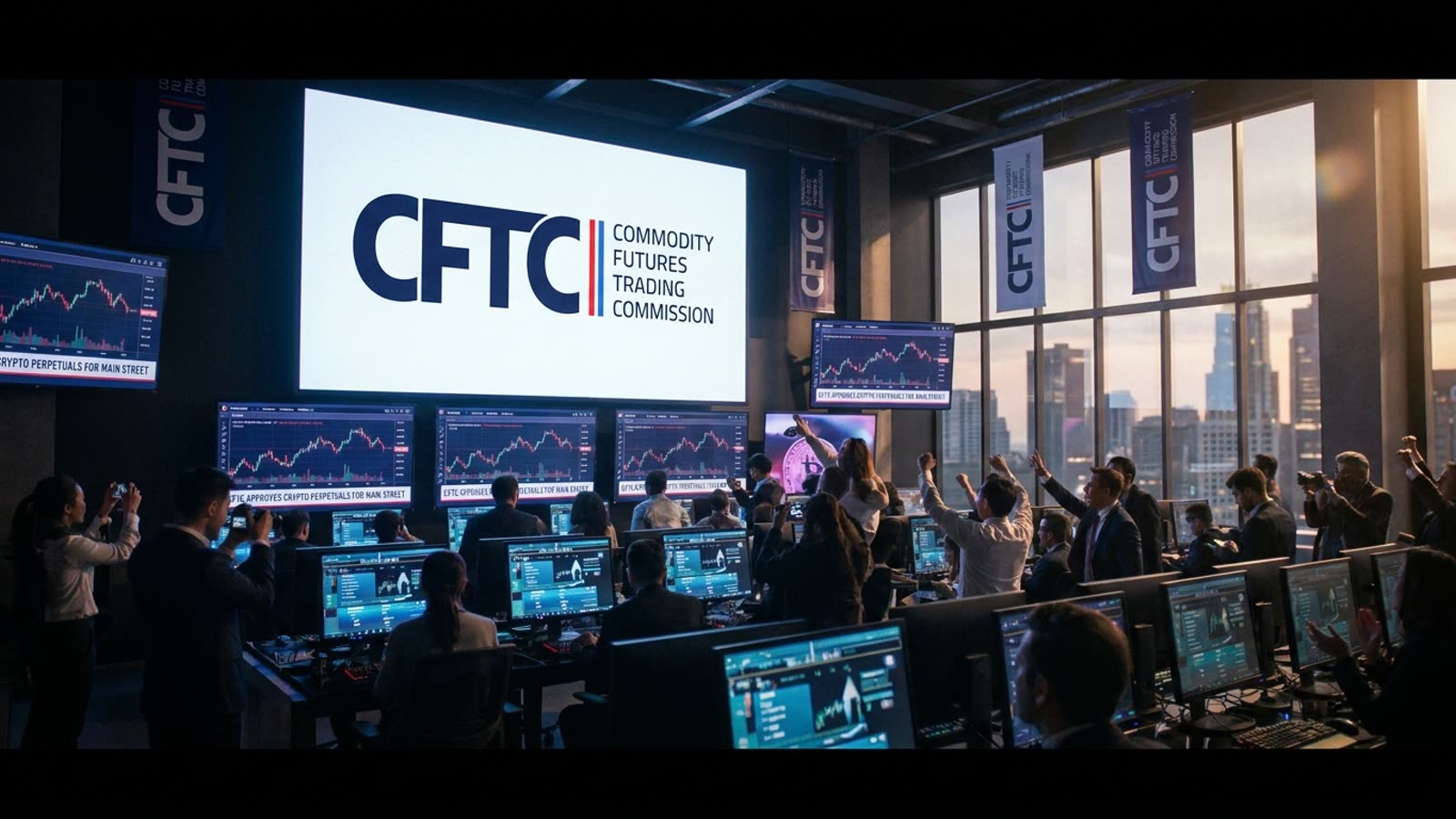
The Commodity Futures Trading Commission's decision to approve perpetual futures contracts on Kalshi marks a watershed moment for American crypto markets—one that could reshape how ordinary investors access digital-asset exposure and force offshore exchanges to reckon with genuine domestic competition.
Perpetual futures, or "perps," are the engine of global crypto trading. Unlike traditional futures that expire on fixed dates, perps roll indefinitely, tracking spot prices through a funding-rate mechanism that has made them the instrument of choice for speculators and hedgers alike. By some estimates, perp volumes on offshore venues like Binance and Bybit dwarf spot trading by a factor of five or more. Yet until now, American retail investors have been locked out—forced to either lie about their jurisdiction or settle for the clunkier quarterly contracts offered by CME.
A door swings open
Kalshi, the prediction-market platform that has spent the past two years waging legal warfare to expand what Americans can bet on, becomes the first CFTC-regulated venue permitted to list crypto perpetuals. The approval covers Bitcoin and Ethereum contracts initially, with a framework that could extend to other assets. The significance is less about Kalshi itself—a relatively small player in derivatives—than about the precedent. If the CFTC is comfortable with one venue offering perps, it will be difficult to deny similar applications from larger incumbents.
The timing is notable. The agency has spent much of 2026 in a defensive crouch, navigating political pressure over its jurisdictional turf war with the SEC and criticism that American crypto regulation has pushed innovation offshore. Approving perps is a statement: the CFTC believes it can supervise sophisticated crypto derivatives without inviting systemic risk, and it would rather have that trading happen under its watch than in the regulatory shadows of Malta or the Seychelles.
What changes for traders
For retail investors, the immediate impact is access. Perpetuals allow leveraged exposure without the basis risk that comes from rolling expiring contracts, and their funding rates provide a real-time signal of market sentiment. Sophisticated traders have long used perps for everything from directional bets to delta-neutral yield strategies; now those tools become available to Americans through a regulated, tax-reportable interface.
For offshore exchanges, the calculus shifts. The American market has always been the prize—deep pockets, high volumes, institutional capital waiting on the sidelines. If domestic venues can offer comparable products with the imprimatur of federal regulation, the competitive moat around Binance and its peers narrows considerably. Expect compliance upgrades and licensing pushes from the offshore giants, or a strategic retreat from the U.S. market entirely.
Our take
This is the kind of regulatory clarity crypto has begged for and rarely received. The CFTC is not blessing speculation for its own sake; it is acknowledging that perpetual futures exist, that Americans want to trade them, and that supervised markets are preferable to the alternative. Whether Kalshi can scale into a serious derivatives venue remains to be seen—its prediction-market roots are a long way from institutional-grade crypto infrastructure. But the door is open, and the first one through rarely stays alone for long.