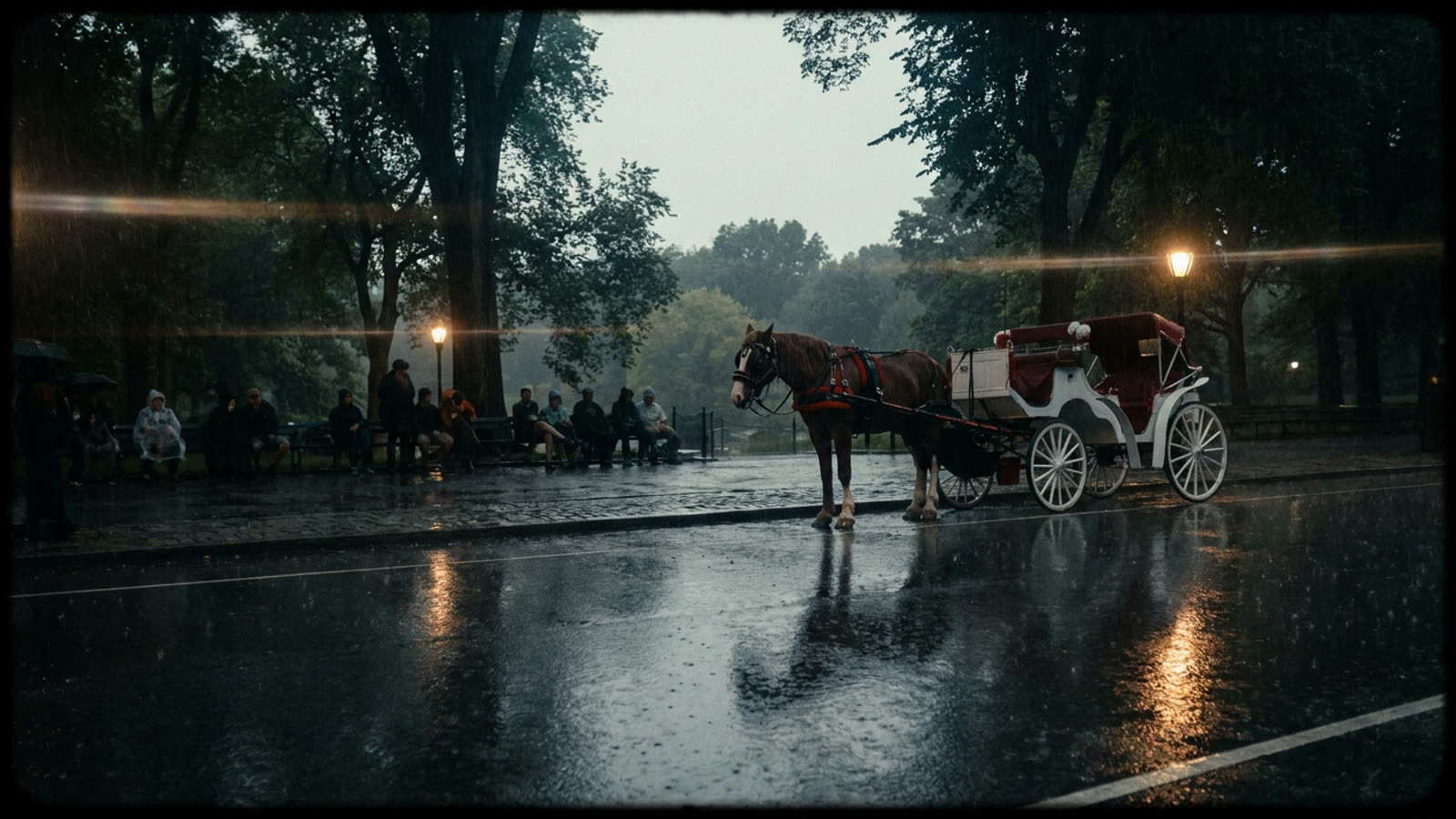
The footage is grimly familiar by now: a horse down on the pavement, tourists filming, handlers scrambling, animal-rights activists arriving with megaphones before the NYPD does. Central Park's carriage-horse industry has survived decades of abolition campaigns, mayoral threats, and PETA protests. But in the age of the smartphone, each incident becomes a referendum on whether the tradition can survive the court of public opinion.
The latest collapse—captured, shared, and algorithmically amplified within hours—has prompted the usual cycle: outrage, defensive statements from the carriage operators' union, calls for investigation from city council members, and a flurry of op-eds from people who have never been within fifty feet of a draft horse. What's different this time is the political context. New York's current administration has been notably less hostile to the industry than Bill de Blasio's was, but the mayor's office has remained conspicuously silent as the video circulates.
The economics of clip-clop
Central Park's carriage trade is a peculiar relic—a nineteenth-century business model operating in a twenty-first-century regulatory environment. Roughly 200 horses work the park, owned by a handful of operators who hold medallions worth hundreds of thousands of dollars. A twenty-minute ride costs upwards of $75, and on peak autumn weekends, the industry generates substantial revenue. The operators argue they provide better care than most suburban horse owners, pointing to mandatory veterinary checks, regulated working hours, and climate restrictions that keep horses stabled when temperatures exceed 90°F or drop below freezing.
Critics counter that no amount of regulation can make Midtown traffic safe for a prey animal, and that the industry's survival depends on tourists who don't know enough about equine welfare to ask hard questions. The collapses—there have been several in recent years—are cited as evidence that the work is inherently cruel, though veterinarians have offered varied diagnoses ranging from heat exhaustion to underlying cardiac conditions unrelated to labor.
The abolition math
Every few years, a politician promises to ban the carriages. De Blasio made it a centerpiece of his 2013 campaign, backed by a real-estate developer who wanted the stables' valuable Hell's Kitchen land. The ban never materialized; the political capital required exceeded the payoff, and the Teamsters-affiliated carriage union proved more formidable than anticipated. Since then, abolition efforts have sputtered. The horses remain, the protests continue, and the industry operates in a kind of regulatory purgatory—too controversial to expand, too entrenched to eliminate.
The fundamental question is whether animal welfare concerns outweigh cultural and economic arguments for preservation. Carriage supporters invoke tradition, tourism dollars, and the horses' own apparent contentment. Opponents invoke the inherent risks of urban traffic, the impossibility of informed consent from non-human workers, and the availability of electric alternatives that could preserve the aesthetic without the ethical baggage. Neither side has moved the needle in years.
Our take
The carriage-horse debate is less about horses than about what kind of city New York wants to be. The animals are proxies for a broader argument over authenticity, nostalgia, and the limits of urban sentimentality. A ban would satisfy activists but eliminate a genuinely distinctive attraction; preservation satisfies tradition but requires accepting that some horses will collapse on camera. The honest answer is that there is no clean solution—only trade-offs that different constituencies weigh differently. The horses, of course, have no vote.