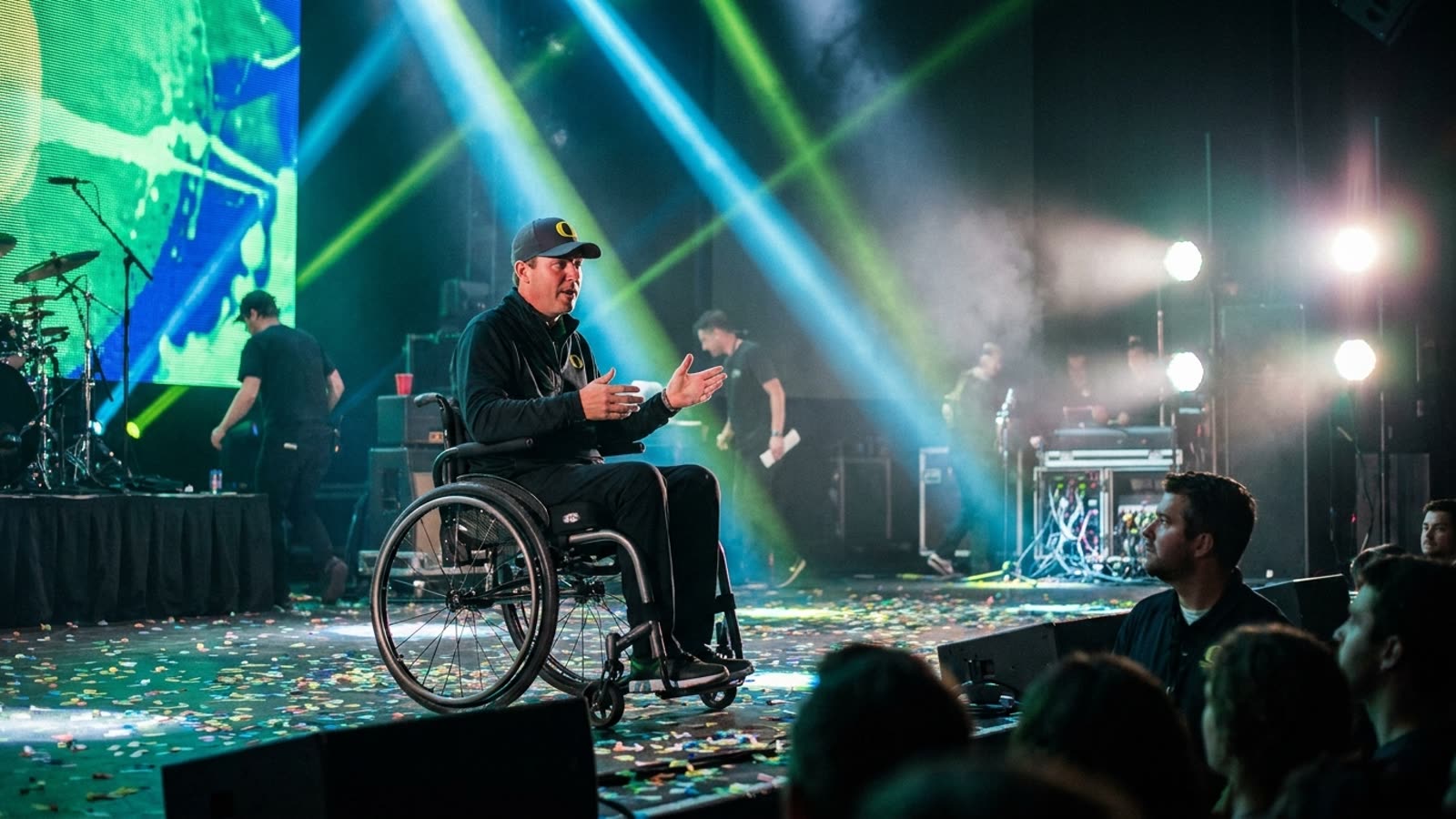
In 2001, the Supreme Court ruled 7-2 that Casey Martin could ride a golf cart on the PGA Tour, a decision that seemed to settle whether professional sports could exclude athletes with disabilities from reasonable accommodations. A quarter-century later, Martin is coaching the University of Oregon golf team from a motorized wheelchair, his right leg amputated below the knee, still embodying the uncomfortable truth his case exposed: winning in court and winning in life are different games entirely.
The Martin decision was supposed to be transformative. Justice John Paul Stevens, writing for the majority, held that the Americans with Disabilities Act applied even to elite professional competition, and that walking was not so fundamental to golf that allowing a cart would "fundamentally alter" the nature of the game. The PGA Tour had argued, absurdly in retrospect, that fatigue from walking was an essential competitive element. The Court disagreed.
The body keeps score
Martin was born with Klippel-Trénaunay-Weber syndrome, a circulatory disorder that slowly destroyed his right leg. When he sued the Tour in 1997, he was a promising professional who had played alongside Tiger Woods at Stanford. The legal victory allowed him to compete, but his leg continued to deteriorate. He never won on the PGA Tour. By 2006, he had largely stopped playing competitively. In 2021, doctors amputated the leg that had been the subject of Supreme Court argument.
The trajectory is not a failure of the ADA or the Court's ruling—Martin got to compete, which was the point. But it illustrates how disability accommodation in professional sports remains largely theoretical. The Martin precedent has been cited sparingly. No flood of disabled athletes has entered elite competition demanding accommodations. The barriers are physical, financial, and cultural, and a favorable legal ruling addresses only one of them.
The coaching chapter
Martin took over Oregon's golf program in 2006 and has built it into a consistent contender, reaching the NCAA Championship match in 2016. His players describe a coach who understands struggle in ways that healthy former pros cannot. He navigates courses in his wheelchair, unable to demonstrate swings but able to read greens and competitors with unusual precision.
The job has given Martin a platform to remain visible in golf without requiring his body to cooperate. It has also kept him adjacent to the sport that once tried to exclude him, a daily reminder of both what he won and what his condition took.
Our take
Casey Martin's story is frequently invoked as a civil rights triumph, and it was. But triumphs have afterlives. The man who forced the most exclusive tour in golf to accommodate him now watches his players walk fairways he cannot. The legal principle endures; the body did not. That is not tragedy—Martin has built a meaningful career and remains influential in his sport. It is, however, a corrective to the American habit of treating Supreme Court victories as endings rather than beginnings. Martin is still fighting, still coaching, still showing up. The battles, as they say, continue.