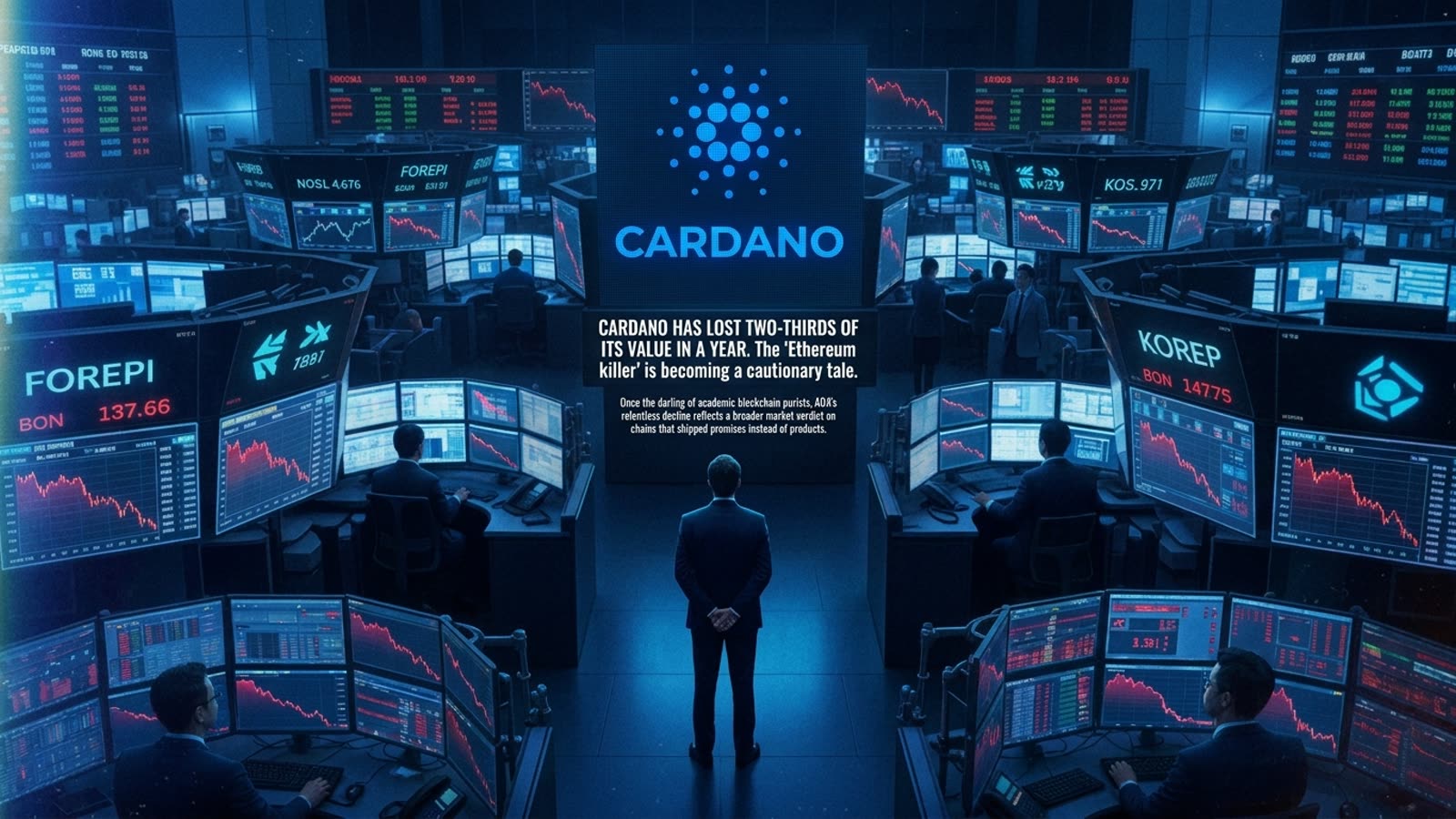
The numbers are brutal: Cardano's native token ADA trades near $0.23, down more than 65 percent from its price a year ago. While Bitcoin flirts with all-time highs and Ethereum consolidates its institutional beachhead, the self-styled "third-generation blockchain" has quietly become one of crypto's most spectacular disappointments—a case study in what happens when a project's narrative outruns its execution.
This is not a flash crash or a temporary dip. ADA has been in structural decline for the better part of two years, shedding market cap even as the broader crypto market recovered from the 2022–2023 winter. The token now sits at rank seventeen on CoinGecko, a far cry from its 2021 peak when it briefly threatened Ethereum's throne.
The academic blockchain that forgot to ship
Cardano's pitch was always seductive: a blockchain built by scientists, peer-reviewed and rigorously designed, that would avoid the mistakes of its predecessors. Founder Charles Hoskinson, an Ethereum co-founder, positioned the project as the thinking person's crypto—slow and deliberate where others were fast and reckless.
The problem is that deliberation became paralysis. Smart contract functionality arrived years late. The decentralized application ecosystem remains anemic. While Solana captured the speed narrative and Ethereum locked in institutional capital, Cardano delivered whitepapers and roadmap updates. The market, eventually, noticed.
Developer exodus and TVL stagnation
On-chain metrics tell a grim story. Total value locked in Cardano's DeFi protocols remains a rounding error compared to Ethereum or even newer competitors like Sui. Developer activity, the leading indicator of blockchain health, has declined quarter over quarter. The community that once evangelized ADA's technical superiority now sounds defensive, pointing to future upgrades rather than present utility.
The contrast with chains that moved faster is instructive. Solana, despite its outages and FTX association, rebuilt developer momentum. Base, Coinbase's Layer 2, went from zero to billions in TVL in months. Cardano's methodical approach looked principled in 2020; in 2026, it looks like a strategic miscalculation.
Our take
Cardano's decline is not primarily about technology—it's about timing and narrative management. Crypto markets reward shipping over planning, and they punish projects that let competitors define the conversation. Hoskinson remains a compelling spokesperson, but speeches cannot substitute for applications. ADA may stabilize at some lower equilibrium, but the dream of Cardano as a major platform has effectively ended. The academic blockchain built a beautiful thesis; it just forgot to build the product.