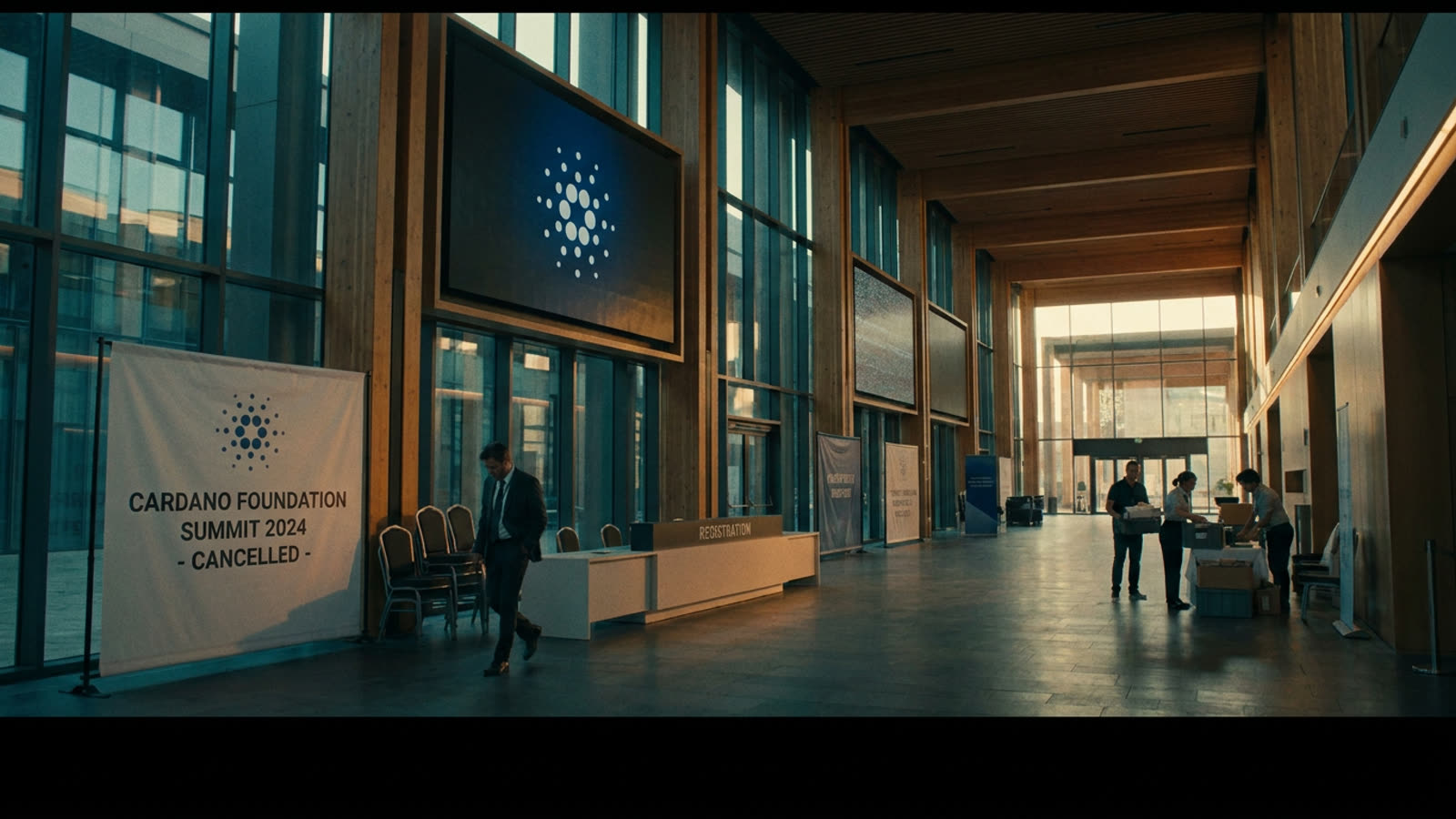
The Cardano Foundation announced this week that its 2026 global summit—the blockchain ecosystem's marquee annual gathering—has been cancelled after a treasury funding proposal fell just short of the required threshold. It is a quietly devastating moment for one of crypto's most governance-obsessed projects, and a case study in how decentralized decision-making can produce outcomes nobody actually wanted.
The summit, which has previously drawn thousands of developers, investors, and enthusiasts to venues from Lausanne to Dubai, required community approval to tap Cardano's substantial on-chain treasury. The proposal needed to clear a participation quorum and supermajority support. It achieved neither—not because voters rejected the event, but because not enough of them showed up to vote at all.
The Participation Problem
Cardano has long positioned itself as the thinking person's blockchain, emphasizing peer-reviewed research and formal governance mechanisms over the move-fast-and-break-things ethos of competitors. Its treasury system, which accumulates a portion of transaction fees and staking rewards, was designed to fund ecosystem development without relying on a central foundation's discretion. In theory, this is democracy in action. In practice, it requires token holders to actually participate.
The summit vote's failure exposes a tension at the heart of all decentralized governance: the people with the most tokens often have the least time to vote on every proposal, while smaller holders may lack the incentive to engage with decisions that feel remote from their daily concerns. The result is a kind of governance paralysis where important initiatives die not from opposition but from indifference.
Treasury Politics in a Bear Market
Cardano's treasury holds substantial reserves, accumulated during the 2021 bull market and subsequent years of steady network activity. But the psychology of treasury spending has shifted. In flush times, communities vote enthusiastically for conferences, grants, and marketing initiatives. In leaner periods—or when token prices are volatile—the instinct to hoard kicks in. Why spend on a summit when the funds might be needed for something more urgent later?
This conservatism is rational at the individual level but potentially catastrophic for ecosystem development. Conferences aren't just parties; they're where partnerships form, developers get recruited, and the narrative around a project gets shaped. Cardano's competitors—Solana, Ethereum, and the ever-proliferating Layer 2s—will hold their events regardless, capturing attention and talent while Cardano's community debates whether to spend its own money.
Our take
The summit cancellation is not a death knell for Cardano, but it is a warning shot about the limits of on-chain governance as currently practiced. Decentralization is supposed to prevent capture by insiders; it is not supposed to prevent a project from funding its own conference. If Cardano's governance mechanisms cannot reliably approve consensus-positive spending, the foundation will need to rethink either the quorum thresholds or the voter engagement strategies. Otherwise, the treasury becomes a mausoleum—full of assets, empty of purpose.