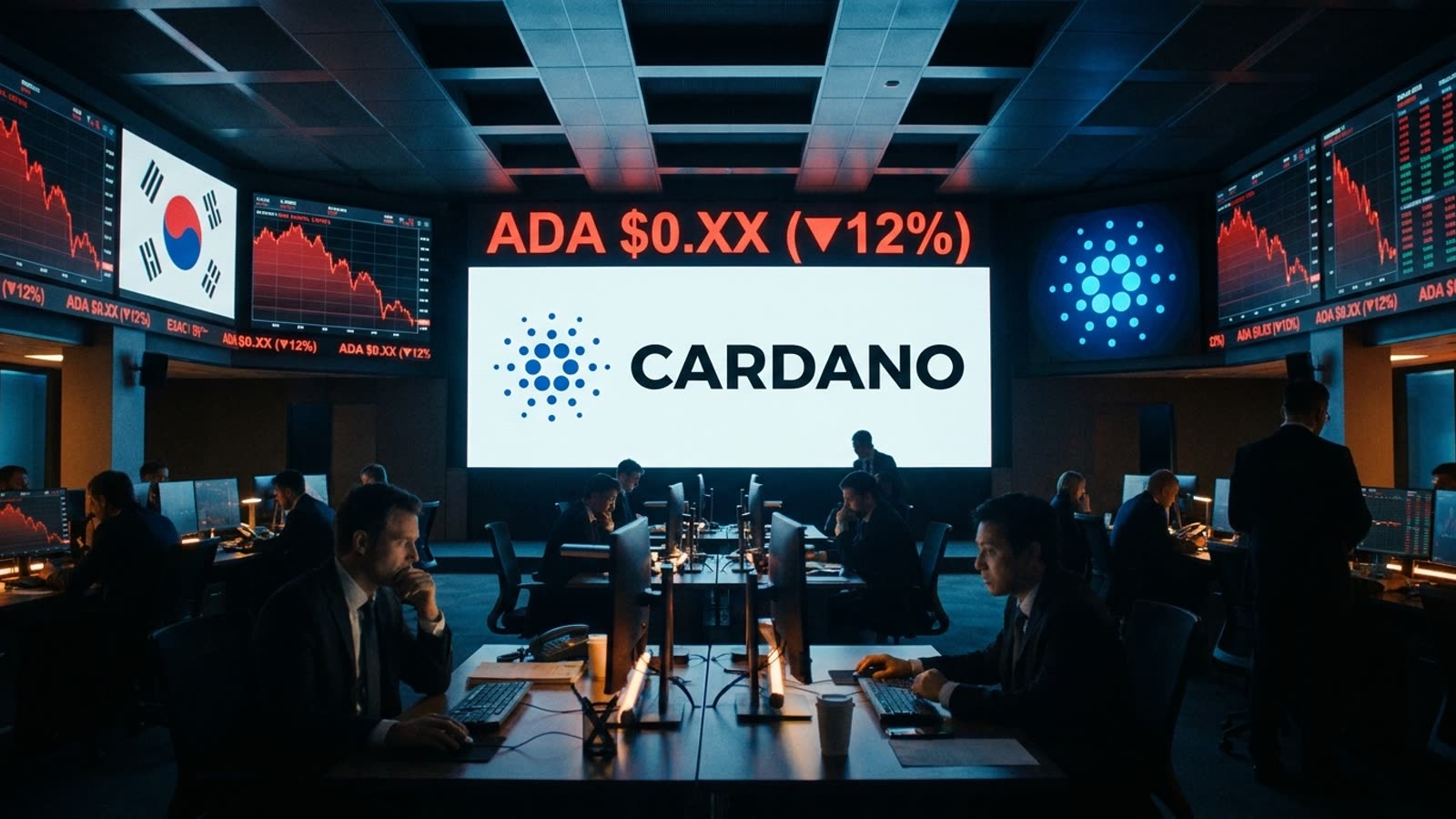
Charles Hoskinson's announcement that he would be "taking a break" from the Cardano community landed with the subtlety of a resignation letter slipped under the door during a house fire. ADA, already nursing wounds from a brutal year, has now cratered another 12% in the past day alone, pushing the token to roughly $0.16 — a price point that makes its 2021 peak of $3.10 feel like a fever dream from another geological era.
The 76% year-over-year decline places Cardano among the worst performers in the top-20 by market capitalization, a distinction that grows more painful when one considers the project's intellectual pretensions. Hoskinson built Cardano's brand on peer-reviewed research, formal verification, and a deliberate development cadence that critics called slow and supporters called rigorous. The market, it seems, has rendered its own peer review.
The founder factor
Hoskinson's decision to step back from public-facing duties — ostensibly to focus on "building" rather than "defending" — arrives at a moment when Cardano desperately needs a credible spokesperson. The project has struggled to articulate a compelling narrative in a market that has moved on to newer layer-one contenders and, more recently, back to Bitcoin and Ethereum as risk appetite collapses. His absence removes the one figure capable of commanding attention, even if that attention was often negative.
The timing invites speculation. Founders rarely retreat when things are going well. Whether Hoskinson's hiatus reflects burnout, strategic repositioning, or something more troubling about Cardano's internal state remains unclear. What is clear is that the community now faces a leadership vacuum precisely when it can least afford one.
The broader layer-one reckoning
Cardano's collapse is not occurring in isolation. The entire alternative layer-one thesis — the idea that Ethereum killers would capture meaningful market share through superior technology — has been systematically dismantled over the past year. Solana survived its FTX-adjacent near-death experience only to find itself competing for a shrinking pool of speculative capital. Avalanche, Polkadot, and Sui have all experienced similar capitulations.
But Cardano's decline carries a particular sting because the project positioned itself as the adult in the room, the blockchain that would win through intellectual superiority rather than hype. That narrative now reads as hubris. The market has demonstrated, with characteristic brutality, that it does not grade on a curve for good intentions.
Our take
Cardano was always a bet on patience — the idea that doing things correctly would eventually triumph over doing things quickly. That thesis required sustained community faith and a founder willing to absorb endless criticism while the roadmap inched forward. With Hoskinson stepping back and ADA trading at prices that make early investors question their life choices, Cardano's remaining believers face a stark choice: double down on the long-term vision or acknowledge that the market has spoken. The peer-reviewed research will still be there. The question is whether anyone will be around to read it.