Heavy music has always trafficked in catharsis, but Caleb Shomo has made vulnerability the entire point. The Beartooth frontman, who founded the band in 2012 after leaving Attack Attack!, has spent more than a decade turning his panic attacks, depressive episodes, and battles with self-worth into anthems that fill arenas. In a genre often criticized for performative aggression, Shomo's radical honesty has carved out something genuinely rare: a space where screaming along feels less like rebellion and more like release.
The 31-year-old Ohio native has been unusually transparent about his struggles, discussing them in interviews with the same matter-of-fact candor he brings to his lyrics. Songs like "In Between" and "The Past Is Dead" read like journal entries set to breakdowns, and Shomo has spoken openly about writing music as a survival mechanism rather than a career strategy. It's an approach that initially worried industry observers—confessional songwriting doesn't always scale—but Beartooth's trajectory has proved the doubters wrong.
The business of being honest
Beartooth's commercial arc tells an interesting story about what audiences actually want. Each successive album has charted higher than the last, with 2023's The Surface debuting at number one on Billboard's Hard Rock chart. The band headlines festivals and sells out mid-size venues across North America and Europe, all while Shomo continues to write lyrics that would make most frontmen's publicists nervous. The lesson seems clear: authenticity, even uncomfortable authenticity, sells better than posturing.
The model has spawned imitators, but few have matched Shomo's ability to balance commercial accessibility with genuine emotional weight. His production work—he records and mixes Beartooth's albums himself—keeps the sound radio-friendly enough to cross over while maintaining the heaviness that satisfies the core fanbase. It's a technical achievement that often gets overshadowed by discussions of his lyrical content.
Why it resonates now
Shomo's emergence as a mental health figure in heavy music coincides with a broader cultural shift in how young men discuss emotional struggle. The generation that grew up on Beartooth has proven far more willing to engage with therapy, medication, and open conversation about mental illness than their predecessors. Shomo didn't create that shift, but he's become one of its most visible avatars in a space—aggressive guitar music—that historically resisted such openness.
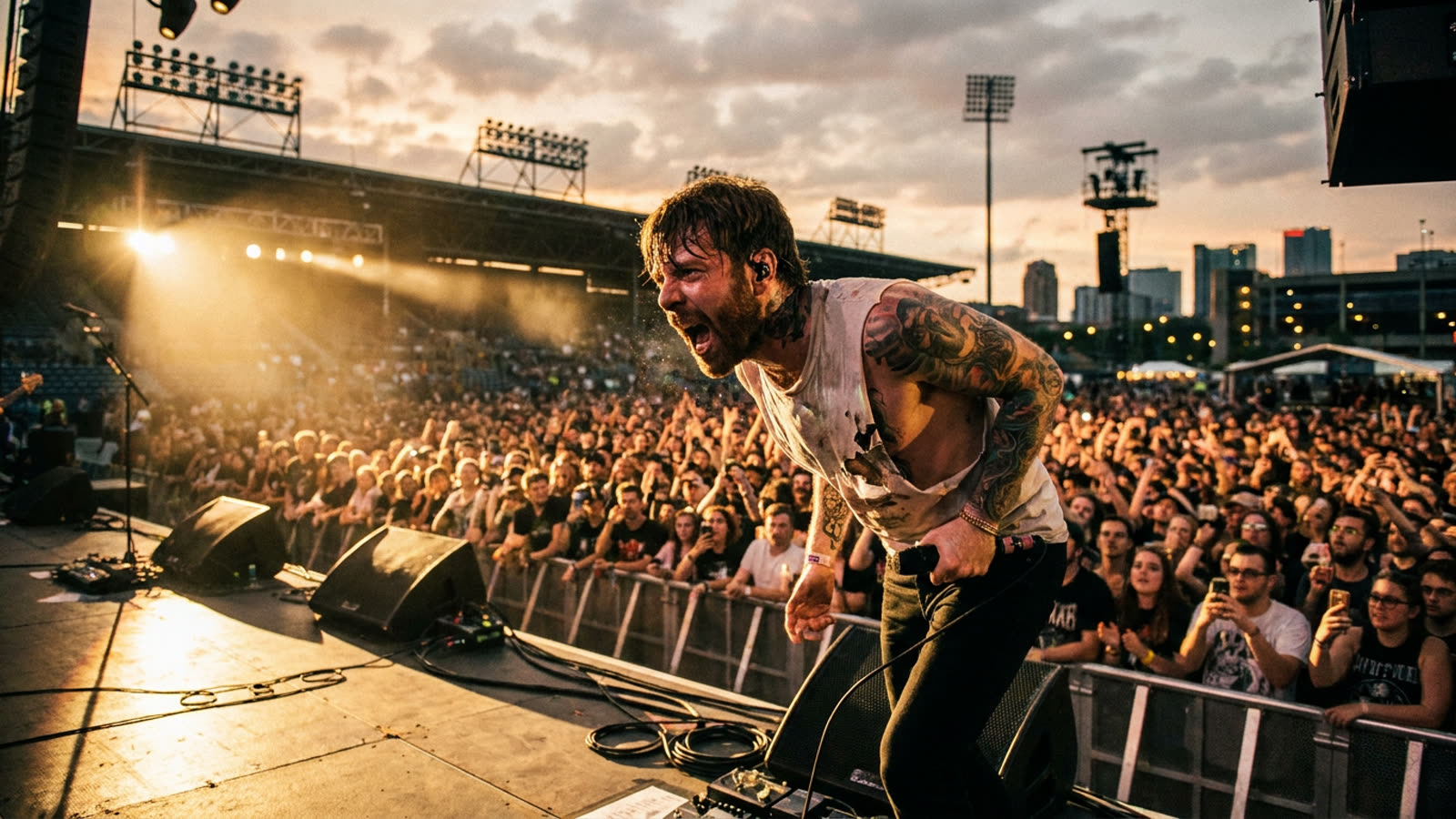
Concert footage from Beartooth shows tells the story: crowds singing every word to songs about wanting to disappear, about feeling broken, about the daily work of staying alive. These aren't ironic singalongs. They're communal acknowledgments of shared experience, facilitated by a frontman willing to go first.
Our take
There's something quietly revolutionary about a metalcore band becoming synonymous with emotional honesty rather than sonic brutality. Shomo has proven that vulnerability and heaviness aren't opposites—they're complements. In an era when male mental health remains stubbornly undertreated and underdiscussed, having someone scream about it to sold-out crowds might be exactly the intervention the culture needs.