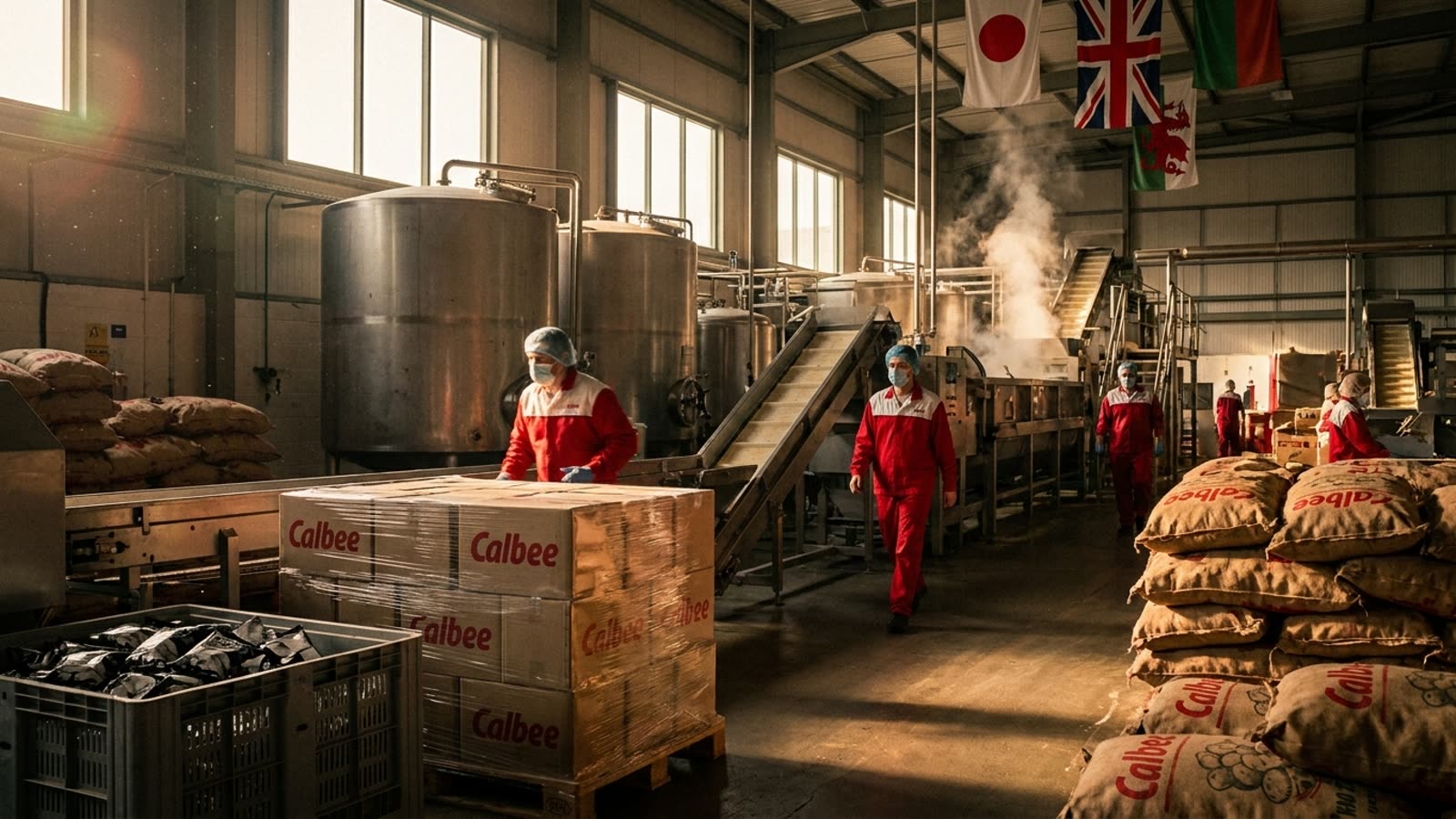
When Calbee, Japan's largest snack manufacturer, announced it would temporarily strip the colour from its iconic crisp packaging, the company framed it as a minor inconvenience. It is anything but. The decision to switch to monochrome bags—a first in the company's 75-year history—exposes a supply chain vulnerability that extends far beyond petroleum and into the mundane materials that hold modern commerce together.
The culprit is cyan. Specifically, the petroleum-derived pigments that give packaging its vibrant blues and greens, which flow through the Strait of Hormuz alongside crude oil. With the waterway now effectively closed due to the Iran conflict, Calbee's suppliers have run dry. The company expects colour to return "within months," though that timeline assumes a resolution that military analysts consider optimistic.
The ink nobody thought about
Printing inks rely heavily on petrochemical feedstocks, and roughly 20 percent of the world's petroleum-based chemical precursors transit the Hormuz chokepoint. Japan, which imports nearly all its oil, is particularly exposed. But the disruption isn't limited to one archipelago. European packaging firms are already warning of shortages, and American consumer goods companies have begun stockpiling pigments at prices three times their pre-crisis levels.
Calbee's transparency is unusual. Most manufacturers facing similar constraints have simply delayed product launches or quietly reduced SKU variety, hoping consumers won't notice. The Japanese firm's willingness to ship visually degraded products suggests its inventory situation is more dire than competitors care to admit—or that it's making a calculated bet that honesty will earn customer loyalty.
Beyond snacks: the cascading effects
The ink shortage is a leading indicator of broader disruptions. Plastics, synthetic textiles, pharmaceuticals, and fertilisers all depend on the same petrochemical supply chains now under strain. Container shipping rates from the Middle East have tripled since the Hormuz closure, and insurers are refusing to cover vessels transiting nearby waters.
Japan's Ministry of Economy, Trade and Industry has convened emergency meetings with major manufacturers, though officials have offered little beyond vague assurances about "strategic reserves." Those reserves, designed primarily for fuel, do little to address specialty chemical shortages. South Korea and Taiwan face similar exposure, raising questions about semiconductor production inputs that have so far received little attention.
Our take
Calbee's colourless crisps are faintly absurd, the kind of detail that invites jokes about first-world problems. But the underlying reality is serious. The global economy has spent decades optimising for efficiency over resilience, routing critical materials through a handful of chokepoints and assuming those chokepoints would remain open. The Hormuz crisis is stress-testing that assumption in real time, and the early results are not encouraging. If a snack company is already rationing ink, imagine what happens when the pharmaceuticals run short.