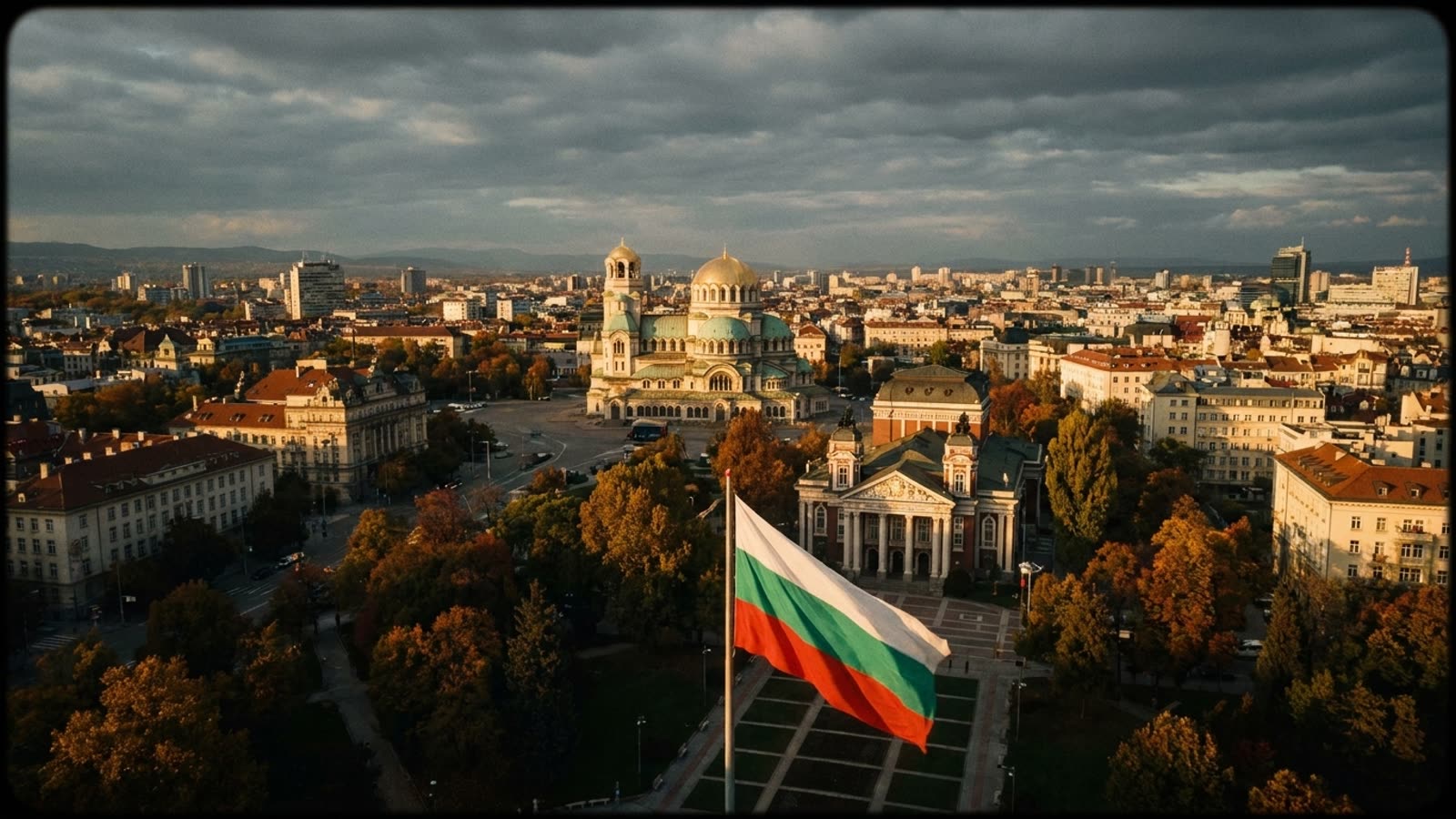
The numbers tell a story of democratic fatigue before they tell anything about policy. Bulgaria's presidential first round drew barely 38 percent of eligible voters to the polls on Sunday, the lowest turnout for a national election since the country joined the European Union in 2007. The two candidates advancing to next week's runoff — incumbent President Iliana Yotova and former caretaker Prime Minister Andrey Gyurov — together captured less than half of those already meager ballots cast.
This is what happens when a country holds seven elections in four years and still cannot produce a stable government.
The candidates nobody chose
Yotova, a socialist who has served as president since 2022, finished first with roughly 26 percent. Gyurov, a technocrat who briefly led a caretaker cabinet last year, trailed at 22 percent. Neither commanded enthusiasm; both benefited primarily from name recognition and the collapse of alternatives. The center-right GERB party, which dominated Bulgarian politics for over a decade, saw its candidate eliminated in third place — a humiliation that reflects the party's ongoing corruption scandals more than any ideological shift among voters.
The runoff next Sunday will pit a figure associated with Bulgaria's Russia-friendly socialist establishment against a colorless administrator whose chief qualification is having offended fewer people than his rivals. Brussels will prefer Gyurov. Moscow will prefer Yotova. Most Bulgarians, evidently, prefer neither.
The turnout crisis is the real story
Bulgaria's voter participation has declined in every election since the anti-corruption protests of 2020 briefly energized the electorate. The pattern is now unmistakable: each inconclusive vote, each collapsed coalition, each return to the polls drains a little more civic faith. Sunday's 38 percent turnout means that the next president will be chosen by roughly one-fifth of the adult population — a legitimacy deficit that will shadow whoever takes office.
The European Union has watched Bulgaria's dysfunction with growing alarm. The country remains outside the Schengen zone and has yet to adopt the euro, failures that stem partly from governance instability and partly from Brussels' own wariness about admitting a member state that cannot maintain a functioning executive for more than a few months at a stretch. A weak president, elected on thin turnout, will do nothing to resolve that impasse.
Our take
Bulgaria's runoff is less an election than a formality — the democratic equivalent of picking the least objectionable item from a vending machine. Gyurov will probably win, because he represents change without risk, and because Yotova's socialist affiliations make Western-oriented voters nervous in an era of Russian aggression. But the real lesson is structural: Bulgaria has become a case study in how repeated electoral dysfunction can hollow out democratic participation itself. When voting stops producing results, voters stop showing up. That spiral is easier to start than to reverse.