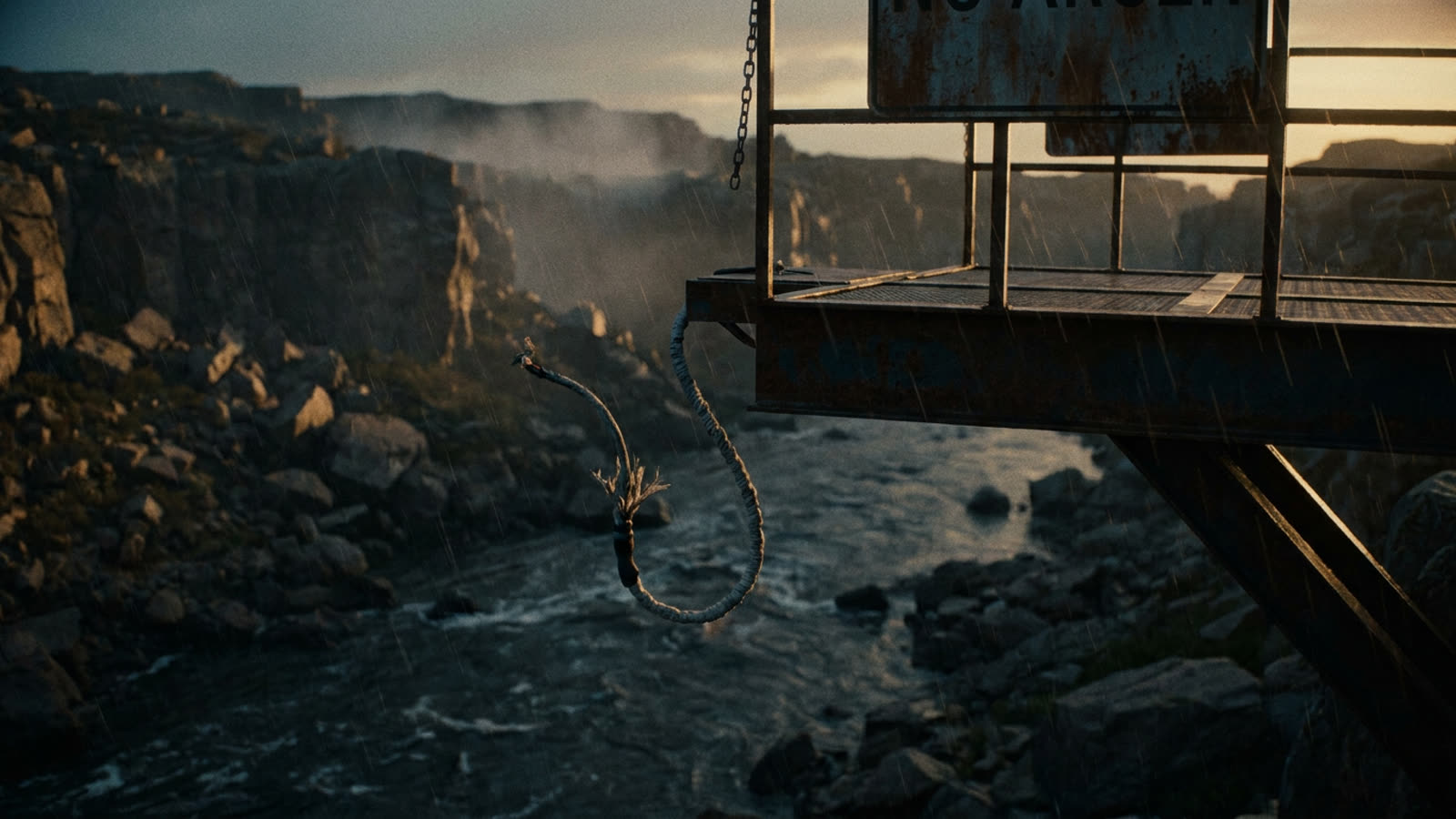
A tourist died this week in Brazil after a bungee cord failed during a jump, the latest in a grim pattern of fatalities that the multi-billion-dollar adventure tourism industry would prefer you not think too hard about. The incident, while still under investigation, has reignited questions about an uncomfortable truth: the business of selling adrenaline operates in a regulatory vacuum across much of the world.
The appeal is obvious. Bungee jumping, zip-lining, paragliding, and their increasingly extreme cousins promise transcendence—the Instagram-ready moment of conquering fear, the dopamine hit of survival. What they don't advertise is that in many popular destinations, the equipment inspections, operator certifications, and safety protocols are essentially voluntary.
The boom nobody regulates
Adventure tourism has exploded over the past decade, driven by social media's appetite for spectacular content and a post-pandemic hunger for intense experiences. The global market is projected to exceed $1.6 trillion by 2030. Yet oversight has not kept pace. In Brazil, as in much of Latin America, Southeast Asia, and parts of Europe, bungee operations often fall into regulatory gaps—too small for aviation authorities, too temporary for building codes, too novel for tourism ministries that still think in terms of hotels and tour buses.
Operators self-certify. Equipment ages. Cords fray. And when something goes wrong, families discover that liability waivers signed in foreign languages offer little recourse.
The silence after the fall
What's striking about these incidents is how quickly they vanish from public conversation. A death makes local news, perhaps international headlines for a day, then disappears. The industry has no equivalent of aviation's mandatory incident reporting, no centralized database tracking failures across borders. Each tragedy is treated as isolated, a freak accident, rather than a data point in a pattern.
This suits operators who depend on the illusion of controlled danger. The entire business model rests on customers believing they're taking a calculated risk—that the fear is performative, the safety absolute. Acknowledging systemic problems would puncture that illusion.
Our take
There's nothing wrong with seeking thrills. But the adventure tourism industry has grown too large and too lucrative to operate on the honor system. What's needed is not the elimination of risk—that would defeat the purpose—but transparency about what risks actually exist and international standards that don't evaporate at the border. Until then, every bungee jump is a leap of faith in more ways than one.