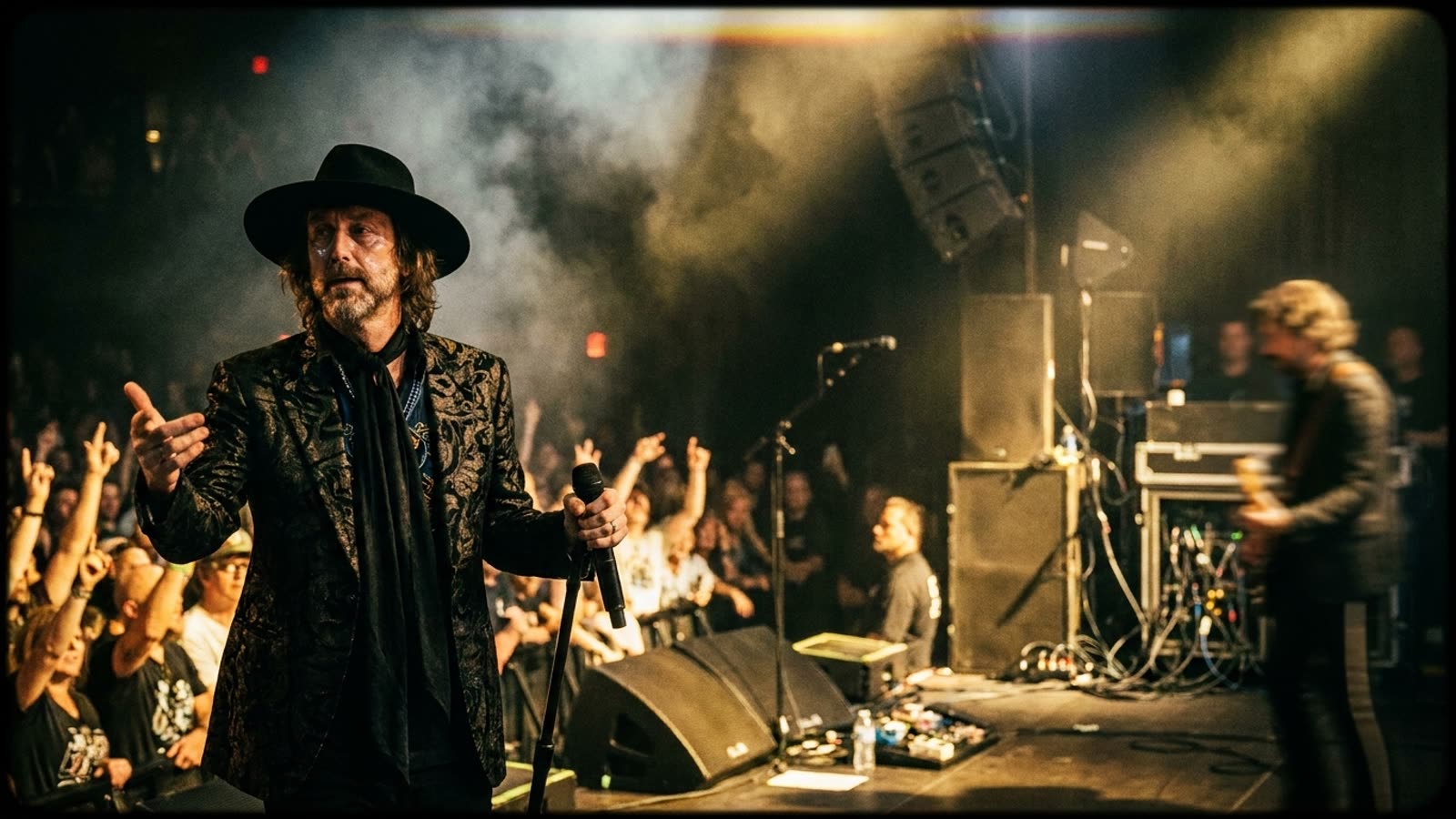
Rock and roll has always had a complicated relationship with patriotism, but rarely does that tension erupt so visibly as it did over the weekend when The Black Crowes stopped their set to admonish fans who had broken into a "U.S.A." chant—prompting dozens of attendees to abandon the venue mid-song.
The incident, captured on video that quickly circulated online, shows frontman Chris Robinson pausing between songs as the chant swelled from a section of the crowd. "We're not doing that here," Robinson reportedly said, before launching into the band's next number. Within minutes, clusters of fans could be seen making their way toward the exits, some gesturing angrily, others simply shaking their heads.
The context matters
The Robinson brothers have never been shy about their politics. Chris Robinson's social media presence leans conspicuously left, and the band's music—steeped in the tradition of Southern rock but filtered through a countercultural lens—has always occupied an ideologically ambiguous space. Their audience, however, skews older and more geographically diverse than their San Francisco sensibilities might suggest. Classic rock tours in 2026 draw crowds who came of age in very different Americas.
The "U.S.A." chant itself has become a loaded signifier. Once the province of Olympic hockey games and bipartisan moments of national unity, it has increasingly been adopted as a tribal marker at political rallies and, more recently, at entertainment events where performers' politics clash with their audiences'. For some fans, the chant is innocent celebration; for others, it carries unmistakable partisan freight.
A pattern emerging
The Black Crowes are hardly the first legacy act to find themselves navigating this minefield. Bruce Springsteen has long dealt with conservatives who misread "Born in the U.S.A." as jingoistic anthem rather than bitter critique. Neil Young's ongoing battles with streaming platforms over misinformation placed him squarely in the culture wars. But those conflicts played out in press releases and catalog removals—not in real-time confrontations with paying ticket holders.
What distinguishes this moment is the immediacy of the rupture. Concert tickets for legacy rock acts are not cheap; the fans who walked out had committed both money and time to be there. That they chose to leave rather than simply ignore the rebuke suggests something has shifted in the compact between performer and audience. The stage is no longer neutral ground, if it ever was.
Our take
Robinson was within his rights to set the terms of his own show, and fans were within theirs to leave. But the episode reveals how thoroughly politicized even the most apolitical spaces have become. A Black Crowes concert should be about "Hard to Handle" and "She Talks to Angels," not about which America you belong to. That it has become something else is nobody's victory.