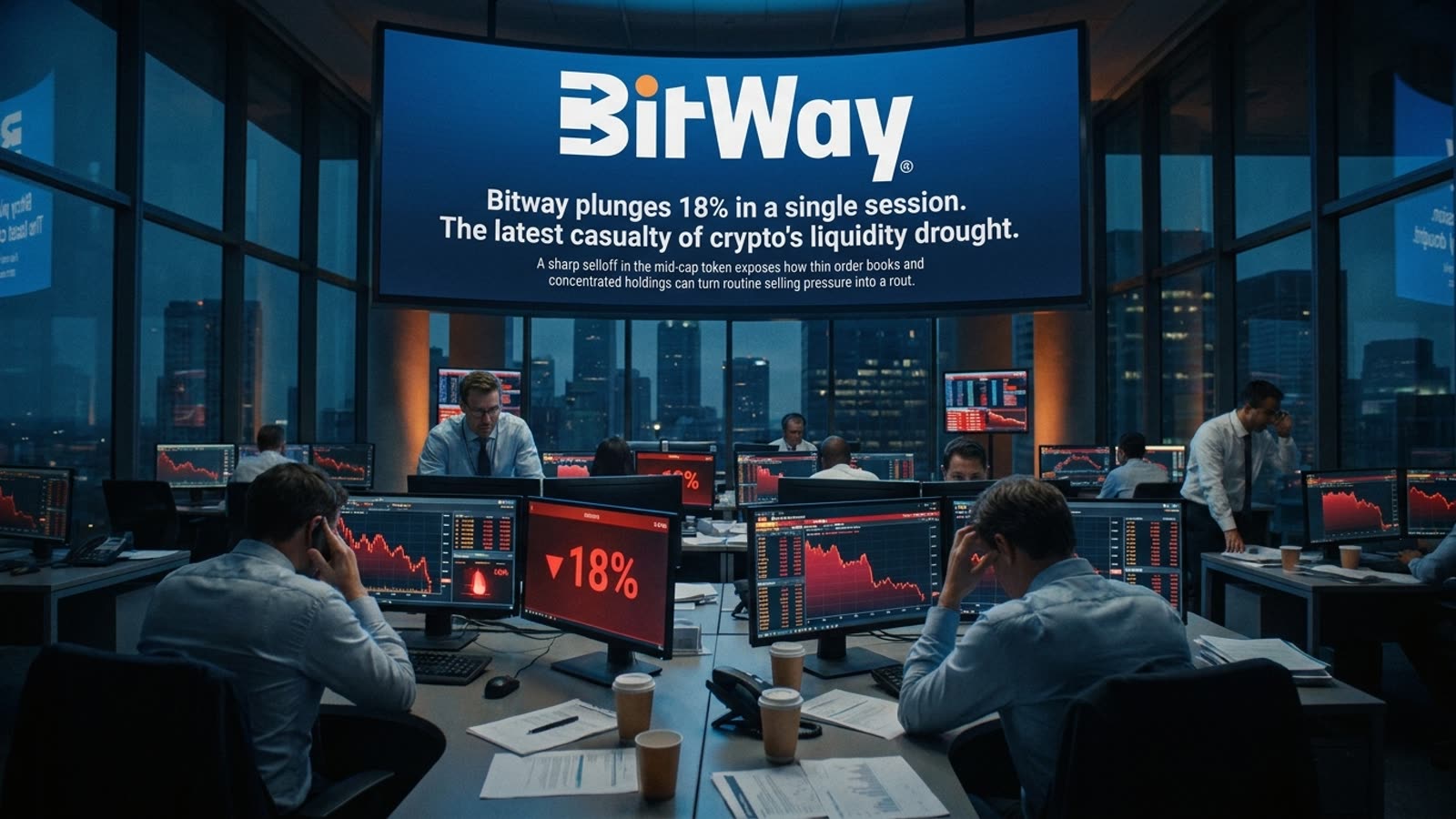
When a top-40 cryptocurrency loses nearly a fifth of its value in twenty-four hours, the instinct is to hunt for a catalyst—a hack, a regulatory filing, a founder scandal. With Bitway's collapse to around $1.92, the more unsettling answer may be that no single event was required. The token simply met the market it had always been trading in: shallow, illiquid, and unforgiving.
Bitway, which climbed into the top 40 by market capitalization on the back of modest DeFi integrations and a loyal but narrow holder base, has long exhibited the telltale signs of a liquidity-challenged asset. Bid-ask spreads on secondary exchanges routinely stretched wider than those of comparable mid-caps, and on-chain data suggested that a handful of wallets controlled a disproportionate share of circulating supply. In calmer conditions, that architecture merely dampened upside volatility. In a risk-off environment—when macro jitters and a broader tech selloff have already thinned crypto trading desks—it became a trapdoor.
The mechanics of a flash crash
Preliminary order-flow analysis points to a cascade effect. A moderately sized sell order, likely from a single whale or an automated liquidation, overwhelmed the visible bid stack on at least two centralized exchanges. Market makers, already running lean inventories, stepped back rather than absorb the flow. Within minutes, arbitrage bots propagated the dislocation across decentralized venues, and the price discovery that followed was brutal. Bitway shed roughly 18.5% before bids stabilized—if "stable" is the right word for a token now trading at multi-month lows.
A sector-wide warning
Bitway is not unique. Dozens of tokens in the 30-to-100 market-cap range share its structural vulnerabilities: concentrated ownership, limited exchange depth, and dependence on retail sentiment that can evaporate overnight. The difference between a 5% dip and an 18% crater often comes down to whether a single large holder decides to exit—and whether anyone is willing to catch the falling knife. In the current environment, with institutional desks still digesting the global tech rout and retail participation subdued, the answer is increasingly "no."
Our take
Bitway's crash is less a story about Bitway than about the fragile plumbing beneath much of the altcoin market. Investors who treat market-cap rankings as a proxy for liquidity are playing a dangerous game. Until trading infrastructure matures—more market makers, deeper order books, better circuit breakers—mid-cap crypto will remain a market where exits are easy to imagine and hard to execute. The lesson, as always, is that you don't own a position until you can sell it.