The most consequential event in bitcoin's calendar is not a product launch, regulatory decision, or celebrity endorsement. It is a line of code that executes automatically every 210,000 blocks — roughly every four years — cutting the reward that miners receive for validating transactions precisely in half. This mechanism, known as the halving, is bitcoin's answer to central banking: a monetary policy that cannot be lobbied, amended, or reversed.
Understanding the halving is essential to understanding why bitcoin behaves the way it does, and why its adherents speak of it with an almost religious certainty.
The mechanics of programmed scarcity
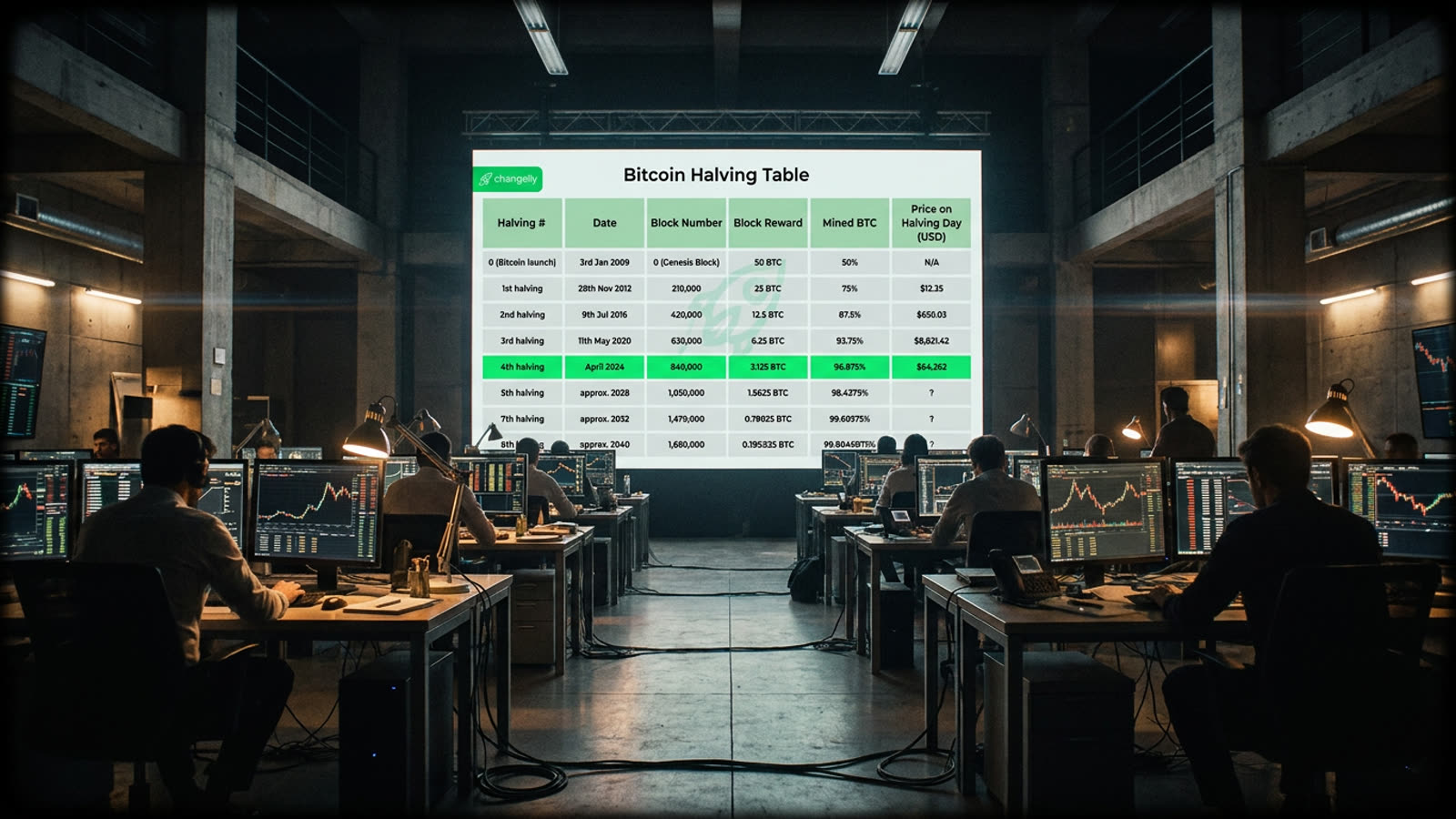
When bitcoin launched in 2009, miners received 50 bitcoin for each block they added to the blockchain. After the first halving in 2012, that dropped to 25. Then 12.5 in 2016. Then 6.25 in 2020. The most recent halving, in 2024, reduced the reward to 3.125 bitcoin per block. This will continue until approximately 2140, when the final fraction of the 21 million bitcoin cap will have been mined.
The logic is disarmingly simple: if demand remains constant or grows while new supply shrinks, price should rise. This is Econ 101, but applied with algorithmic rigidity. There is no Federal Reserve to debate timing, no committee to issue forward guidance. The halving happens when the block count hits the threshold, full stop.
The pattern that believers swear by
Historically, bitcoin's price has followed a recognizable rhythm around halvings. In the months preceding each event, anticipation builds. In the year or so following, prices have surged to new highs — though the magnitude of each cycle's gains has diminished as the asset has matured and its market capitalization has grown. The busts that follow the peaks have been brutal, with drawdowns exceeding seventy percent on multiple occasions.
Skeptics argue this pattern is coincidence dressed as causation. The early halvings occurred when bitcoin was a niche curiosity; price movements were driven more by exchange hacks, regulatory crackdowns, and speculative manias than by supply dynamics. The faithful counter that the halving creates a structural supply shock that takes time to manifest, as miners who previously sold new coins to cover electricity costs suddenly have half as much to sell.
What the halving reveals about bitcoin's identity
The halving is more than a technical event. It is a statement of values. Bitcoin's anonymous creator, Satoshi Nakamoto, designed a system that explicitly rejects discretionary monetary policy. The halving schedule was set in 2009 and has never changed. In a world where central banks have printed trillions in response to crises, this immutability is either bitcoin's greatest feature or its most dangerous rigidity, depending on your perspective.
For miners, the halving is an existential stress test. When rewards drop, only the most efficient operations survive. This has driven mining toward industrial scale and regions with cheap electricity, concentrating an ostensibly decentralized network in ways that trouble purists.
Our take
The halving is neither the guaranteed wealth machine its evangelists promise nor the irrelevant technical detail its critics dismiss. It is a fascinating experiment in hard-coded monetary policy — one that has, so far, produced both spectacular gains and spectacular losses. Whether bitcoin's programmed scarcity will continue to attract capital in a world of competing digital assets and evolving regulation remains genuinely uncertain. But the halving ensures that bitcoin will never be boring on a four-year cycle.