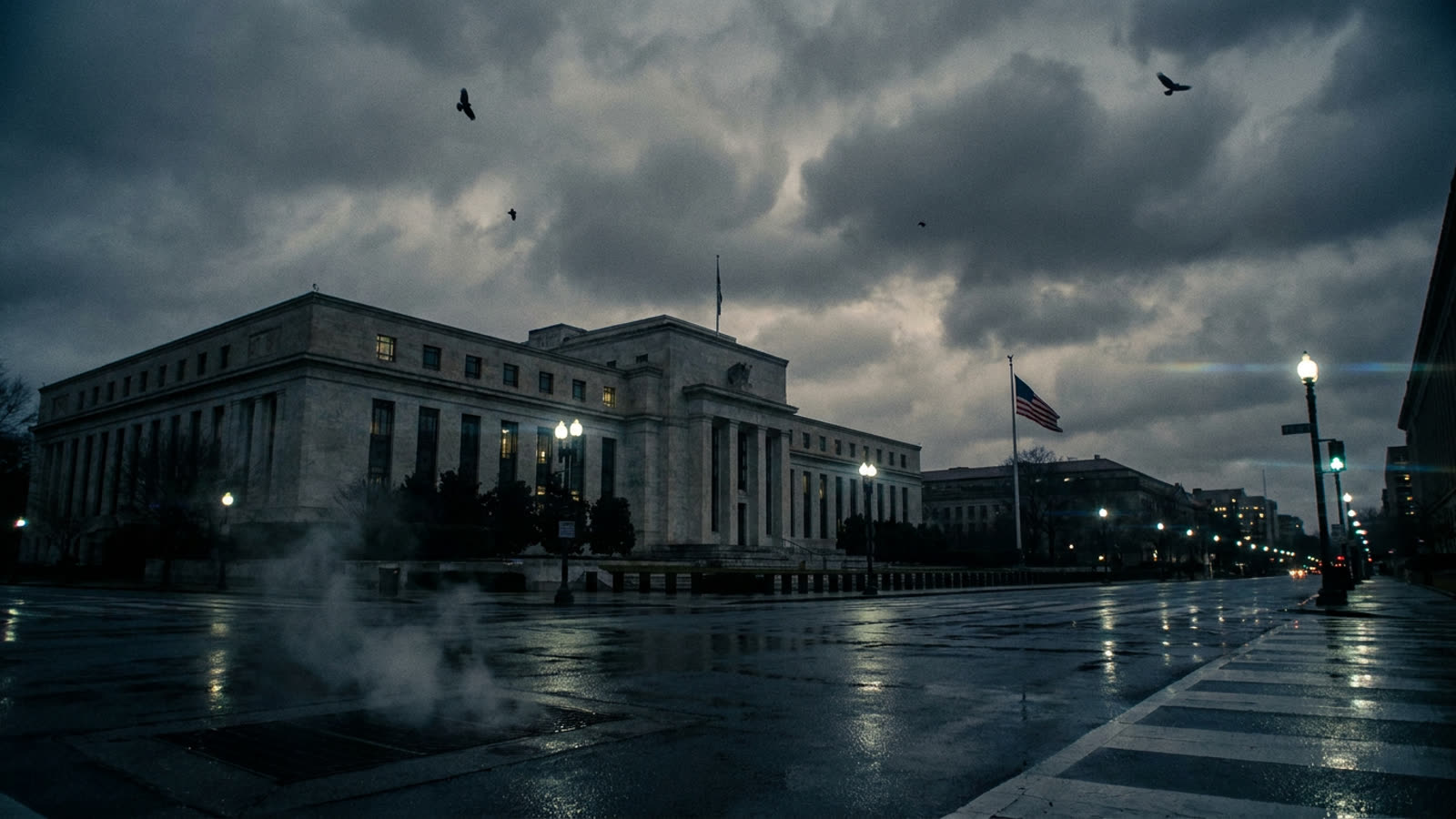
The great paradox of Bitcoin's maturation is that it now moves on the same forces it was designed to escape. This week delivered a pointed reminder: $268 million in outflows from Bitcoin ETFs, the largest single-day exodus since March, arrived alongside the peculiar spectacle of crypto traders parsing Federal Reserve tea leaves like bond fund managers.
The spot Bitcoin ETFs that launched with such fanfare in early 2024 were supposed to represent crypto's graduation into the financial mainstream. They did exactly that—which is precisely the problem now confronting true believers. Bitcoin, the asset that promised independence from central bank machinations, has become exquisitely sensitive to them.
The institutional trap
When BlackRock and Fidelity opened the ETF floodgates, they brought a new class of investor: the allocation-driven institutional buyer who treats Bitcoin as a risk asset to be trimmed when uncertainty rises. These aren't HODLers with diamond hands; they're portfolio managers with quarterly reviews and risk committees. The $268 million that departed this week wasn't panic selling by retail speculators—it was professional rebalancing by investors who view Bitcoin through the same lens as emerging market equities or high-yield credit.
The irony is rich. Bitcoin's price stability and reduced volatility, both consequences of institutional adoption, were celebrated as signs of maturity. But that maturity comes with strings: correlation to traditional risk assets, sensitivity to dollar strength, and acute awareness of Federal Reserve policy.
The Fed chair wildcard
With Jerome Powell's position increasingly uncertain and the administration openly shopping for a more accommodating monetary policy, Bitcoin finds itself in an unusual position. A dovish Fed chair—one willing to tolerate higher inflation or cut rates more aggressively—would theoretically benefit Bitcoin through dollar weakness and increased liquidity. The dollar index has already softened on speculation alone.
Yet the appointment process itself creates the kind of policy uncertainty that institutional investors despise. Every day without clarity on Fed leadership is another day for risk committees to justify trimming exposure. The cryptocurrency that was supposed to thrive on monetary chaos is instead suffering from monetary ambiguity.
The liquidation cascade
Beyond ETF flows, leveraged positions have been unwinding across major exchanges. The combination of outflows and liquidations creates a familiar feedback loop: falling prices trigger margin calls, forced selling accelerates the decline, and cautious institutional money retreats further. Bitcoin has traded sideways for weeks, unable to break convincingly above $105,000 despite favorable macro narratives about dollar weakness and inflation hedging.
The technical picture suggests consolidation rather than collapse, but the psychological damage may be more significant. Each failed rally reinforces the narrative that Bitcoin's easy gains are behind it, that the ETF-driven repricing is complete, and that future returns will look more like a volatile equity than a moonshot.
Our take
Bitcoin wanted institutional legitimacy and got it—along with all the baggage that entails. The asset that promised to be uncorrelated to everything now correlates to everything that matters: Fed policy, risk appetite, dollar strength, and institutional fund flows. This isn't a failure; it's the natural consequence of success. The question for long-term holders isn't whether Bitcoin will survive this consolidation—it will—but whether they can accept that the revolutionary asset has become, for better or worse, just another line item in a diversified portfolio. The Fed chair appointment, whenever it comes, will matter enormously. That alone tells you everything about what Bitcoin has become.