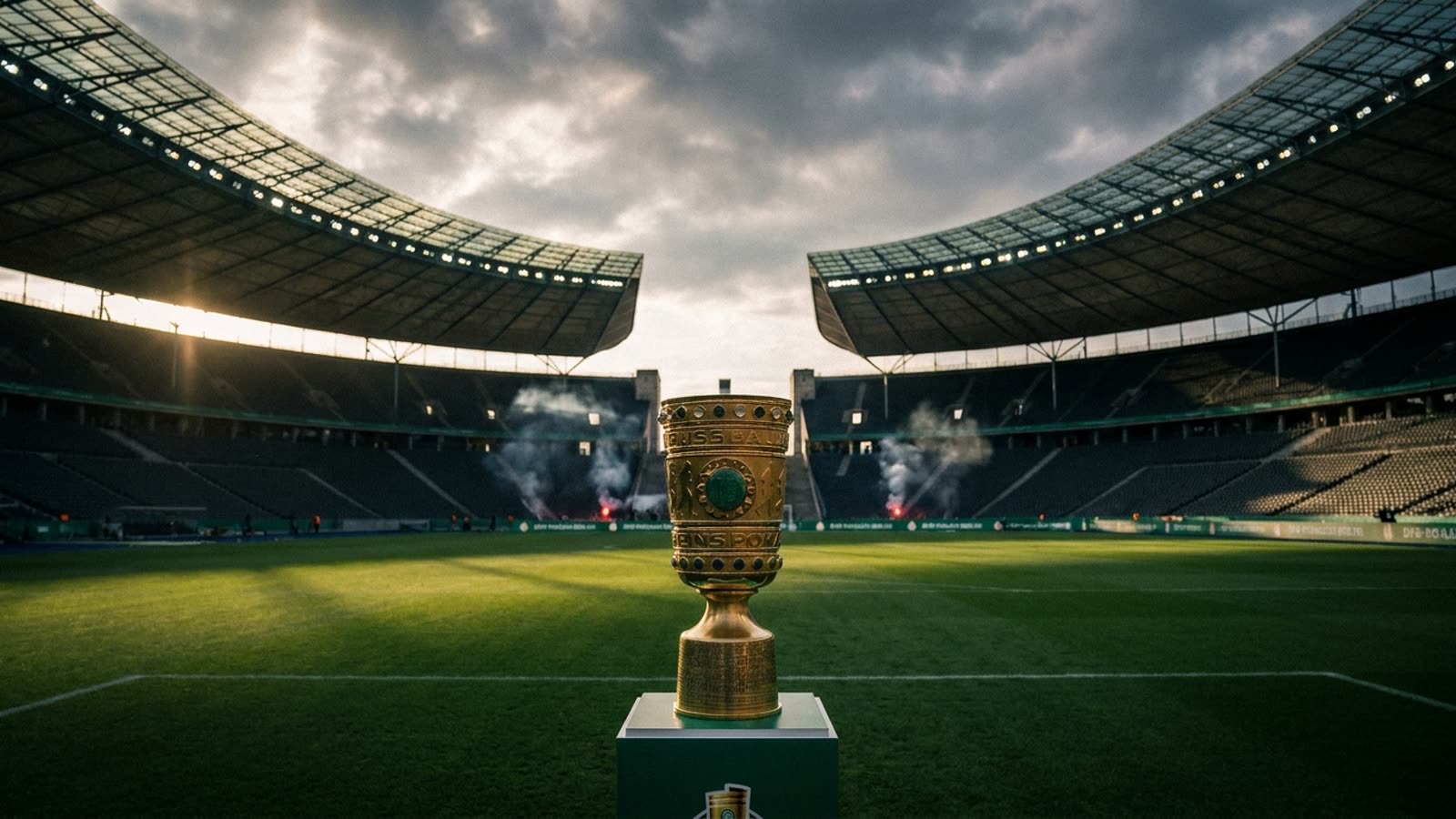
The DFB-Pokal Final has, for much of the past decade, been Bayern Munich's consolation prize — the trophy they collect while the Bundesliga title sits comfortably in the cabinet and the Champions League campaign sputters out in the quarterfinals. This year is different. Stuttgart's presence in Berlin represents something German football has been quietly craving: a genuine challenger with staying power, not merely a plucky underdog destined for regression.
Bayern arrive at the Olympiastadion with their domestic league crown secure but their European ambitions once again unfulfilled. The cup final offers redemption of a particular kind — proof that Vincent Kompany's first season in charge, despite its continental disappointments, produced more than just expected dominance over weaker Bundesliga opposition. For a club that measures success in trebles, a mere double feels like underperformance. The pressure on Bayern to win convincingly, not just win, is substantial.
Stuttgart's Unlikely Persistence
What makes this final compelling is Stuttgart's refusal to fade. After their remarkable 2023-24 campaign ended with Champions League qualification, the conventional wisdom held that Sebastian Hoeneß's side would struggle with the dual burden of domestic and European competition. Instead, they have managed both with surprising composure. Their cup run has featured the kind of gritty performances — narrow victories, penalty shootout survival — that suggest a squad with genuine belief rather than borrowed confidence.
The Swabians have not beaten Bayern in a competitive match since 2021, a drought that speaks to the chasm in resources between the clubs. Yet cup finals operate by different logic. Stuttgart's high-pressing system, which troubled Bayern in both league meetings this season, could prove even more effective in a one-off knockout setting where tactical discipline matters more than squad depth.
What Victory Means for Each Side
For Bayern, lifting the Pokal would represent continuity — their twenty-first cup triumph, further cementing their status as German football's hegemonic force. For Stuttgart, it would be transformational. The club has not won the DFB-Pokal since 1997, and a victory would validate their entire project: the youth development, the coaching philosophy, the patient rebuilding after years of mediocrity and one genuinely terrifying relegation battle.
The broader Bundesliga narrative is at stake too. German football has spent years lamenting its competitive imbalance, watching Bayern hoover up titles while hoping someone — anyone — might emerge as a sustainable rival. Dortmund have tried and faltered. Leipzig remain perpetually promising. Stuttgart winning in Berlin would not fix the structural issues, but it would provide evidence that the gap can be bridged, at least occasionally.
Our take
Bayern will probably win. They have the deeper squad, the bigger-game experience, and the institutional expectation of victory that tends to become self-fulfilling. But Stuttgart have earned the right to be taken seriously, and cup finals reward teams that believe they belong. This is the best DFB-Pokal Final in years precisely because the outcome feels uncertain — and in German football, uncertainty involving Bayern Munich is itself a kind of progress.