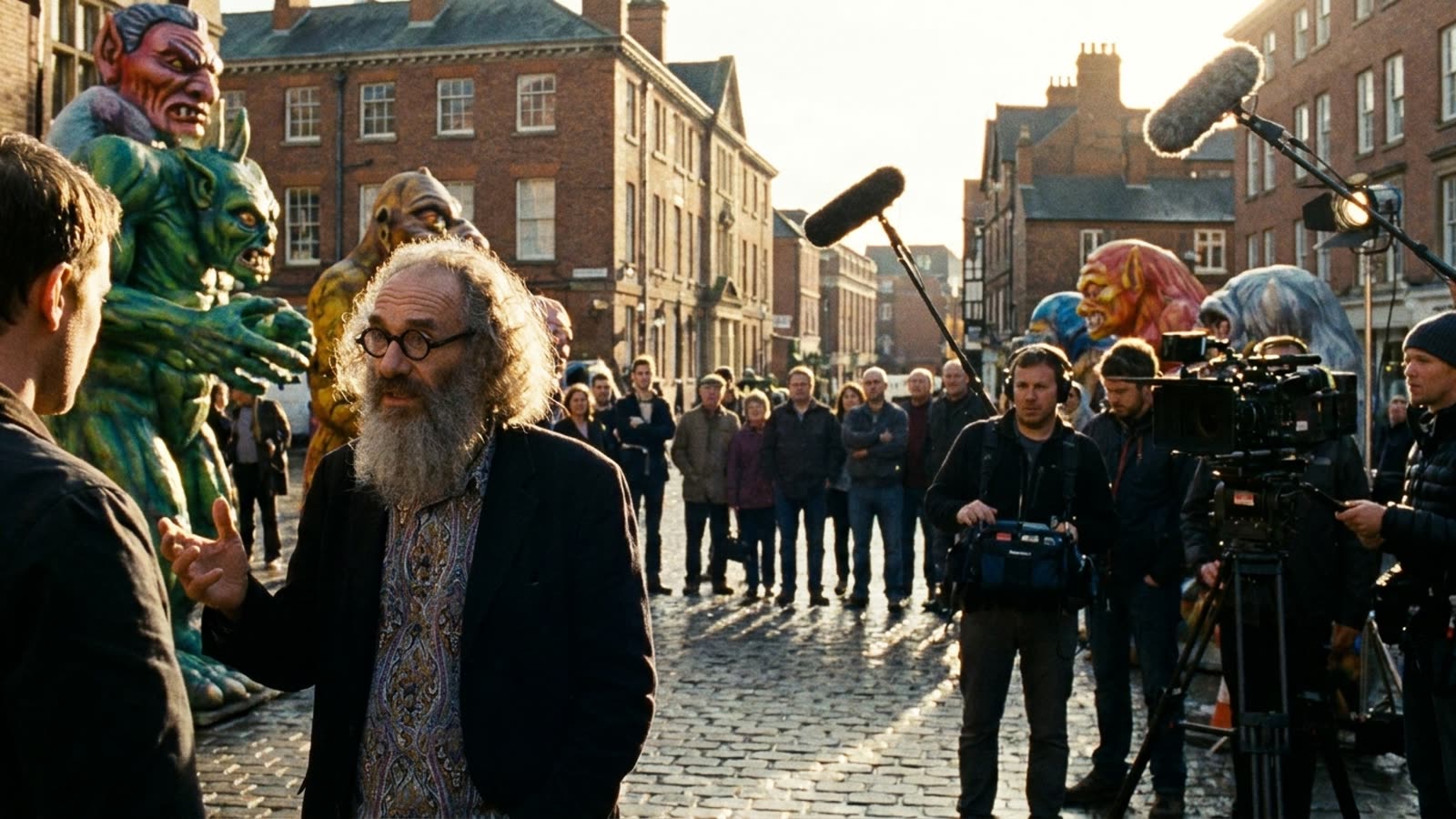
There is something almost perverse about Barbara Kopple's timing. The documentary filmmaker who embedded herself with striking Kentucky coal miners in 1973 and emerged with the Academy Award-winning Harlan County, USA has spent half a century returning to the same subject: ordinary Americans who organize, strike, and occasionally win. Now, with Union Town, she completes a trilogy that spans fifty years of American labor history — and lands it precisely when the Teamsters, the UAW, and the Screen Actors Guild have reminded the country that unions still have teeth.
Kopple, now 78, has never been coy about whose side she is on. "They are my heroes," she told Variety ahead of the film's screening at the Ji.hlava Documentary Film Festival, referring to the workers who fight for "dignity and fairness." The sentiment is earnest, perhaps unfashionable in an era of ironic distance, and entirely consistent with a career built on proximity to picket lines.
The arc of a trilogy
Harlan County, USA (1976) documented a thirteen-month strike by miners against the Eastover Mining Company in southeastern Kentucky. It won Kopple her first Oscar and established her as the preeminent chronicler of American labor conflict. American Dream (1990), which followed a disastrous strike at a Hormel meatpacking plant in Minnesota, earned her a second. That film was darker, more ambivalent — a portrait of a union movement fracturing under Reagan-era pressure.
Union Town reportedly synthesizes both sensibilities: the moral clarity of the first film and the institutional complexity of the second. Kopple has not disclosed the specific union or location at the center of the new work, but the film's festival run — Venice, Toronto, now Ji.hlava — suggests it has the prestige-documentary sheen that Academy voters favor.
Why now matters
The timing is not accidental. The past three years have seen the most significant labor actions in a generation: the 2023 Writers Guild and SAG-AFTRA strikes that paralyzed Hollywood, the UAW's successful stand-up strikes against the Big Three automakers, and a wave of organizing at Amazon warehouses and Starbucks locations. Union approval ratings, according to Gallup, have hovered near their highest levels since the 1960s.
Kopple's trilogy, viewed in sequence, becomes a kind of longitudinal study of American working-class consciousness — from the militant solidarity of Appalachian miners, through the demoralization of the Reagan years, to whatever the present moment represents. Whether that is a genuine revival or a last gasp remains, as always, contested.
Our take
There is no shortage of documentaries about labor, but very few filmmakers have earned the right to claim a trilogy. Kopple has. Union Town may or may not be her best work — the festival circuit will render its verdict — but its existence is itself a statement: that the subject is not exhausted, that the fight is not over, and that someone with two Oscars still thinks it is worth pointing a camera at a picket line. In an industry obsessed with intellectual property and franchise potential, Kopple has built the only kind of franchise that matters: one rooted in conviction.