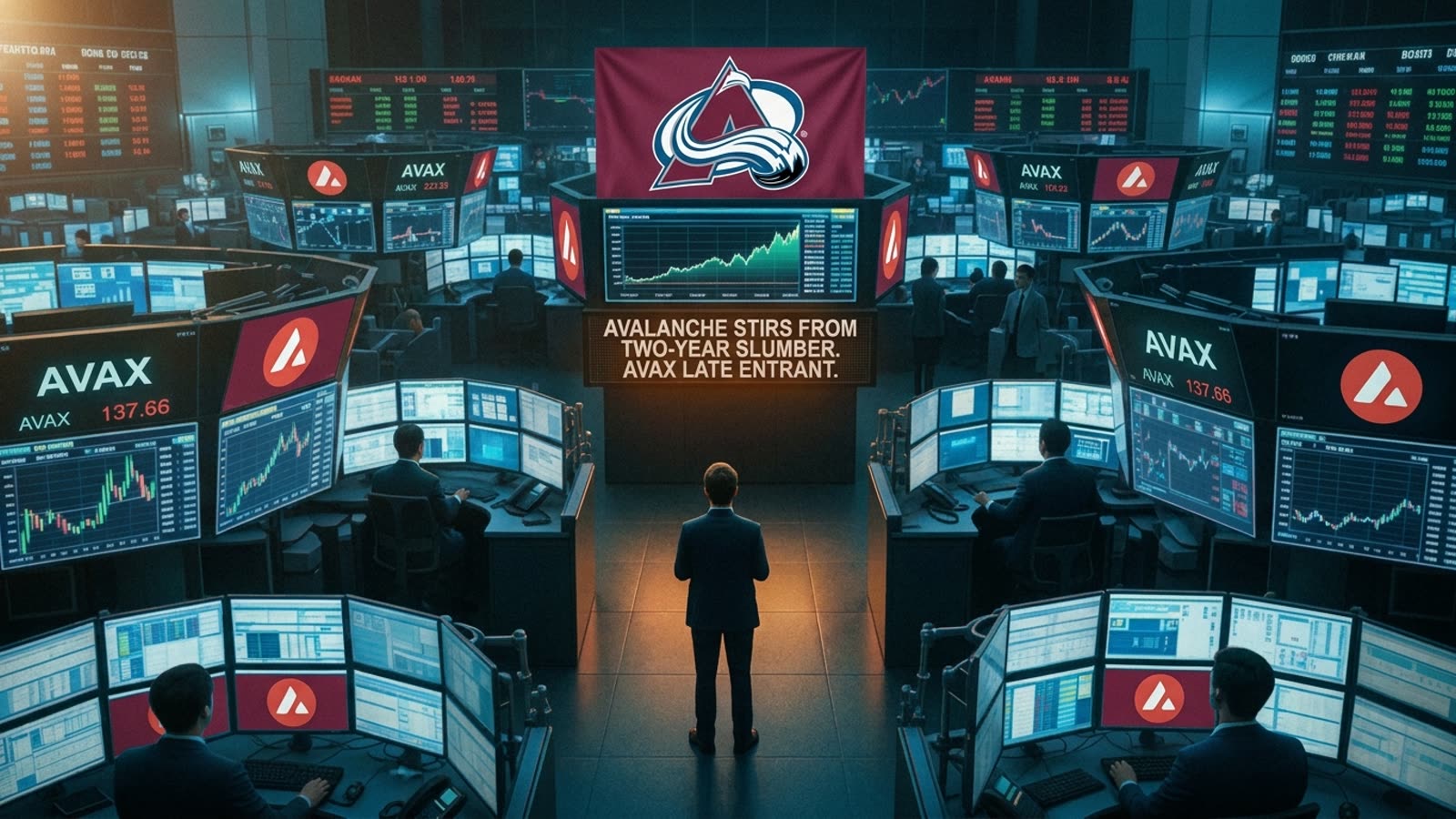
For most of 2024 and 2025, Avalanche existed in a peculiar limbo: too established to die, too quiet to matter. The layer-one blockchain that once promised sub-second finality and infinite horizontal scaling had watched Solana steal the retail spotlight and Ethereum absorb the institutional capital. AVAX drifted from its 2021 peak above $140 to hover in single digits, down more than 60 percent over the past year alone. This week, however, something shifted—a 1.8 percent daily gain that, in isolation, means nothing, but in context suggests the market is reconsidering a network that never stopped building.
The timing is instructive. Avalanche's subnet architecture—essentially bespoke blockchains that inherit the main network's security while operating independently—has quietly accumulated a roster of enterprise clients that reads like a Fortune 500 procurement list. Financial institutions exploring tokenized assets have found Ethereum's gas fees prohibitive and Solana's periodic outages unacceptable. Avalanche, with its Ethereum Virtual Machine compatibility and configurable compliance layers, offers a middle path: decentralized enough to satisfy the blockchain purists, controllable enough to satisfy the lawyers.
The institutional thesis
What distinguishes Avalanche's current positioning is its explicit pivot toward real-world asset tokenization. While competitors chase memecoin volume, Ava Labs has spent the past eighteen months courting asset managers and banks interested in putting bonds, real estate, and private equity on-chain. The subnet model allows these institutions to operate permissioned environments—know-your-customer checks, restricted validator sets, jurisdiction-specific compliance—without abandoning the broader Avalanche ecosystem entirely. It is, in effect, a blockchain that lets you have your decentralization and regulate it too.
Why the market is noticing now
The renewed attention likely stems from several converging factors. First, Ethereum's Dencun upgrade, while reducing layer-two fees, did little to address base-layer congestion for complex smart contracts. Second, Solana's 2025 has been marked by network instability during high-traffic events, making institutional treasurers nervous. Third, the broader crypto market's stabilization has freed capital to explore alternatives beyond the big two. Avalanche, sitting at a market cap rank of 37 with a price that reflects years of pessimism, suddenly looks like a value proposition rather than a has-been.
The network's technical fundamentals remain sound: three-chain architecture separating exchange, contract, and platform functions; consensus finality under two seconds; and a deflationary fee-burn mechanism that has removed substantial AVAX from circulation. None of this is new, but markets have a habit of rediscovering virtues they once ignored.
Our take
Avalanche's problem was never technology—it was narrative. In a market that rewards memes and momentum, a blockchain optimized for enterprise compliance felt like bringing a spreadsheet to a casino. But casinos eventually close, and the institutions writing the largest checks have always preferred spreadsheets. If tokenization of traditional assets becomes the next crypto cycle's defining use case, Avalanche may find itself unexpectedly well-positioned. A 1.8 percent daily move is noise; a strategic moat built over two quiet years is signal.