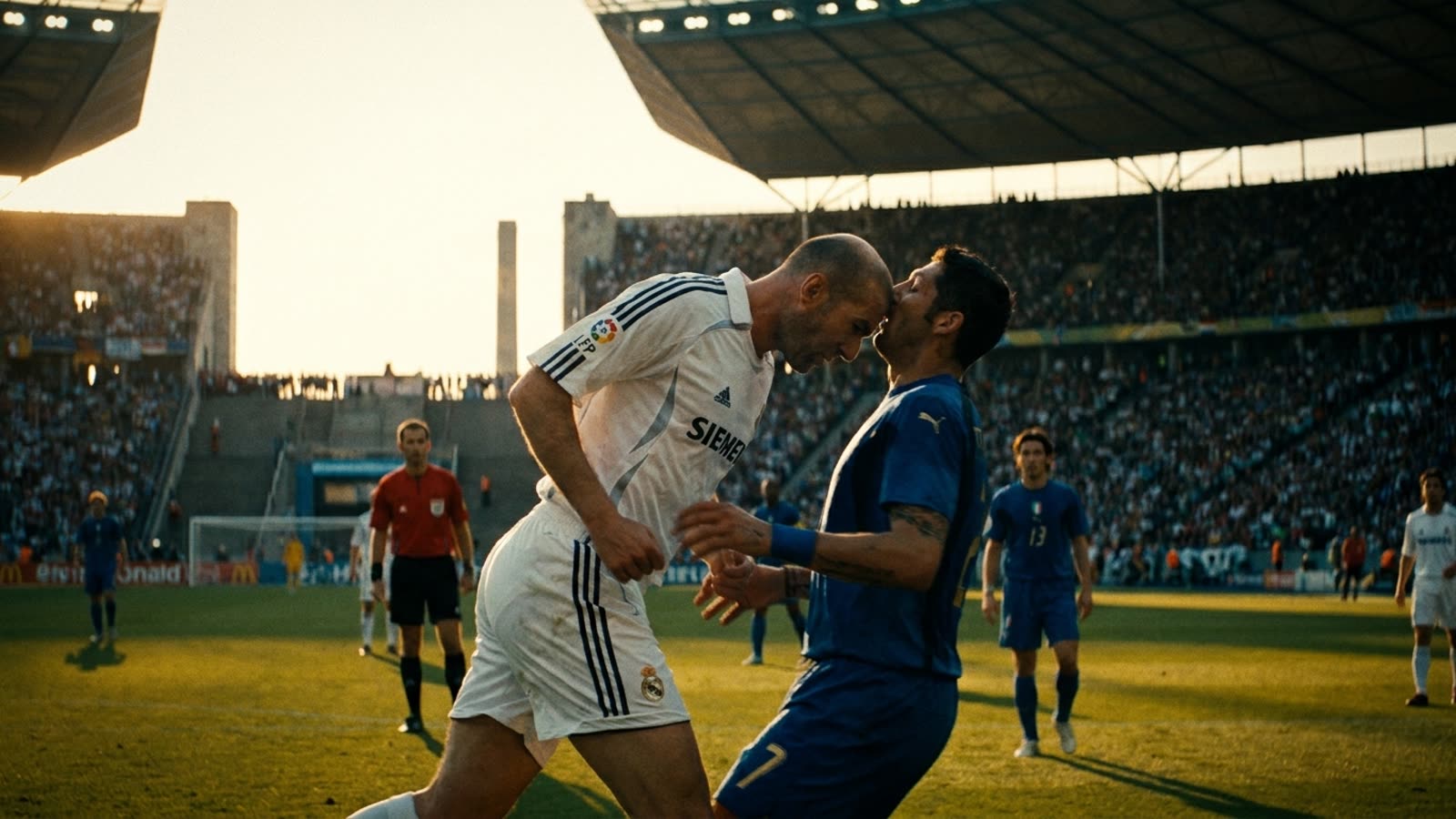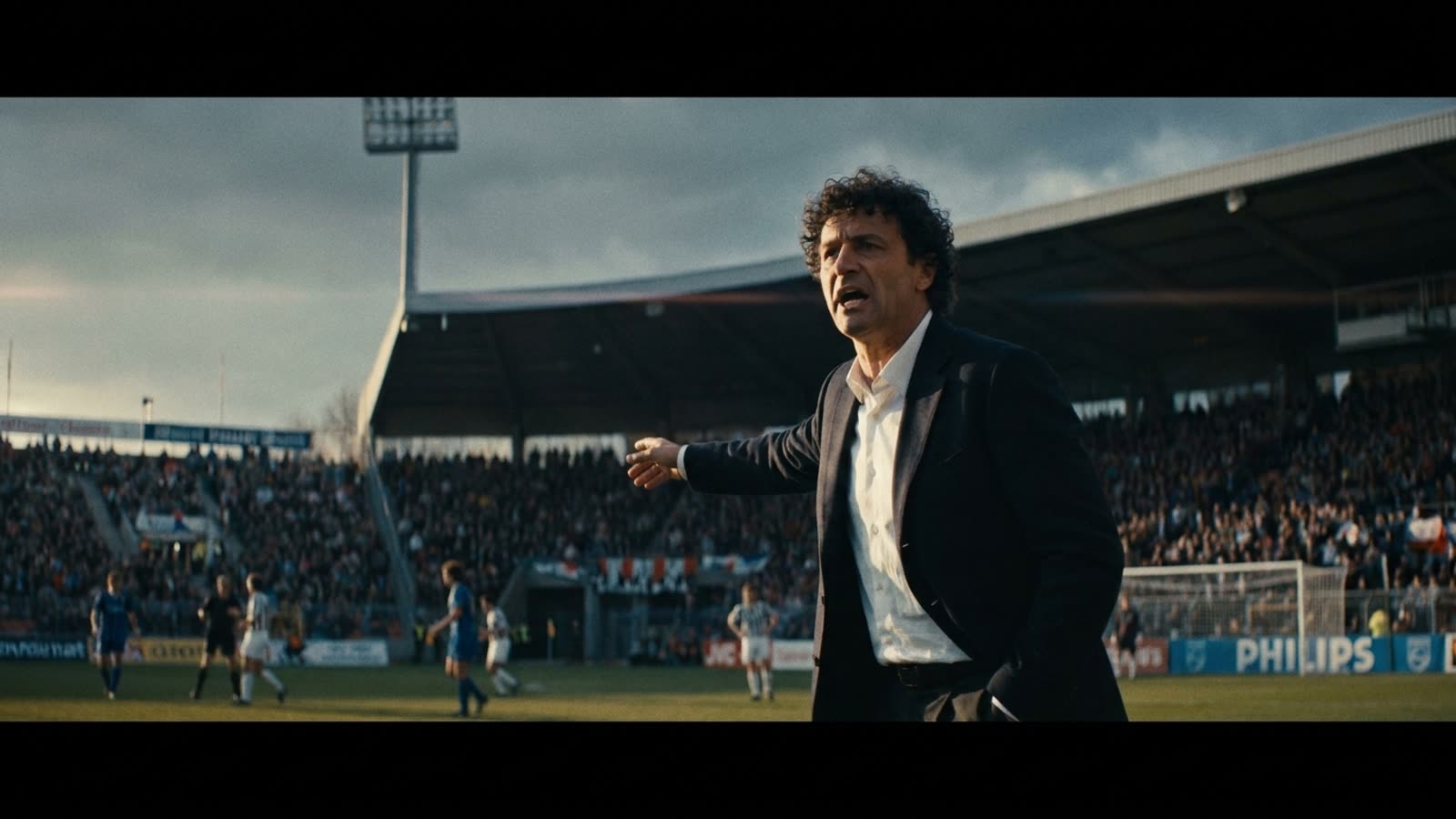
Before Arrigo Sacchi arrived at AC Milan in 1987, the conventional wisdom in Italian football was immutable: you could not coach at the highest level without having played there first. Sacchi had been a shoe salesman. His playing career peaked in the amateur leagues of Emilia-Romagna. When Silvio Berlusconi appointed him to manage one of the world's most storied clubs, the Italian press treated it as a punchline. Within two years, Milan had won Serie A, the European Cup, and the Intercontinental Cup, playing football so revolutionary that opponents described it as suffocating.
Sacchi's heresy was simple in principle and fiendishly difficult in execution: he believed the team, not individual talent, was the fundamental unit of football. His Milan pressed high and pressed together, the defensive line pushing up to compress the pitch into a corridor of roughly thirty meters where eleven men hunted as one organism. The offside trap was not a tactic but a philosophy—space was the enemy, and Milan would strangle it.
The system that ate Serie A
What made Sacchi's approach genuinely radical was its rejection of Italian football's sacred cow: catenaccio, the defensive system built around a sweeper who cleaned up behind a deep back line. Sacchi eliminated the sweeper entirely, deploying a flat back four that moved in concert. Franco Baresi, perhaps the greatest defender of his generation, was asked to abandon the role that had made him famous and become something new—a conductor rather than a last line of defense.
The results were devastating. Milan's 1989 European Cup campaign saw them dismantle Real Madrid 5-0 in the semifinal second leg, a scoreline so improbable that Spanish newspapers initially assumed a wire-service error. The final against Steaua Bucharest was a 4-0 procession. The following year, Milan retained the trophy, becoming the last club to win consecutive European Cups before the competition became the Champions League.
The coaching tree that reshaped Europe
Sacchi's influence extended far beyond his own touchline. His assistant at Milan was a reserved former midfielder named Carlo Ancelotti, who would go on to win the Champions League four times as a manager. Fabio Capello, who succeeded Sacchi at Milan, built an even more dominant domestic side using the same principles. Pep Guardiola, who faced Sacchi's methods as a young Barcelona player, has spent his managerial career elaborating on them—his teams press with the same coordinated ferocity, the same insistence that football is a game of space denied rather than space exploited.
The modern game's obsession with pressing intensity, with defensive lines that squeeze opponents into errors, with coaches who speak of "rest defense" and "counterpressing"—all of it traces back to a shoe salesman from Fusignano who believed that collective movement could overcome individual brilliance.
Our take
Sacchi's vindication was not merely tactical but philosophical. He proved that football knowledge could be acquired through observation and analysis rather than inherited through playing experience, a lesson the sport has been slow to fully absorb. The coaching profession remains disproportionately populated by former players, but the most influential managers of the past two decades—Guardiola, Mourinho, Klopp—have all built systems rather than simply managing talent. Sacchi showed them it was possible. The shoe salesman saw something the professionals had missed, and football never recovered.