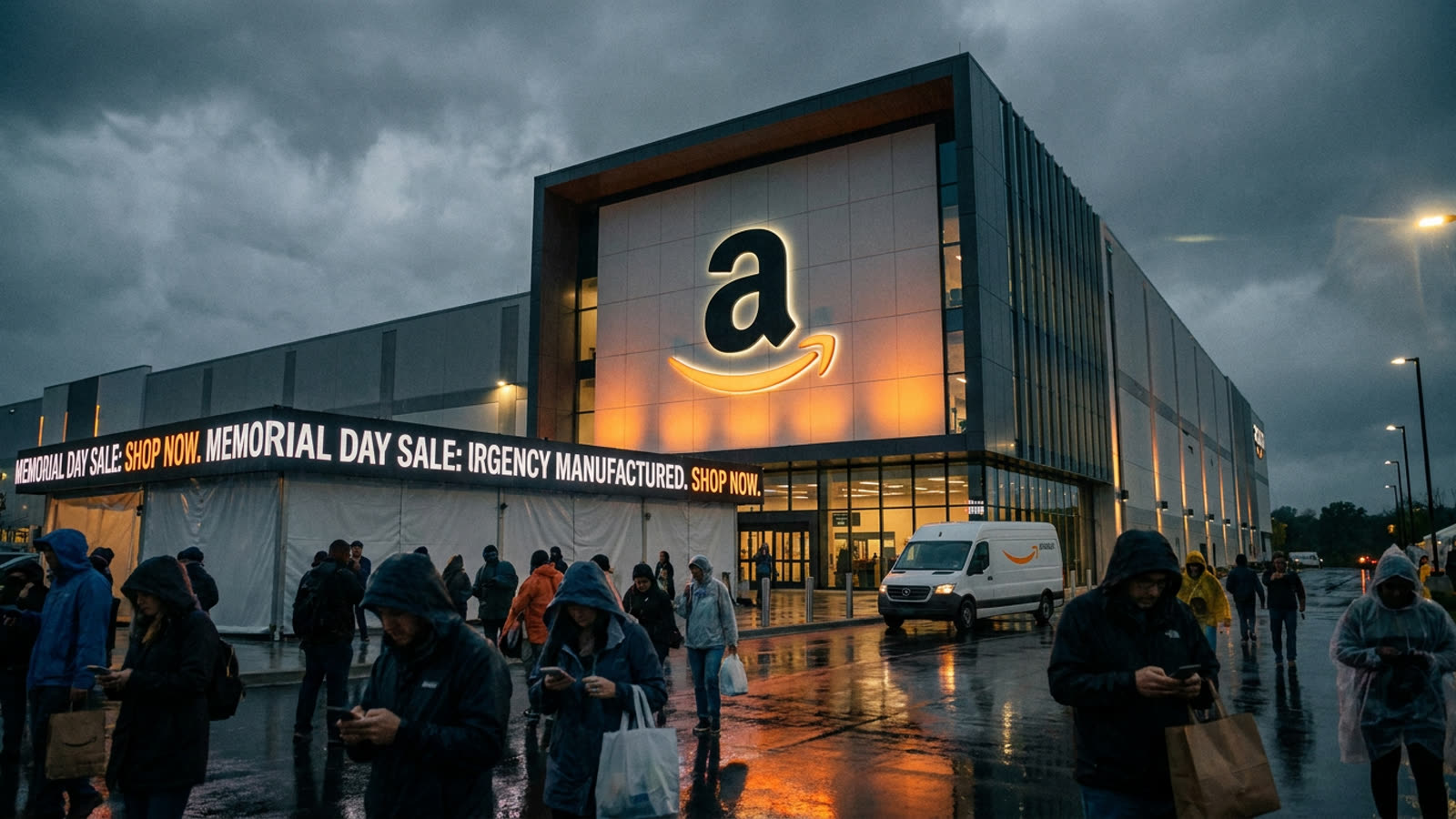
Amazon's Memorial Day sale, now in full swing, offers the annual spectacle of a trillion-dollar company pretending it desperately needs to move inventory. Lightning deals expire in hours. Countdown timers tick ominously. The message is clear: buy now or suffer the consequences of paying full price for a Ninja blender you weren't sure you wanted anyway.
The discounts are genuine enough—some premium items marked down 40 percent or more—but the event's true product is anxiety. Amazon has perfected what behavioral economists call "scarcity framing," transforming a long weekend into a high-stakes shopping emergency.
The democratization of luxury panic
What makes this year's sale notable is how thoroughly Amazon has absorbed the language of luxury retail. Categories once reserved for department store floors—premium skincare, designer-adjacent home goods, aspirational kitchen equipment—now populate the same interface as toilet paper and phone chargers. The company has learned that middle-class consumers will pay more attention to a discounted Le Creuset than a cheap knockoff, even when the knockoff would serve them perfectly well.
This is the real innovation: not lower prices, but higher aspirations packaged as savings.
The algorithm knows you're bored
Memorial Day weekend presents a particular opportunity. Americans are home, slightly restless, scrolling between barbecue preparations. Amazon's recommendation engine, trained on years of holiday behavior, knows exactly when to surface that air fryer you browsed in March. The timing is surgical.
The company won't disclose conversion rates, but industry analysts estimate holiday sales events drive purchases at roughly three times the normal rate—not because the deals are three times better, but because the psychological pressure is three times higher.
Our take
There's nothing wrong with buying things you need at lower prices. But Amazon's Memorial Day event isn't really about need—it's about transforming want into urgency and urgency into action. The company has built a machine that manufactures desire on a national scale, then offers to satisfy it at a discount. That's not a sale. That's a business model. Shop if you must, but perhaps let the lightning deal expire and see if you still want it Tuesday.