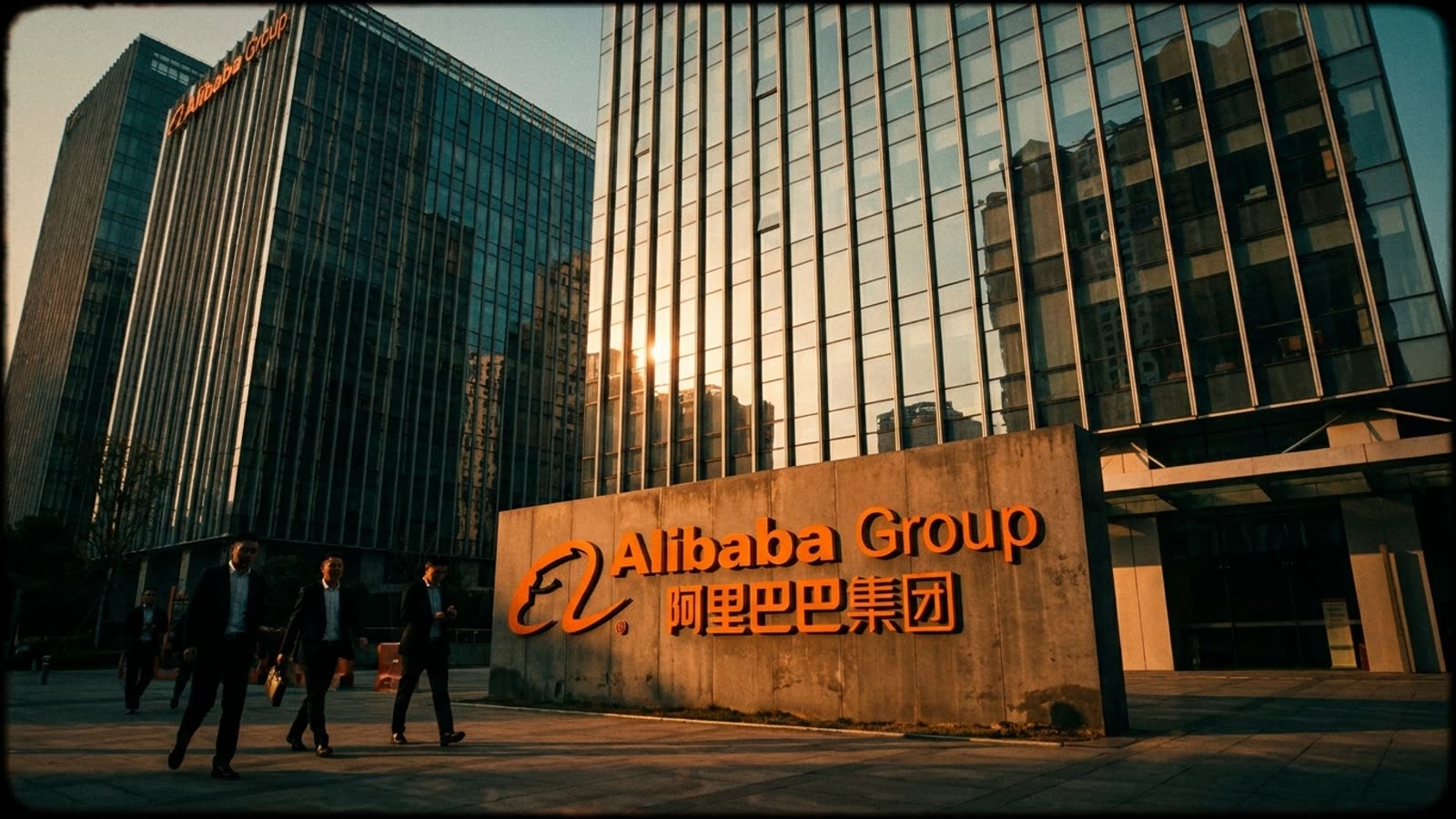
When a company worth hundreds of billions of dollars sues the United States Department of Defense, the filing itself becomes a geopolitical statement. Alibaba's decision to challenge its designation on the Pentagon's list of Chinese military companies is not primarily about winning in court — it is about forcing Washington to justify, in public and under oath, the evidentiary basis for its entire China containment strategy.
The lawsuit arrives at a moment when the list has become one of America's most potent economic weapons. Companies designated as Chinese military companies face automatic exclusion from federal contracts, heightened scrutiny from CFIUS, and a chilling effect on Western institutional investment. The designation requires no congressional vote, no formal adjudication, and until now, no meaningful legal challenge.
The list as soft sanction
The Pentagon's Section 1260H list, created by the 2021 National Defense Authorization Act, was designed to identify companies owned or controlled by China's military. But the criteria have expanded through successive administrations to include firms with any discernible connection to China's defense-industrial base — a definition capacious enough to capture semiconductor manufacturers, AI startups, and now, an e-commerce platform best known for Singles' Day sales.
Alibaba's inclusion last year puzzled even some China hawks. The company has no meaningful defense contracts. Its cloud division serves commercial clients. Its founder, Jack Ma, spent years cultivating relationships with American business leaders. The designation appeared to reflect a broader theory: that any Chinese technology company of sufficient scale is presumptively a national security threat.
What Alibaba wants — and what it cannot get
The lawsuit, filed in federal court, argues that the Pentagon failed to provide adequate notice or opportunity to respond before designation — a procedural argument that sidesteps the more explosive substantive question of whether the company actually aids China's military. Alibaba's lawyers are betting that American courts will enforce due process requirements even when national security is invoked.
They may be right on the law and irrelevant on the policy. Even if Alibaba wins delisting, the victory would be pyrrhic. American institutional investors have already adjusted their models. Supply chains have already been rerouted. The designation's damage is largely done.
Our take
Alibaba's lawsuit is less legal strategy than political theatre — a signal to Beijing that Chinese companies will not accept American designations passively, and a signal to Washington that the decoupling project will face friction. The suit will almost certainly fail to restore Alibaba's pre-designation status, but it may succeed in exposing the list's evidentiary thinness. That exposure matters: if the Pentagon cannot articulate why Alibaba is a military company, the entire designation regime looks less like national security policy and more like industrial protectionism dressed in camouflage.