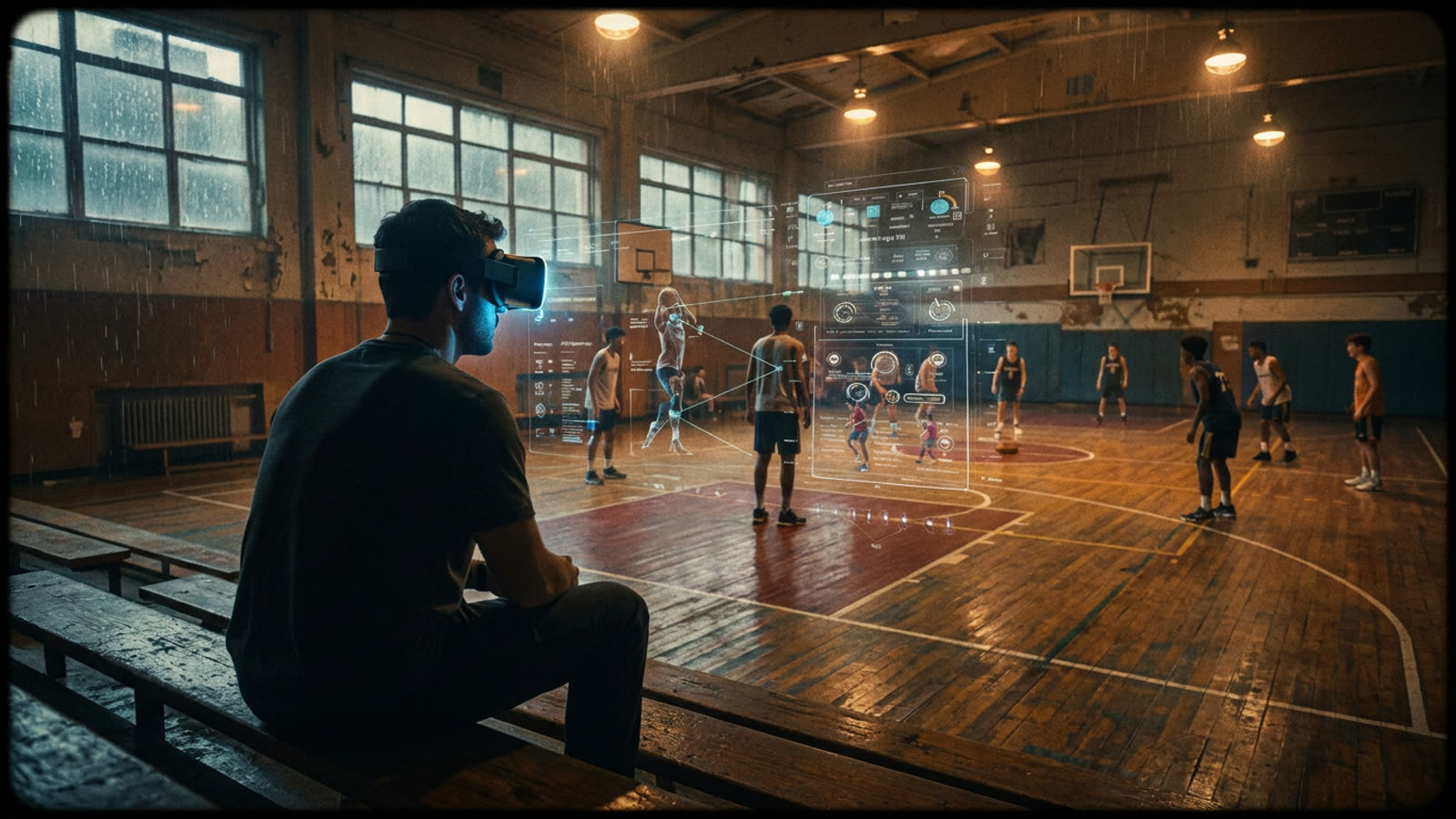
The traditional sports scout occupied a peculiar position in the athletic ecosystem: part statistician, part psychologist, part fortune teller. They sat in drafty gymnasiums and sun-scorched pitches, watching teenagers and imagining futures. Their currency was intuition, their edge was access, and their mystique was the ability to see what others could not. That job description is being rewritten in real time.
Machine learning systems now ingest video feeds from youth tournaments on four continents, tracking not just goals scored or points tallied but biomechanical signatures invisible to human perception. The angle of a striker's hip rotation during a shot. The millisecond delay between a point guard's visual acquisition of a passing lane and the initiation of the pass. The subtle asymmetry in a pitcher's shoulder that presages injury years before it manifests. These systems do not get tired, do not have biases toward players who remind them of past successes, and do not miss the prodigy playing in an obscure league because they happened to be watching someone else that weekend.
The democratization of discovery
The implications cut in unexpected directions. For decades, geography determined destiny in sports. A gifted midfielder born in Lagos faced structural barriers that a comparably talented player in London did not. Scouts had finite bandwidth; they concentrated on established pipelines. AI-driven platforms are flattening this hierarchy. Several major football clubs now subscribe to services that algorithmically rank youth players across dozens of countries, flagging anomalies that warrant human follow-up. The scout's role shifts from primary discoverer to validator and relationship-builder.
This democratization has limits. Access to quality video remains uneven. The algorithms are only as good as their training data, which skews toward leagues with sophisticated broadcast infrastructure. A teenager in rural Cameroon may still be invisible to the machines if no camera captures her play. Yet the trend line is clear: the cost of video capture is collapsing, smartphone footage is increasingly usable, and the informational moats that once protected well-resourced clubs are eroding.
What the machines miss
The most interesting question is not whether AI can identify talent — it demonstrably can — but what dimensions of athletic potential remain stubbornly opaque to computation. Scouts speak of intangibles with near-religious reverence: leadership, composure under pressure, coachability, the ineffable quality of making teammates better. These attributes manifest in subtle behavioral patterns that current systems struggle to quantify.
Some organizations are attempting to close this gap through natural language processing of interview transcripts and social media analysis, approaches that raise obvious ethical concerns about surveillance and privacy. Others argue that the intangibles are overrated, that scouts have historically used them as post-hoc rationalizations for gut decisions that were often wrong. The data suggests traditional scouting has a remarkably poor hit rate; most draft picks, in any sport, fail to meet expectations. Perhaps the human eye was never as discerning as the mythology suggested.
Our take
The romantic vision of the grizzled scout discovering a diamond in the rough makes for better cinema than the reality of algorithmic talent pipelines. But nostalgia should not obscure the genuine gains: more players from more places getting legitimate chances, fewer careers derailed by the geographic lottery of birth. The scouts who thrive in this new landscape will be those who embrace the machines as amplifiers rather than competitors, who understand that their value lies not in seeing what algorithms cannot but in the irreducibly human work of persuasion, mentorship, and judgment that follows discovery. The eye remains important. It is simply no longer sufficient.