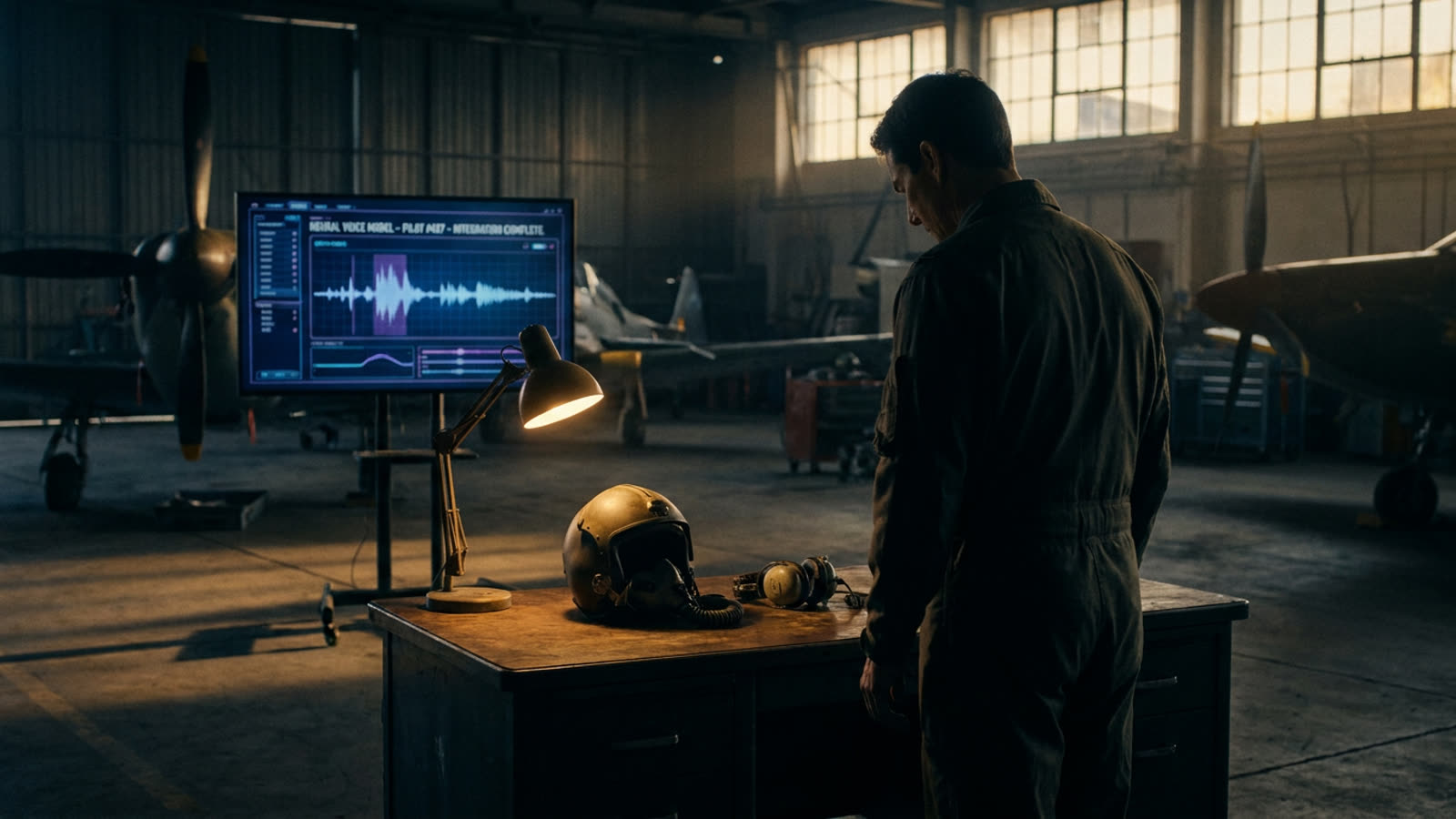
Somewhere in a flight simulator, a young pilot is receiving instruction from a voice that belongs to someone who died years ago. The instructor sounds authoritative, calm, experienced—because the original was. The original is also no longer alive to consent to this particular form of immortality.
Defense technology firms have begun deploying AI-generated voice clones of deceased military pilots in training programs, according to recent reporting. The technology synthesizes hours of cockpit recordings, debriefs, and communications to recreate not just a pilot's voice but their cadence, their teaching style, their way of explaining a tricky maneuver. The pitch to the Pentagon is compelling: preserve institutional knowledge, honor legacies, train the next generation with the wisdom of proven veterans.
The consent problem nobody wants to discuss
The legal framework for using a dead person's voice is, to put it charitably, underdeveloped. Estate rights vary wildly by jurisdiction. Military service members sign away many privacy expectations, but posthumous voice cloning wasn't contemplated in any enlistment contract signed before 2023. The families of these pilots may or may not have been consulted—the defense contractors involved have been notably vague on this point.
This isn't a celebrity deepfake for entertainment. It's the systematic extraction of a person's communicative essence for institutional purposes. The pilot who spent twenty years perfecting how to talk a nervous wingman through a night landing is now, in some sense, performing that service forever—without ever having agreed to it.
Why the military loves it anyway
The operational logic is hard to argue with. Experienced combat pilots are rare. Their knowledge is hard-won and poorly documented. When they die—in training accidents, in combat, of old age—decades of expertise vanish. If AI can preserve even a fraction of that institutional memory, the argument goes, isn't that a form of honoring their service?
The technology also sidesteps a persistent problem: living instructors retire, burn out, or simply aren't available at 3 AM when a trainee needs to run a simulation. A voice clone is infinitely patient, always available, and never files a grievance.
Our take
There's something deeply uncomfortable about a system that can resurrect the dead without asking them first—and something even more uncomfortable about how quickly we're normalizing it. The military has always had a complicated relationship with the bodies and identities of those who serve, but this feels like a new frontier. The dead pilots being cloned were real people with real families, not training assets to be optimized. At minimum, explicit consent frameworks and family notification should be non-negotiable. The fact that we're having this conversation after deployment, rather than before, tells you everything about how seriously the defense-tech complex takes these questions.