The conventional narrative about artificial intelligence and creative labor follows a predictable arc: machines learn to mimic human output, costs plummet, workers disappear. Voice acting was supposed to be the canary in this particular coal mine. Audiobook narration, video game dialogue, corporate training modules, GPS navigation — all seemed ripe for wholesale automation. The reality unfolding is considerably stranger and more instructive.
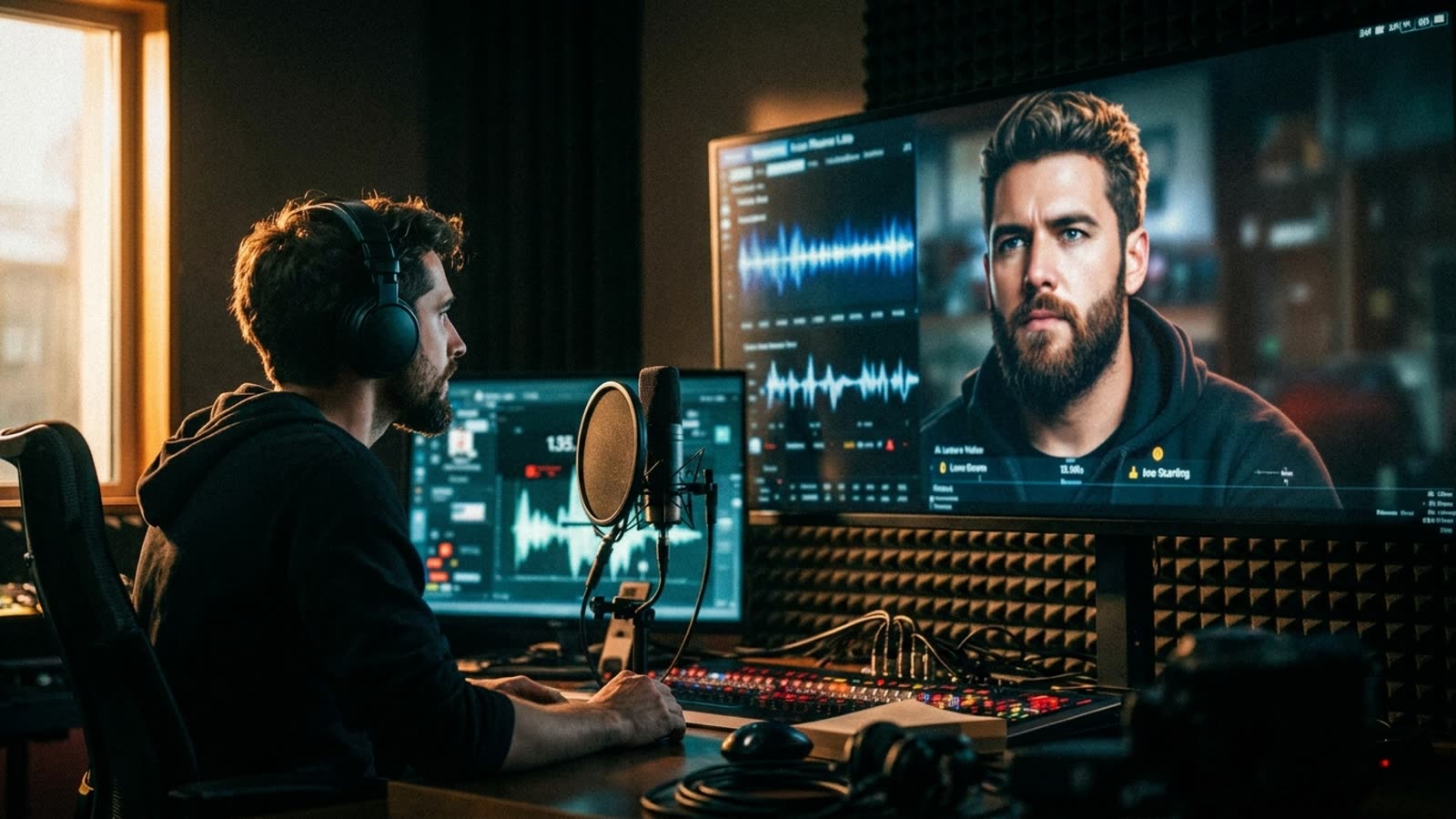
Voice actors are not being replaced so much as they are being disaggregated. Their work now exists in multiple temporal states simultaneously: the live performance, the licensed voice clone, the AI-assisted editing session where a human corrects synthetic output in real time. The profession has not contracted; it has fragmented into a constellation of new roles that bear only passing resemblance to what came before.
The clone economy
The economics of voice cloning have created a peculiar labor market. A working voice actor today might earn residuals from a synthetic version of themselves narrating budget audiobooks while simultaneously performing premium live sessions for clients who specifically want the ineffable quality of human spontaneity. The same voice exists in two price tiers, serving different market segments. Some performers have discovered that licensing their voice for AI training pays better than the original work ever did — a royalty stream from their own digital doppelgänger.
This has inverted traditional career incentives. Young voice actors once aspired to anonymity in commercial work while seeking recognition in prestige projects. Now distinctiveness is the entire game. A voice that sounds generically professional is worthless precisely because AI produces generic professionalism at near-zero marginal cost. The premium attaches to idiosyncrasy, to the qualities that resist algorithmic reproduction.
The new skill stack
The performers thriving in this landscape have developed competencies that would have seemed irrelevant a decade ago. They understand prompt engineering well enough to direct AI systems that generate first drafts of their own performances. They negotiate licensing agreements with the sophistication of intellectual property attorneys. They have learned to think of their voice as a brand asset requiring active management across multiple platforms and use cases.
Perhaps most surprisingly, many have become editors of synthetic speech rather than pure creators of original content. A human ear catching the uncanny valley moments in AI-generated dialogue, smoothing the prosody, adding the micro-hesitations that signal authentic thought — this turns out to be skilled labor that commands real compensation. The voice actor has become, in part, a quality-control specialist for their own artificial replacement.
Our take
The voice acting profession offers a template for how AI disruption actually unfolds in creative fields — not as clean replacement but as messy hybridization. The workers who survive are those who recognize that their value was never really in the mechanical production of sound waves. It was in judgment, taste, and the irreducible strangeness of individual human presence. Those qualities have become more valuable, not less, precisely because everything else can now be synthesized. The machines have not made human performers obsolete. They have clarified, with brutal efficiency, what the human contribution actually was all along.