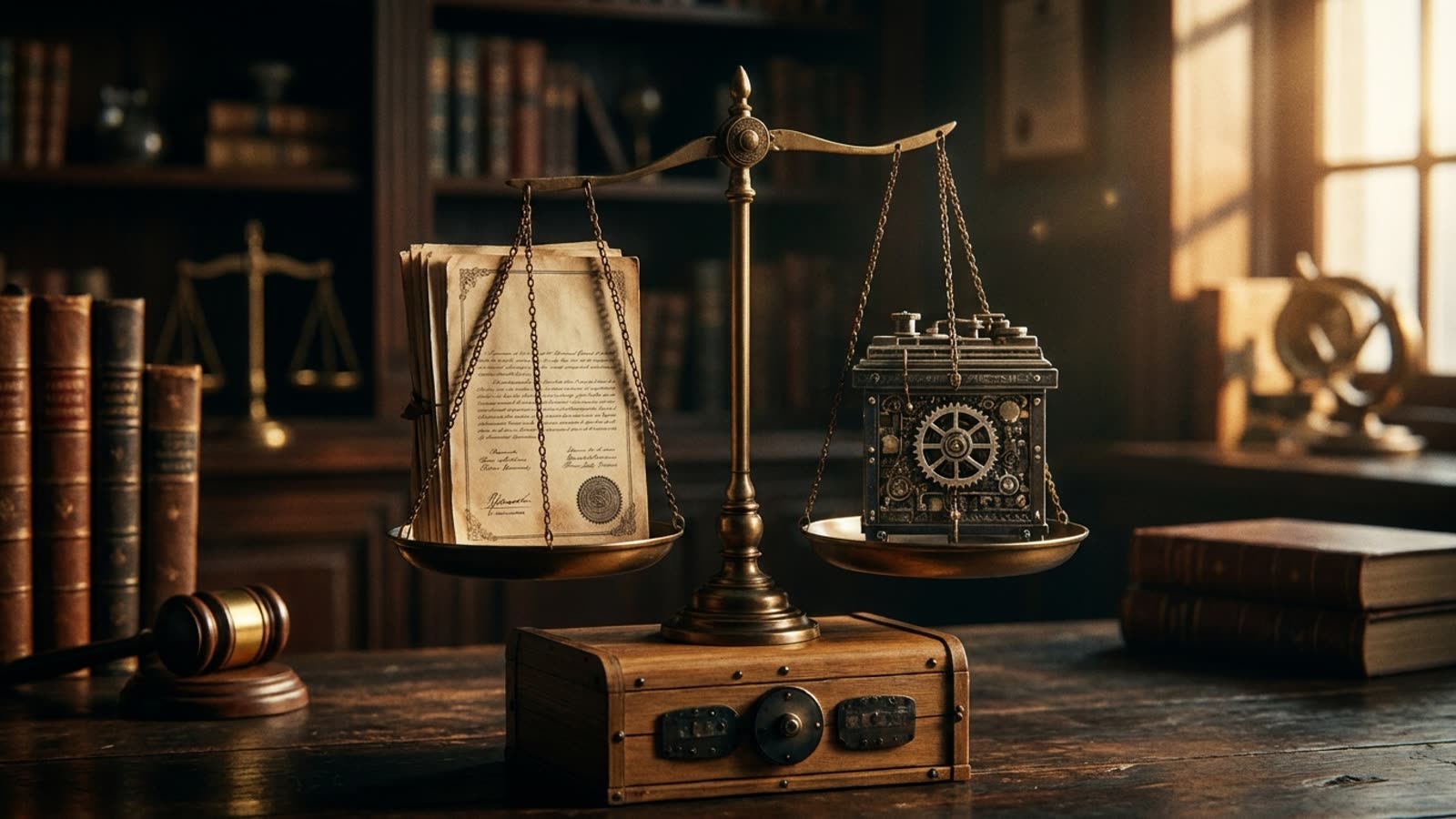
The patent attorney has long occupied a peculiar position in the knowledge economy: part lawyer, part scientist, part translator between the worlds of invention and legal protection. For decades, the job required grinding through prior art searches that could take weeks, drafting claims with the precision of a watchmaker, and maintaining encyclopedic knowledge of both technical domains and case law. Artificial intelligence has not eliminated this work. It has compressed it, accelerated it, and fundamentally altered what the profession values.
The transformation began quietly. Large language models proved unexpectedly adept at the preliminary stages of patent work—conducting prior art searches across millions of documents, identifying relevant claims in existing patents, and even generating first drafts of applications. Tasks that once consumed forty hours of billable time now take four. The economics of patent prosecution have shifted accordingly.
The new division of labor
What remains for humans is precisely what machines cannot do: judgment. Determining whether an invention is truly novel requires understanding not just what exists but what matters. Crafting claims that will survive litigation demands anticipating how competitors and courts will interpret language years hence. Advising clients on patent strategy means grasping business models, competitive dynamics, and technological trajectories that no training dataset fully captures.
Senior practitioners report spending far more time on these high-level questions and far less on the mechanical work that once defined junior roles. The apprenticeship model that trained generations of patent attorneys—learning by doing hundreds of prior art searches, drafting dozens of applications under supervision—has been disrupted. Firms now struggle to develop talent when the rote work that built expertise has been automated away.
The access paradox
AI tools have dramatically reduced the cost of basic patent work, theoretically democratizing access to intellectual property protection. A startup can now generate a reasonable first draft of a patent application for a fraction of what it once cost. Yet this accessibility creates its own complications. The patent offices face surging application volumes. The quality of AI-assisted filings varies wildly. And the strategic advantages that sophisticated patent counsel provide have become more valuable precisely because the baseline work has been commoditized.
The profession is bifurcating. At one end, AI-augmented patent mills process high-volume, routine applications with minimal human oversight. At the other, elite practitioners command premium fees for the strategic thinking and judgment that machines cannot replicate. The middle—the journeyman patent attorney handling a mixed portfolio of work—is being squeezed from both directions.
Our take
Patent law offers a preview of how AI will reshape professional services more broadly. The technology does not simply eliminate jobs; it restructures them, compressing some tasks while elevating others. The patent attorneys who thrive are those who recognized early that their value was never in the searching or the drafting but in the thinking. The profession's future belongs to those who can do what the machines cannot: exercise judgment under uncertainty, navigate human institutions, and understand what innovation actually means. That is a smaller workforce, but a more valuable one.