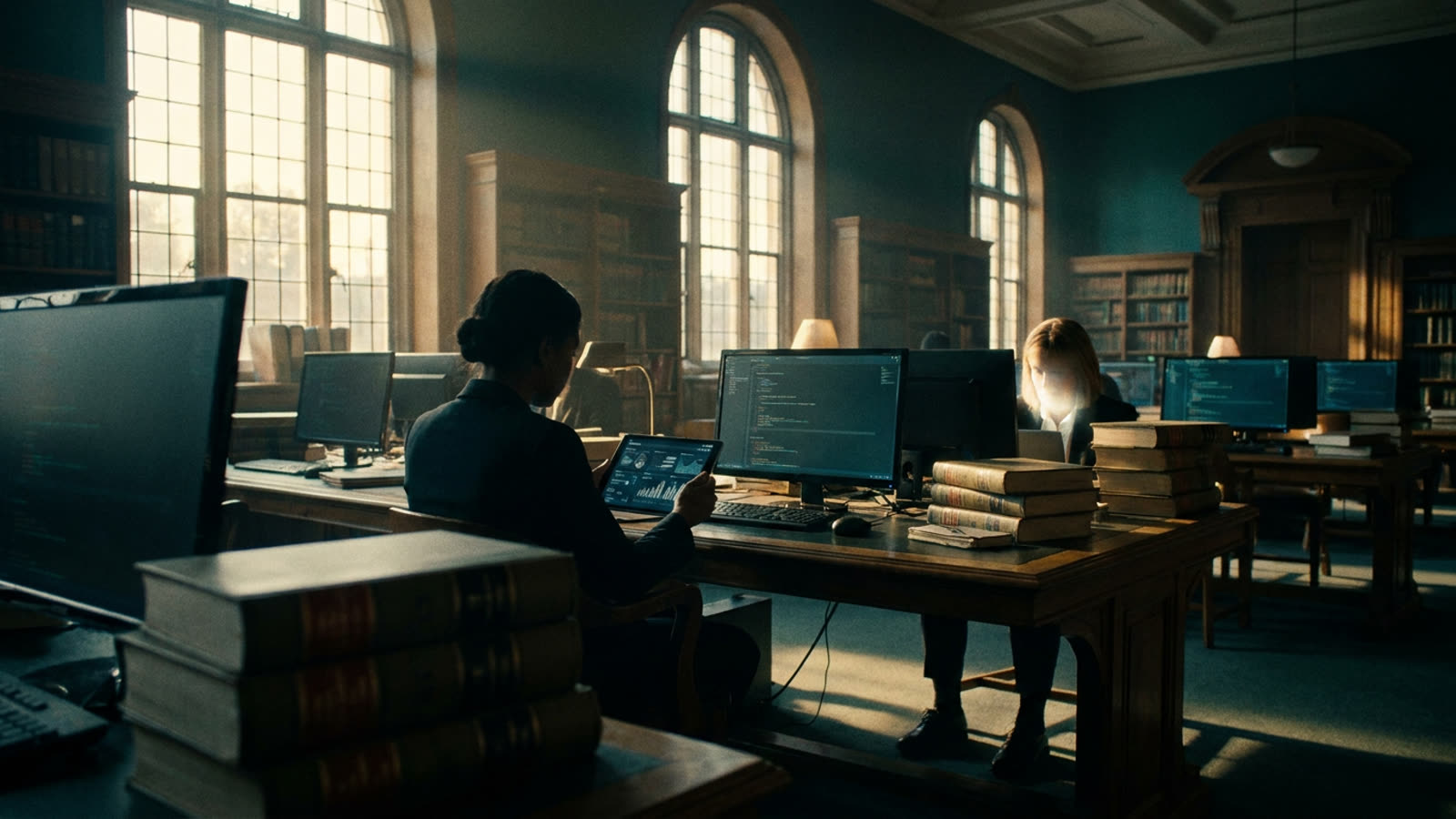
The paralegal profession has always existed in a curious liminal space—too skilled for clerical work, too constrained for courtroom drama, essential but invisible. Now that liminal space is being reshaped by tools that can read contracts faster than any human, and the transformation reveals something important about how AI actually changes work: not through the sudden obsolescence the headlines promise, but through a gradual redefinition of value.
Paralegals have spent decades mastering the art of finding needles in documentary haystacks. Due diligence on a corporate acquisition might require reviewing tens of thousands of documents for specific clauses, obligations, or liabilities. A skilled paralegal could process perhaps a hundred documents per hour with reasonable accuracy. The new generation of AI-powered document review platforms can process thousands in the same time, flagging relevant passages with accuracy rates that, in controlled studies, often match or exceed human reviewers.
The productivity paradox
The obvious conclusion—that firms need fewer paralegals—has proven too simple. What's actually happening is more interesting. The volume of documents subject to legal review has expanded dramatically because reviewing them has become economically feasible. Matters that once received cursory examination due to cost constraints now get thorough AI-assisted analysis. The paralegal's role has shifted from reading documents to supervising the machines that read them, validating AI outputs, and handling the edge cases that confuse the algorithms.
This is the productivity paradox that AI keeps producing across professions: tools that reduce the labor required for a task often increase the total amount of that task performed. The paralegals who thrive are those who've learned to think of AI as expanding their jurisdiction rather than eliminating their function.
What the machines still miss
AI document review excels at pattern matching and classification. It struggles with context that requires understanding relationships between parties, historical business practices, or the subtle implications of unusual phrasing. A contract clause that looks standard might be significant because of who signed it, or when, or what was happening in the broader negotiation. Human paralegals increasingly focus on precisely these contextual judgments—the interpretive work that requires knowing not just what a document says but what it means.
The skills that matter have shifted accordingly. Facility with technology has become table stakes. What distinguishes valuable paralegals now is the ability to train and correct AI systems, to recognize when algorithmic confidence is misplaced, and to articulate the contextual knowledge that machines lack. The profession is becoming more cognitively demanding even as its most tedious tasks disappear.
Our take
The paralegal experience offers a preview of how AI will transform knowledge work more broadly: not through the clean replacement scenarios that make for dramatic headlines, but through a messier process of task redistribution and role redefinition. The humans who adapt will find their work more interesting and their judgment more valued. The humans who don't will discover that competing with machines on mechanical tasks is a losing proposition. The future belongs to those who learn to supervise what they once performed.