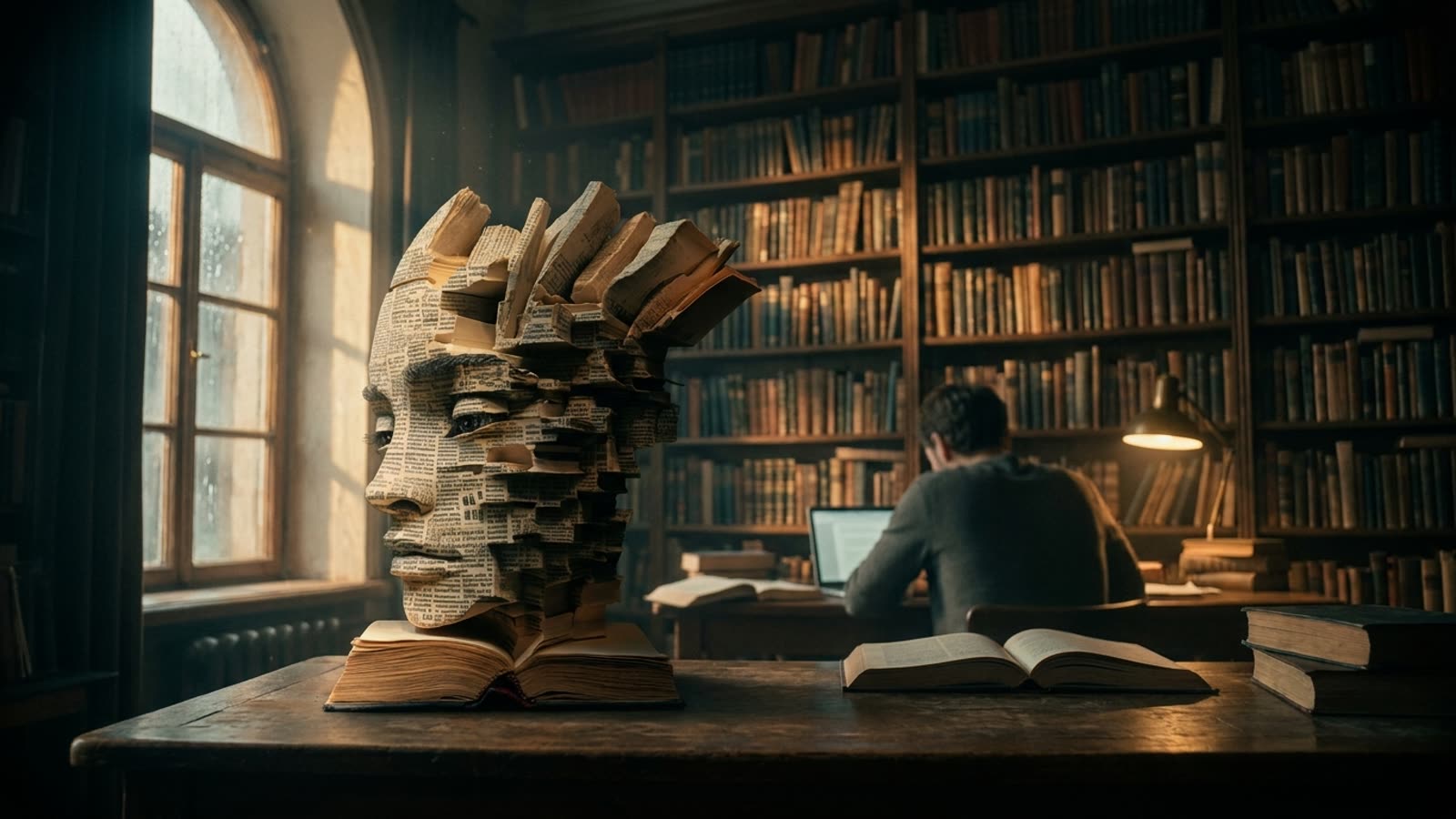
Literary translation has always been an act of controlled betrayal. The Italian proverb traduttore, traditore—translator, traitor—captures the impossible task: to render not just words but rhythm, cultural resonance, and the ineffable music of a sentence into another tongue. For centuries, this work belonged exclusively to humans who spent years mastering two languages and the vast cultural hinterlands between them. That exclusivity is ending.
The shift is not the apocalyptic replacement that headlines suggest. Instead, something subtler is unfolding in publishing houses, literary agencies, and the cramped home offices of freelance translators worldwide. AI has become a collaborator, a first-draft generator, and an uncomfortable mirror reflecting which aspects of translation are mechanical and which remain stubbornly human.
The new workflow
A decade ago, professional literary translators dismissed machine translation as a curiosity useful only for instruction manuals and corporate memos. The neural networks that power contemporary AI have changed the calculus. Modern systems can produce readable prose that captures surface meaning with startling accuracy. For straightforward narrative passages—a character walking through a room, dialogue establishing basic facts—the machine output often requires only light revision.
This has reshaped how translators work. Many now begin with AI-generated drafts, treating them as raw material to sculpt rather than blank pages to fill. The time saved on mechanical rendering can theoretically be redirected toward the genuinely difficult work: untangling wordplay, preserving voice, making cultural references land for new audiences. In practice, the economics are messier. Publishers, aware that AI accelerates production, have begun expecting faster turnaround times. Some have quietly reduced per-word rates, reasoning that the labor has diminished.
What machines still miss
The limits of AI translation reveal themselves precisely where literature becomes most literary. Consider a novel whose narrator speaks in a regional dialect that signals class, geography, and historical moment to native readers. The machine recognizes the words but not the social freight they carry. It cannot decide whether to render that dialect into an equivalent regional voice in the target language—a choice that risks false equivalence—or to flatten it into standard prose and lose the characterization entirely.
Poetry presents even starker challenges. A sonnet's meaning lives in the tension between what the words say and how they sound, the way stressed syllables fall against the meter, the half-rhymes that create unease. AI can identify these formal elements; it cannot yet feel why a poet chose to break a pattern in line nine. The translator's judgment—what to preserve, what to sacrifice, what to invent as compensation—remains irreducibly human.
The emerging hybrid
Younger translators entering the field are adapting in ways their predecessors might not recognize. They train themselves not just in source and target languages but in prompt engineering, learning to coax better raw material from AI systems. They develop editorial instincts for detecting machine tells: the slightly flattened diction, the tendency toward the most common rather than the most apt word choice, the occasional confident hallucination of meaning that was never in the original.
Some established translators refuse to engage with AI at all, viewing it as a corruption of the craft. Others have embraced it so thoroughly that their role has shifted from creator to curator. The profession is stratifying. Premium literary translation—the kind that wins awards and appears in prestigious journals—still commands human expertise and human rates. Commercial translation, the bread-and-butter work that pays most translators' rent, increasingly involves AI in the loop and pays accordingly less.
Our take
The honest assessment is that AI has made literary translation simultaneously easier and harder. Easier because the mechanical drudgery has diminished. Harder because the profession's economic foundations are eroding while its highest artistic demands remain unchanged. The translators who will thrive are those who can articulate what they provide that machines cannot: not just linguistic competence but cultural judgment, aesthetic sensibility, and the willingness to make the hundreds of small creative decisions that transform a text from one world into another. The traitor's art endures, but the terms of the betrayal are being renegotiated.