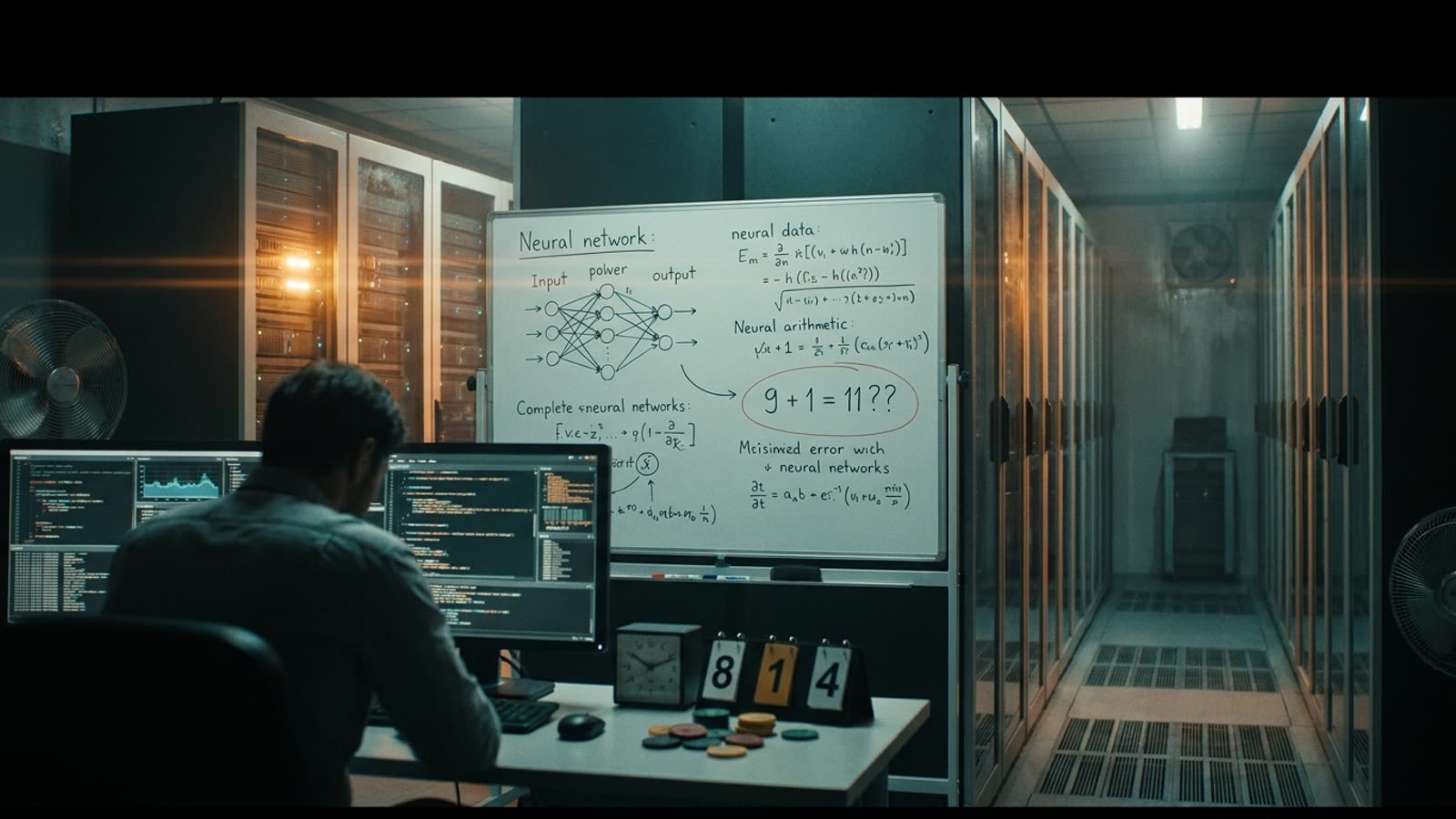
The actuary has always been capitalism's designated worrier, the professional whose entire existence depends on quantifying the unquantifiable — when you will die, whether your house will flood, how much your medical bills will cost. For centuries, this work proceeded with the plodding certainty of mortality tables and compound interest. Then artificial intelligence arrived, and the profession discovered it had been preparing for obsolescence all along.
Actuarial science emerged in its modern form during the seventeenth century, when Edmund Halley — yes, the comet Halley — constructed the first proper life table based on records from Breslau. The methodology remained remarkably stable for three hundred years: gather data, apply statistical models, price risk, repeat. Actuaries became the priesthood of probability, their fellowship exams legendarily difficult, their career paths legendarily secure.
What machine learning introduced was not merely faster computation but a fundamentally different approach to pattern recognition. Traditional actuarial models specify relationships in advance — age correlates with mortality, smoking correlates with lung disease, proximity to coastlines correlates with flood risk. Neural networks discover relationships that humans never thought to look for, finding signal in the noise of thousands of variables simultaneously.
The pricing transformation
Consider auto insurance, where the shift is already well advanced. Classical pricing relied on perhaps two dozen rating factors: age, gender, driving history, vehicle type, ZIP code. Modern telematics and machine learning systems ingest continuous streams of data — acceleration patterns, braking frequency, time-of-day driving habits, even phone usage while driving. The granularity of risk assessment has increased by orders of magnitude.
This creates genuine improvements in accuracy. Insurers can now identify low-risk drivers who would have been overcharged under blunt demographic proxies, and high-risk drivers who would have been undercharged. The statistical term is "lift" — the improvement in predictive power — and the lift from machine learning models over traditional generalized linear models routinely exceeds thirty percent in mortality and morbidity predictions.
But accuracy is not the only consideration. Actuaries have always served as a check on commercial enthusiasm, the professionals who tell underwriters that a risk is mispriced even when the premium looks attractive. When the model is a black box, that oversight function becomes harder to perform.
The new job description
The actuaries who are thriving in this environment have become something closer to translators. They understand enough about machine learning architectures to interrogate model behavior, enough about insurance regulation to ensure compliance, and enough about traditional statistics to explain why a neural network's predictions make actuarial sense — or don't.
Regulators have complicated matters by demanding model explainability. In the European Union and increasingly in American states, insurers cannot simply deploy a black-box algorithm that charges one customer twice as much as another without being able to articulate why. This has created a cottage industry in "interpretable machine learning," techniques for reverse-engineering neural networks into something that resembles traditional actuarial reasoning.
The fellowship exams are changing too. The Society of Actuaries now includes predictive analytics modules that would have been unrecognizable a decade ago. The profession is explicitly training its next generation to work alongside algorithms rather than compete with them.
What machines still cannot do
For all the transformation, certain actuarial functions remain stubbornly human. Reserving — the estimation of future claims on policies already written — requires judgment about legal environments, regulatory changes, and social inflation that no historical dataset fully captures. Catastrophe modeling for novel risks like cyberattacks or pandemics demands scenario construction that goes beyond pattern matching. And the fundamental ethical questions about who should pay for risk, and how much, remain philosophical rather than computational.
Our take
The actuarial profession's encounter with artificial intelligence is a preview of what awaits most knowledge work. The machines are not replacing actuaries; they are replacing the specific tasks that made actuaries valuable in the twentieth century. What remains is the judgment, the regulatory navigation, and the willingness to tell executives that the model is wrong. The actuaries who recognized this early are thriving. The ones who assumed their fellowship credentials were a permanent moat are discovering that three centuries of stability was not a guarantee but an anomaly.