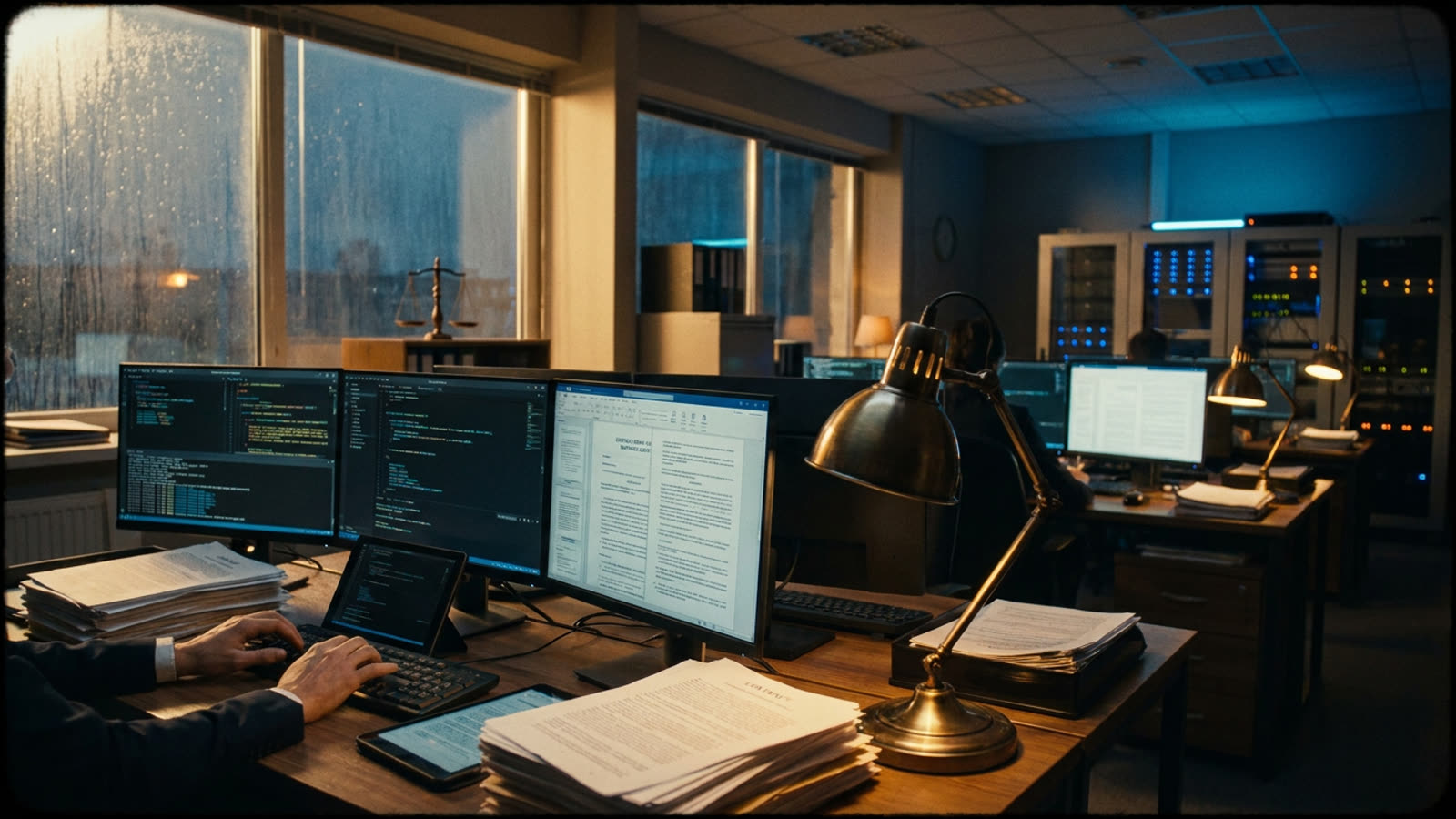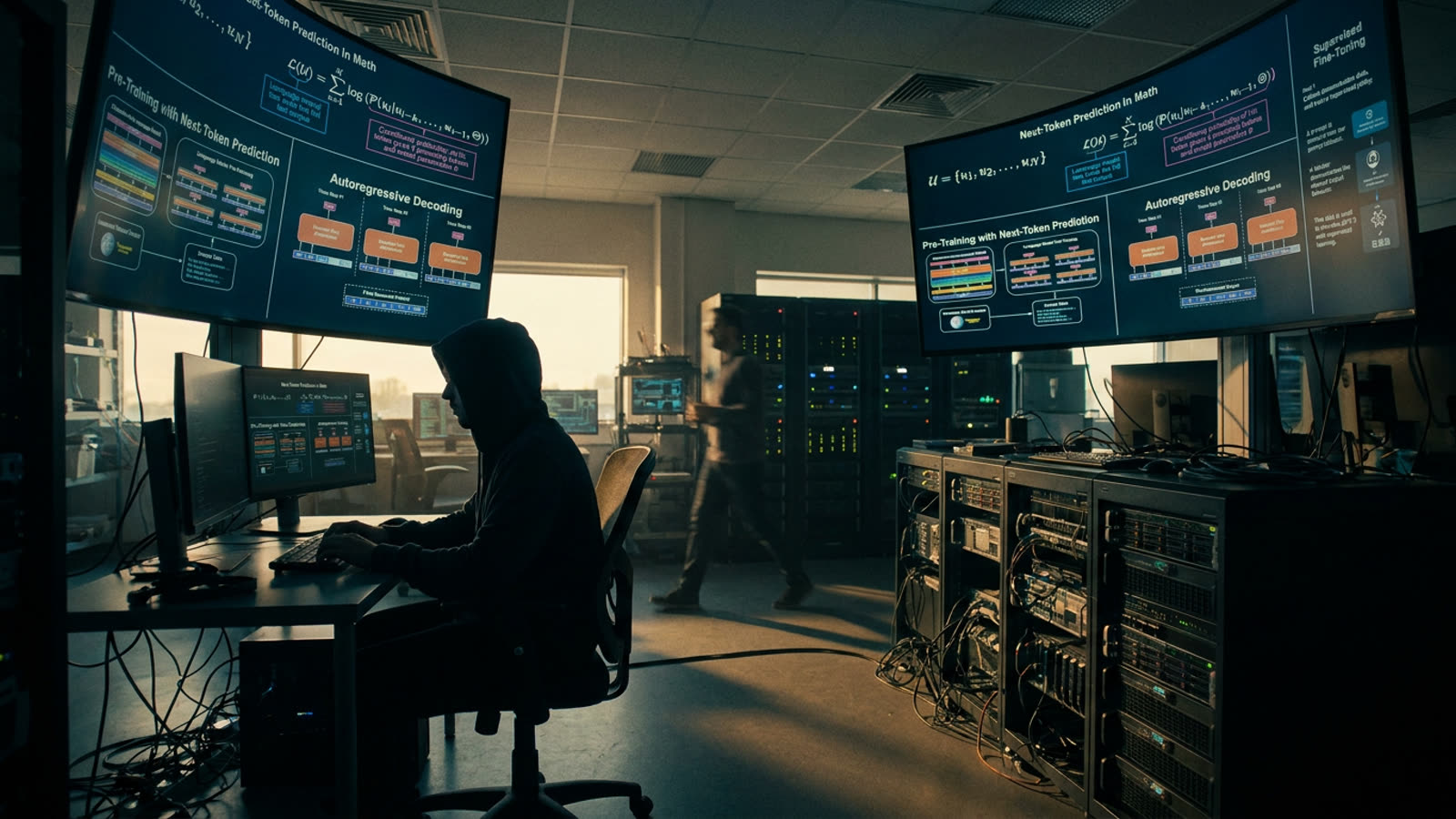
The actuary has always been an unusual creature in the corporate ecosystem: a mathematician who speaks fluent spreadsheet, a fortune-teller with a statistics degree, a professional pessimist paid handsomely to calculate the probability of your untimely demise. For more than two centuries, actuaries have been the quiet backbone of insurance, pensions, and risk management, building elaborate models to price uncertainty itself.
Now they are discovering what it feels like when a machine learns to do the same thing in seconds.
The old craft meets the new engine
Traditional actuarial work involves constructing mortality tables, projecting cash flows, and stress-testing portfolios against scenarios ranging from pandemics to interest-rate shocks. The work is painstaking, iterative, and requires years of training — the actuarial exam sequence is notoriously brutal, with pass rates often below thirty percent and a median completion time stretching into the better part of a decade.
Machine learning models, by contrast, can ingest decades of claims data and surface patterns that would take a human team months to identify. Gradient-boosted trees and neural networks now routinely outperform traditional generalized linear models in predicting claim frequency and severity. The algorithms do not need coffee breaks, and they never complain about the seventh revision to a reserving assumption.
This does not mean actuaries are facing extinction. What it means is that the nature of their work is shifting beneath their feet, often faster than professional bodies can update their syllabi.
From calculator to translator
The actuaries who thrive in this environment are increasingly those who can serve as interpreters between the black box and the boardroom. A neural network might flag that policyholders in a certain postal code cluster have elevated lapse risk, but it cannot explain why in terms a regulator will accept. It cannot testify before a state insurance commissioner. It cannot exercise the professional judgment required when the model's training data predates a novel risk — say, a new class of autonomous vehicles or a previously unknown pathogen.
The emerging division of labor looks something like this: machines handle the heavy computational lifting, while humans focus on validation, communication, and the irreducibly judgmental questions. Is this model fair? Does it comply with anti-discrimination statutes? What happens when it encounters a scenario outside its training distribution?
This is not a comfortable transition for a profession that prided itself on being the quantitative elite. Some actuaries have embraced the change, adding Python and machine learning to their toolkit. Others have retreated into regulatory niches where human sign-off remains legally mandated. A few have left for data science roles at technology companies, where the pay is higher and the credentialing requirements less medieval.
The certification paradox
Professional actuarial societies face a peculiar dilemma. Their examinations were designed to ensure rigor and gatekeep entry into a high-trust profession. But the skills those exams test — manual calculation of commutation functions, hand-derivation of survival models — are precisely the skills most easily automated. Meanwhile, the skills that matter most in an AI-augmented environment — critical evaluation of algorithmic output, ethical reasoning about fairness, communication with non-technical stakeholders — are harder to examine and slower to be incorporated into the curriculum.
The result is a credentialing system that may be selecting for the wrong competencies, producing graduates exquisitely trained for a job that is rapidly ceasing to exist in its traditional form.
Our take
The actuarial profession is not dying; it is metamorphosing. The actuaries who will flourish are those who recognize that their value no longer lies in being the fastest calculator in the room — that race was lost the moment GPUs became cheap — but in being the most trusted interpreter of what the calculations mean. The machines can tell you the probability. The human still has to decide what to do about it.