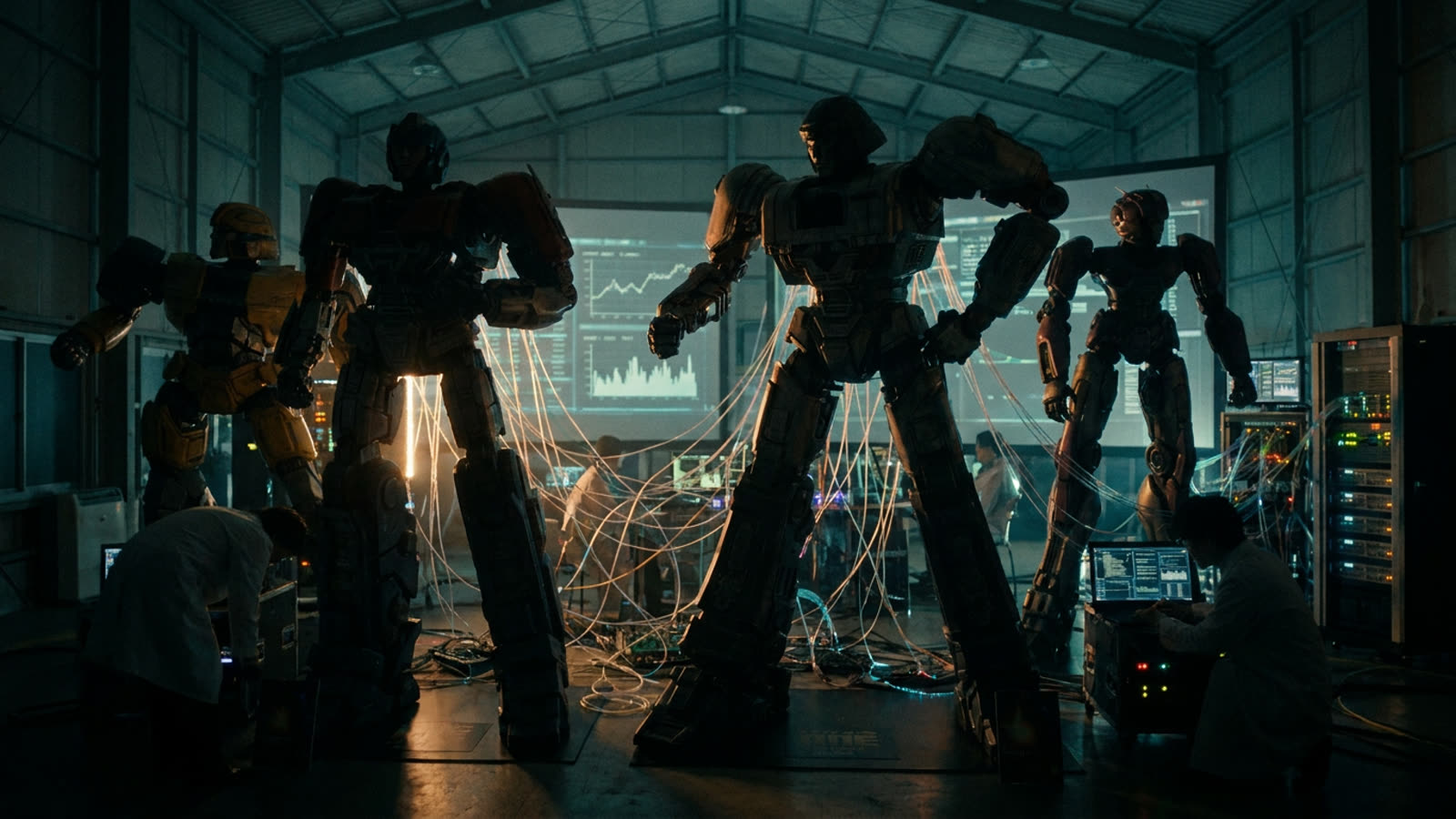
The most instructive way to understand artificial intelligence is to study where it fails. Not the spectacular failures that make headlines—the hallucinated legal citations, the confidently wrong medical advice—but the quieter, more structural incapacities that persist despite billions of parameters and ever-larger training runs. These gaps are not bugs awaiting patches. They are features of how these systems work, and they illuminate the vast distance between statistical pattern-matching and what we casually call thinking.
Consider counting. Ask a large language model to count the number of times the letter 'r' appears in the word 'strawberry' and it will often get it wrong. This is not a processing limitation or a memory constraint. It reflects something deeper: these systems do not see letters. They see tokens—chunks of text that bear only an approximate relationship to the characters humans perceive. The model has never looked at a word the way a child sounds one out. It has ingested statistical relationships between token sequences at a scale no human could comprehend, but it has never actually read anything.
The absence of world models
Perhaps the most consequential limitation is that language models do not possess what cognitive scientists call a world model—an internal representation of how physical and social reality operates that can be queried and updated. When a human reads that a glass fell off a table, they instantly simulate the fall, the impact, the shatter. A language model predicts what words typically follow "the glass fell off the table" based on its training corpus. The outputs may be indistinguishable in many contexts, but the underlying process is categorically different.
This distinction matters enormously for reliability. A world model allows humans to recognize when a conclusion violates physical law or social plausibility, even if the sentence is grammatically perfect. Language models lack this backstop. They will confidently describe a bridge made of paper supporting truck traffic if the statistical patterns in their training data happen to align that way. The fluency is real; the understanding is not.
Reasoning versus pattern completion
The industry has invested heavily in making models appear to reason. Chain-of-thought prompting, scratchpad techniques, and reinforcement learning from human feedback have all improved performance on reasoning benchmarks. But benchmark performance and genuine reasoning are not the same thing. When researchers test models on problems that are structurally identical to training examples but superficially different—changing names, numbers, or contexts—performance often collapses in ways that reveal the underlying pattern-matching.
Genuine reasoning involves constructing novel inferential chains from first principles. It requires knowing that you do not know something, recognizing when a problem demands information you lack, and seeking that information. Language models cannot do this. They generate text that resembles reasoning, which is useful for many applications but dangerous when mistaken for the real thing.
The memory problem
Human intelligence is inseparable from memory—not just retrieval, but the continuous integration of new experience into an evolving understanding of the world. Language models have no persistent memory across conversations. Each interaction begins from the same frozen state. They cannot learn from being corrected, cannot update their beliefs based on new evidence, cannot grow. The context window is not memory; it is a temporary buffer that vanishes the moment the session ends.
This limitation is often obscured by retrieval-augmented systems that bolt external databases onto language models. These hybrids are genuinely useful, but they do not solve the fundamental problem. The model itself remains static, a snapshot of statistical relationships from a training run that ended at a fixed point in time.
Our take
None of this diminishes what language models have achieved. They are extraordinary tools for drafting, summarizing, translating, and brainstorming. They have democratized access to competent prose and made certain knowledge work dramatically more efficient. But the hype cycle has consistently conflated tool and thinker, fluency and understanding, impressive outputs and genuine intelligence. The limitations are not temporary inconveniences on the road to artificial general intelligence. They are structural features of systems that learn statistical patterns from text. Knowing what these systems cannot do is the beginning of using them wisely.