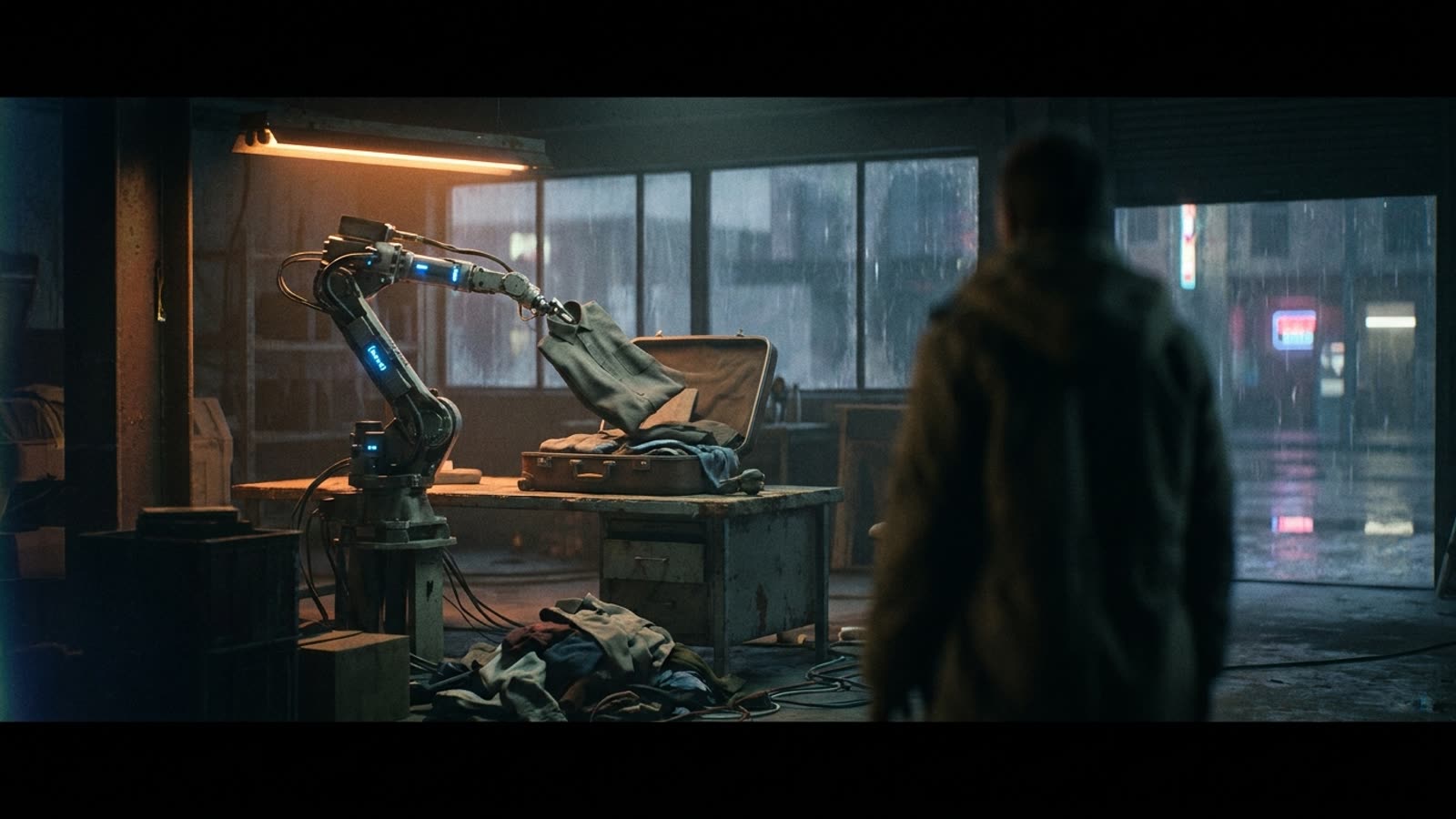
The most capable AI systems on Earth have never stubbed a toe, never felt the particular dread of a Sunday evening, never startled at a loud noise. This is not a temporary engineering constraint to be solved in the next version. It is the defining characteristic of how these systems relate to reality, and it explains more about their limitations than any benchmark ever could.
Large language models learn about the world exclusively through text—billions of documents describing human experience rather than any direct encounter with it. They know that fire is hot because countless sentences say so, not because heat has ever meant anything to them. This creates a peculiar kind of intelligence: vast, articulate, and fundamentally disembodied.
The map is not the territory
Cognitive scientists have long argued that human intelligence is inseparable from having a body that moves through space, feels pain, gets hungry, and dies. Our concepts of time, causation, and even abstract mathematics appear to be grounded in physical experience. When you understand that an argument has "weight" or that a relationship has "distance," you are drawing on bodily metaphors so deep they feel like pure logic.
AI systems lack this grounding entirely. They can discuss the sensation of burning with clinical precision, cite medical literature on thermal injuries, and even generate plausible first-person accounts of pain. But they are performing a sophisticated pattern-matching operation on descriptions of burning, not accessing anything resembling the experience itself. The distinction matters more than it might seem.
Where the gap shows
The embodiment gap surfaces in predictable ways. Ask a language model to describe how to catch a ball, and it will produce reasonable instructions. Ask it to actually coordinate the micro-adjustments of hand, eye, and posture that a child performs unconsciously, and you encounter a void. The model has read about catching; it has never caught.
More subtly, the gap appears in social reasoning. Humans navigate conversations using a constant stream of embodied cues—the slight tension in someone's shoulders, the half-second pause before a response, the way a room's energy shifts when someone enters. Language models see only the transcript, missing the vast majority of what humans actually communicate.
This is why AI-generated text can feel uncanny even when it is technically fluent. The words are correct, but they emerge from something that has never needed to survive, never feared, never wanted. The absence leaves traces.
Why robotics is harder than it looks
The obvious response is to give AI systems bodies—to build robots that can touch, move, and sense. Researchers have pursued this for decades, and progress remains halting. The problem is that embodiment is not a feature to be bolted on; it is a different way of being intelligent altogether.
A robot that can fold laundry must understand fabric physics, yes, but also the ten thousand variations in how a shirt might be crumpled, the way lighting changes depth perception, the unpredictable resistance of damp cotton. Humans handle this effortlessly because our brains evolved precisely for such tasks. Teaching a machine to do it requires either brute-force simulation of every possible scenario or some breakthrough in how machines generalize from physical experience. Neither approach has cracked the problem.
Our take
The embodiment gap is not a bug to be patched; it is a fundamental feature of how current AI systems work. Recognizing this does not diminish what language models can do—they remain extraordinary tools for processing and generating text. But it should temper expectations about what they understand. An AI that has read every book ever written about love still knows less about it than a teenager with a broken heart. That asymmetry is worth remembering every time we mistake fluency for comprehension.