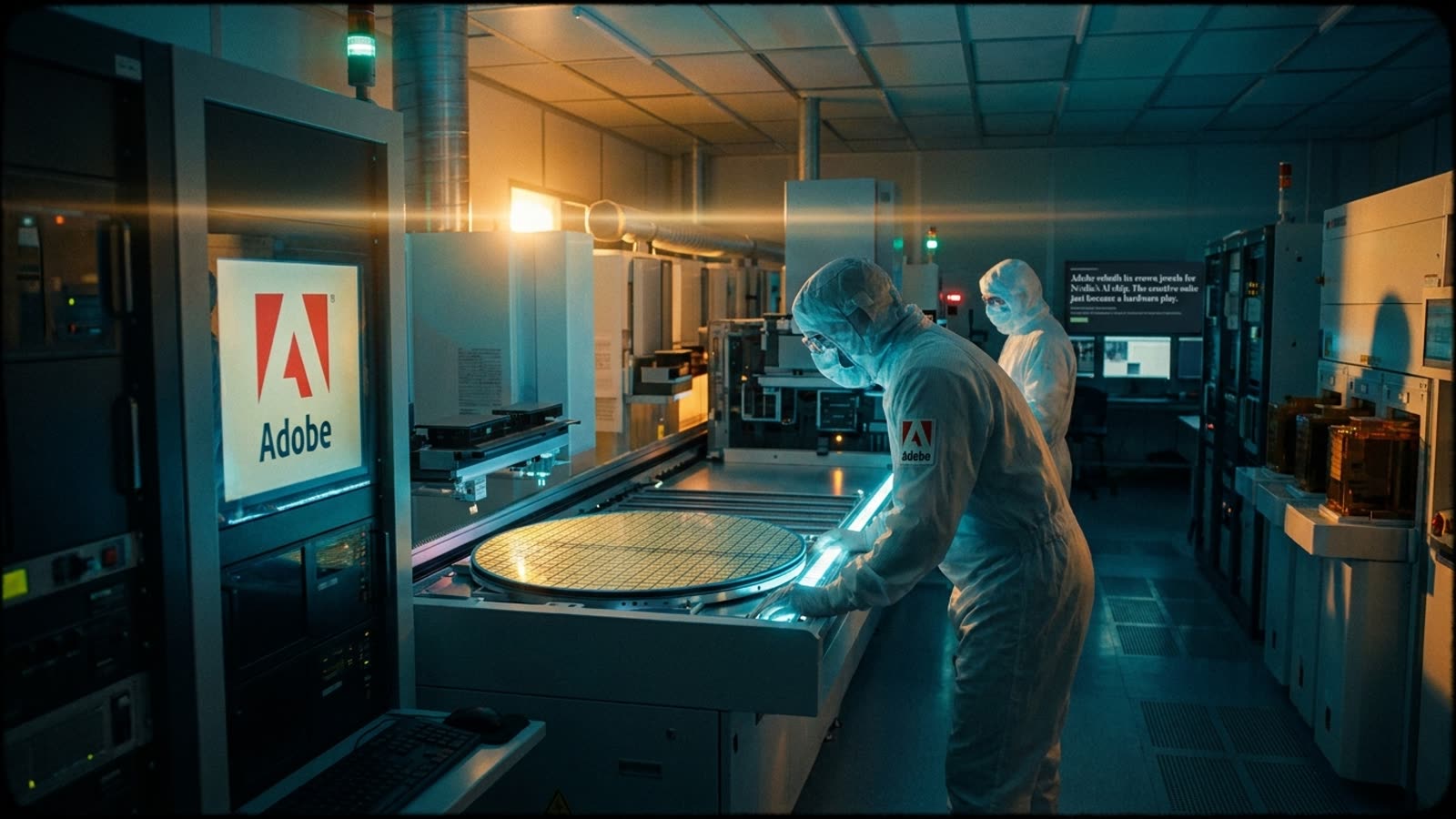
For three decades, Adobe's creative applications have been agnostic about the silicon beneath them—happy to run on whatever CPU and GPU combination users could afford. That era ended this week when the company announced it has fundamentally rebuilt Photoshop, Premiere Pro, and Substance 3D from the ground up for Nvidia's RTX Spark AI superchip platform.
This is not a driver optimization or a plugin. Adobe has rearchitected the core rendering and processing pipelines of its flagship products to exploit RTX Spark's dedicated AI acceleration hardware, promising performance gains that the company claims make certain workflows "feel like different applications entirely." The move represents the most significant technical pivot in Adobe's history since the shift to subscription licensing.
The hardware lock-in question
Adobe's decision to privilege one chip architecture so dramatically will raise eyebrows among creative professionals who have long valued platform flexibility. The company insists that standard versions of its applications will continue to run on conventional hardware, but the performance delta creates a de facto two-tier system. Professionals working on deadline-sensitive projects—film colorists, game texture artists, architectural visualizers—will face pressure to upgrade to RTX Spark-equipped workstations or fall behind competitors who have.
Nvidia, naturally, is delighted. The partnership extends the chipmaker's dominance from AI training data centers into the creative workstation market, where it already holds significant GPU market share. RTX Spark, announced earlier this year, was designed precisely for this kind of application-level integration, with dedicated tensor cores optimized for the generative AI features that Adobe has been layering into its products.
What actually changes
The practical implications vary by application. In Photoshop, generative fill and neural filters now operate at what Adobe calls "real-time preview speeds" on RTX Spark hardware—eliminating the processing delays that currently interrupt creative flow. Premiere Pro gains AI-assisted color matching and audio cleanup that processes during playback rather than requiring separate render passes. Substance 3D, perhaps the most compute-hungry of the three, can now generate and iterate on material textures with latency measured in milliseconds rather than seconds.
For professional studios already invested in high-end workstations, the upgrade path is relatively straightforward. For independent creators and smaller shops, the calculus is more complex. RTX Spark systems carry premium pricing, and the performance benefits are most pronounced in workflows that already push hardware limits.
Our take
Adobe is making a calculated bet that AI-native creative tools require AI-native hardware, and that professionals will follow the performance. The company is probably right—creative work has always been hardware-constrained, and anyone who remembers rendering times in the pre-GPU era knows that speed improvements change not just efficiency but creative possibility itself. The uncomfortable truth is that software-hardware co-design produces better results than abstraction layers, and Adobe has decided to stop pretending otherwise. Whether this represents healthy market evolution or the beginning of a troubling lock-in dynamic depends entirely on whether AMD and Apple can offer competitive alternatives. For now, Nvidia's grip on creative AI just tightened considerably.