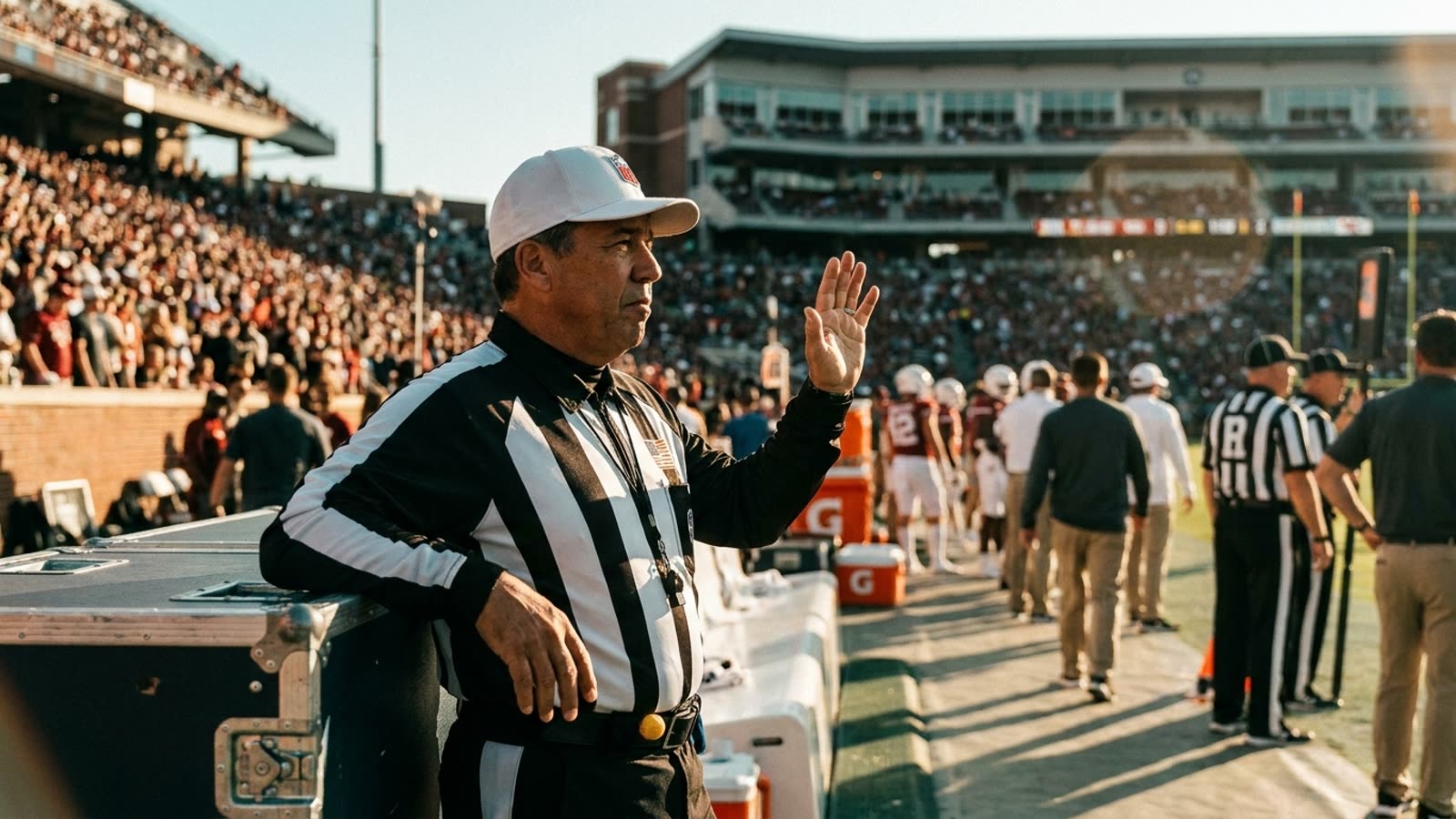
Al Riveron stepping down as the ACC's supervisor of football officials is being framed as a personnel matter. It is not. It is a symptom of a disease that has been metastasizing through college football officiating for years: chronic underfunding, inadequate training pipelines, and an accountability vacuum that makes the position of officiating supervisor somewhere between thankless and impossible.
Riveron came to the ACC from the NFL, where he served as senior vice president of officiating. The hire was meant to signal seriousness. Instead, it illuminated how different the two worlds are. In the NFL, officials are effectively full-time employees with year-round training, video review support, and compensation that reflects the stakes. In college football, even at the Power Five level, officials are largely part-timers juggling day jobs, working for per-game fees that pale beside the billions flowing through the sport.
The structural rot
The ACC, like its peer conferences, has faced mounting criticism over officiating quality. Blown calls in high-stakes games generate social media firestorms, coaching complaints, and occasional fines — but rarely systemic reform. Riveron's tenure saw the usual controversies: disputed targeting calls, inconsistent pass interference rulings, clock management errors that altered outcomes. None of these were unique to his watch; they are endemic to a system that treats officiating as a cost center rather than a core competency.
The pipeline problem compounds everything. High school officiating ranks are thinning as abuse from coaches and fans intensifies while pay remains nominal. Fewer young officials means fewer candidates progressing to college ranks, which means conferences are often retaining officials past their prime simply because replacements do not exist. The average age of a Power Five official has crept steadily upward.
What comes next
The ACC will conduct a search for Riveron's replacement. They will likely hire another experienced figure who will inherit the same constraints: insufficient budgets, decentralized authority, and a culture that treats officiating scandals as PR problems rather than operational failures. The conference could, in theory, push for professionalization — full-time officials, centralized training academies, technology investments that reduce human error. But that would require spending money that athletic departments would rather allocate to coaching salaries and facilities.
Meanwhile, the sport continues its march toward a twelve-team playoff, expanded schedules, and ever-larger television contracts. The stakes keep rising. The officiating infrastructure does not.
Our take
Riveron's exit will be forgotten within a news cycle, which is precisely the problem. College football has decided that officiating quality is an acceptable casualty of its economic model. Until conferences treat officials as professionals worthy of professional investment, supervisor resignations will keep coming — and so will the blown calls that make them inevitable.