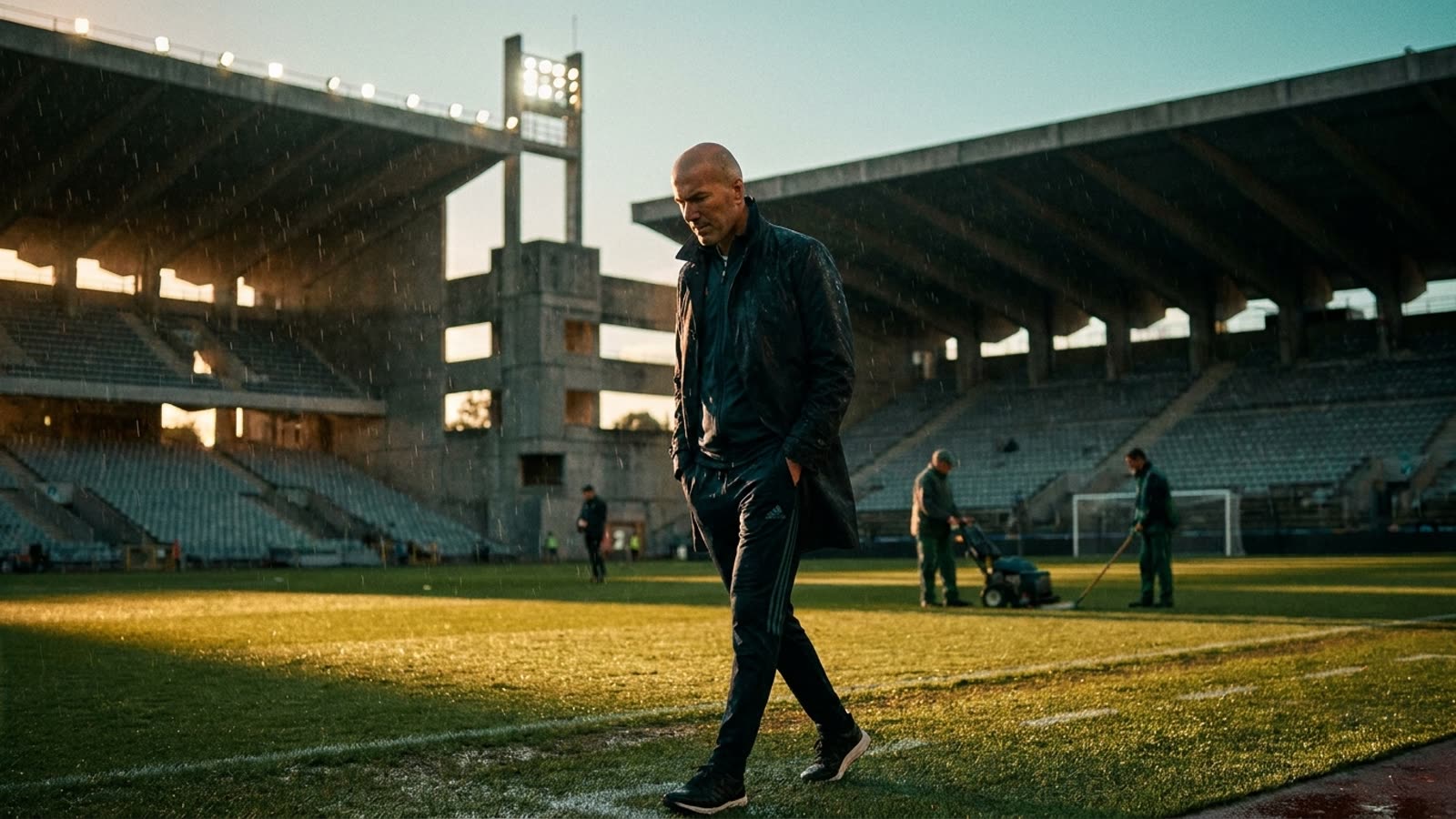
Great players retire on their own terms. Zinedine Zidane retired on Marco Materazzi's chest.
The 2006 World Cup final in Berlin was supposed to be a coronation. Zidane, at thirty-four, had announced his retirement from football. France had reached the final largely through his individual brilliance—the knockout rounds featured vintage performances that reminded the world why he'd won three FIFA World Player of the Year awards. Against Italy, with the score level in extra time, he was minutes away from lifting the trophy that had eluded him since 1998. Then Materazzi said something. Zidane turned, walked toward the Italian defender, and drove his forehead into his sternum. Red card. Exit. France lost on penalties.
The anatomy of a moment
What Materazzi actually said remains disputed. Lip readers, investigators, and eventually Materazzi himself offered varying accounts—most centering on insults about Zidane's mother and sister. The specifics matter less than the architecture of the moment: the greatest midfielder of his generation, in the final act of his final match, chose violence over victory. It wasn't heat-of-the-moment chaos. Watch the footage. Zidane walks past Materazzi, pauses, turns back, and delivers the headbutt with eerie deliberation. He knew what he was doing. He did it anyway.
This is what makes the incident endlessly fascinating to students of athletic psychology. Zidane wasn't a hothead. He was cerebral, balletic, famous for his preternatural calm in high-pressure moments. The roulette turns, the first-touch volleys, the impossible geometry of his passing—all of it suggested a mind operating at frequencies unavailable to ordinary players. Yet that same mind, when provoked in a specific way, short-circuited entirely.
Why we can't look away
Sport loves narratives of redemption and triumph. It has less vocabulary for what Zidane offered: a reminder that excellence and self-destruction can coexist in the same body, sometimes in the same minute. The headbutt wasn't an aberration from his genius—it was, in some uncomfortable way, an expression of the same intensity that produced it. Players who feel nothing don't create art. They also don't snap.
The incident has aged into something approaching mythology. Algerian-French artist Adel Abdessemed cast a bronze statue of the headbutt that toured major museums. Philosophers have written about it. Zidane himself has addressed it with characteristic opacity—expressing regret but never quite apologizing, acknowledging the provocation without hiding behind it. In retirement, as a manager, he won three consecutive Champions League titles with Real Madrid, an achievement that would define anyone else's legacy. It doesn't define his. The headbutt does.
Our take
There's a reason we remember the headbutt more vividly than any of Zidane's goals. Sport is supposed to be a controlled environment where talent determines outcomes. Zidane's final act revealed the lie in that premise—that humans remain human, that pressure eventually finds the fault line, that the same fire that forges greatness can consume it. It wasn't a tragedy. It was something rarer and more valuable: the truth.