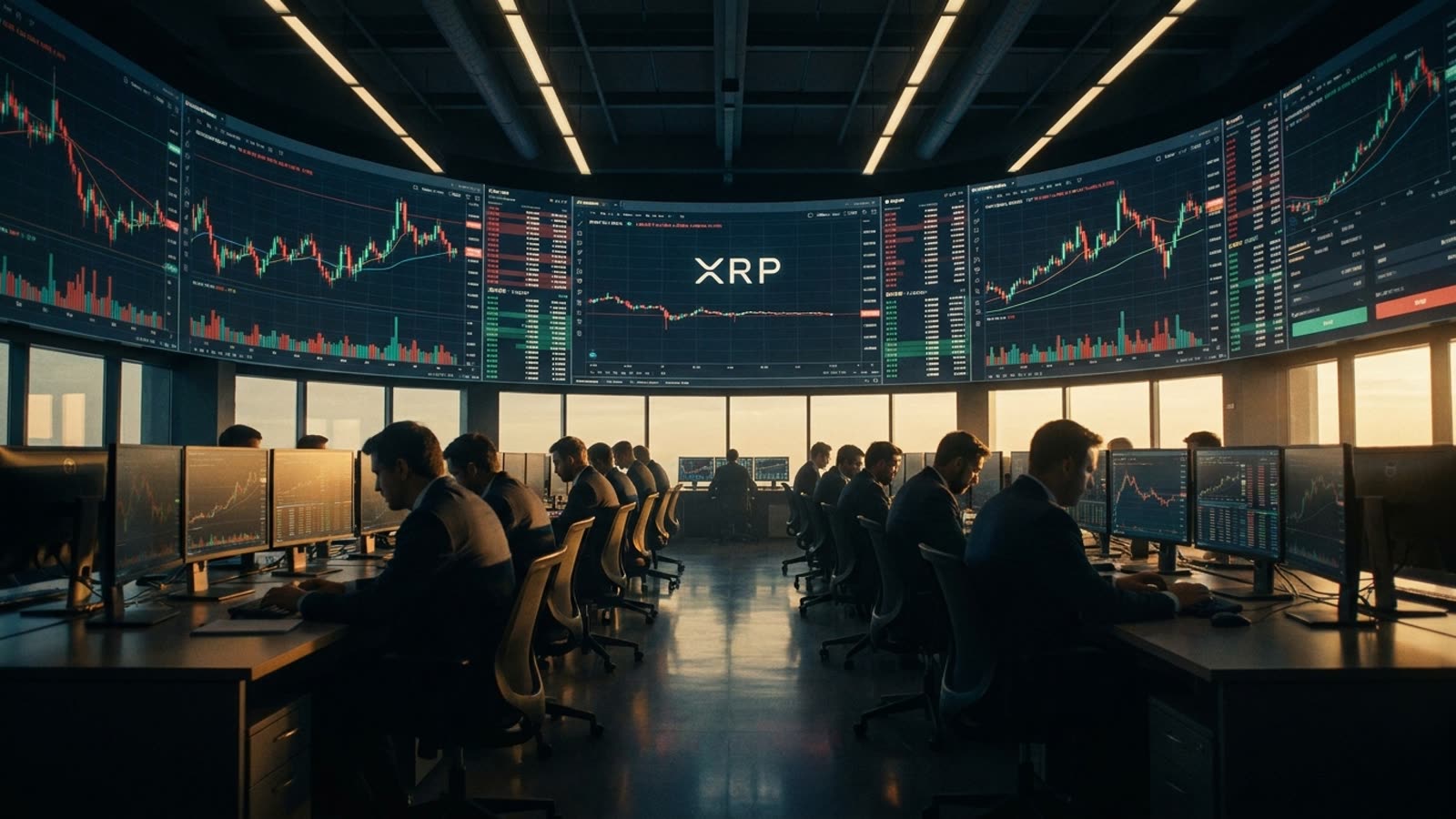
The bet is elegantly contrarian: a single trader has wagered $224,000 that XRP's price will remain essentially unchanged through June, deploying a sophisticated options strategy that profits from the absence of drama. In a market where fortunes are made on volatility, someone is betting the house on boredom.
The position, spotted by on-chain analysts tracking Deribit activity, appears to be a short straddle or strangle — selling both call and put options at or near the current price. The trader collects premium upfront and keeps it all if XRP stays range-bound. If the token moves sharply in either direction, losses can be substantial. It's a bet that requires conviction not in a direction, but in the market's capacity for inertia.
Why XRP makes sense for this trade
XRP has spent much of 2026 in a peculiar limbo. The SEC's case against Ripple has largely resolved, removing the regulatory overhang that once made the token a binary bet. But the resolution didn't trigger the explosive rally true believers expected. Instead, XRP has traded in a relatively tight band, neither collapsing nor breaking out. For a volatility seller, this is paradise.
The token's retail following remains fervent but exhausted. The XRP Army, as they call themselves, has been waiting for vindication since 2020. Many have capitulated; others have simply stopped checking prices. This psychological fatigue translates into muted trading activity and compressed implied volatility — exactly the conditions that make short volatility strategies attractive.
The broader options market awakening
This trade reflects crypto's quiet maturation. Five years ago, the infrastructure for such positions barely existed. Today, Deribit processes billions in notional options volume monthly, and institutional-grade strategies that were once the province of equity and commodity markets have migrated to digital assets. Selling volatility requires deep liquidity and reliable settlement — both now available in crypto.
The whale's bet also highlights a growing divergence between retail and sophisticated capital. While Reddit threads still debate which altcoin will deliver 100x returns, professional traders increasingly treat crypto like any other asset class: something to be analyzed, hedged, and monetized through relative value plays rather than directional moonshots.
Our take
There's something almost philosophical about this trade. Crypto was supposed to be the asset class of revolution, of exponential returns, of escape from the grinding incrementalism of traditional finance. A quarter-million-dollar bet on stagnation feels like apostasy. But it might also be the most honest assessment of where XRP — and perhaps much of the altcoin market — actually sits in 2026: not dead, not resurgent, just quietly existing. The whale isn't predicting the future; they're pricing the present.