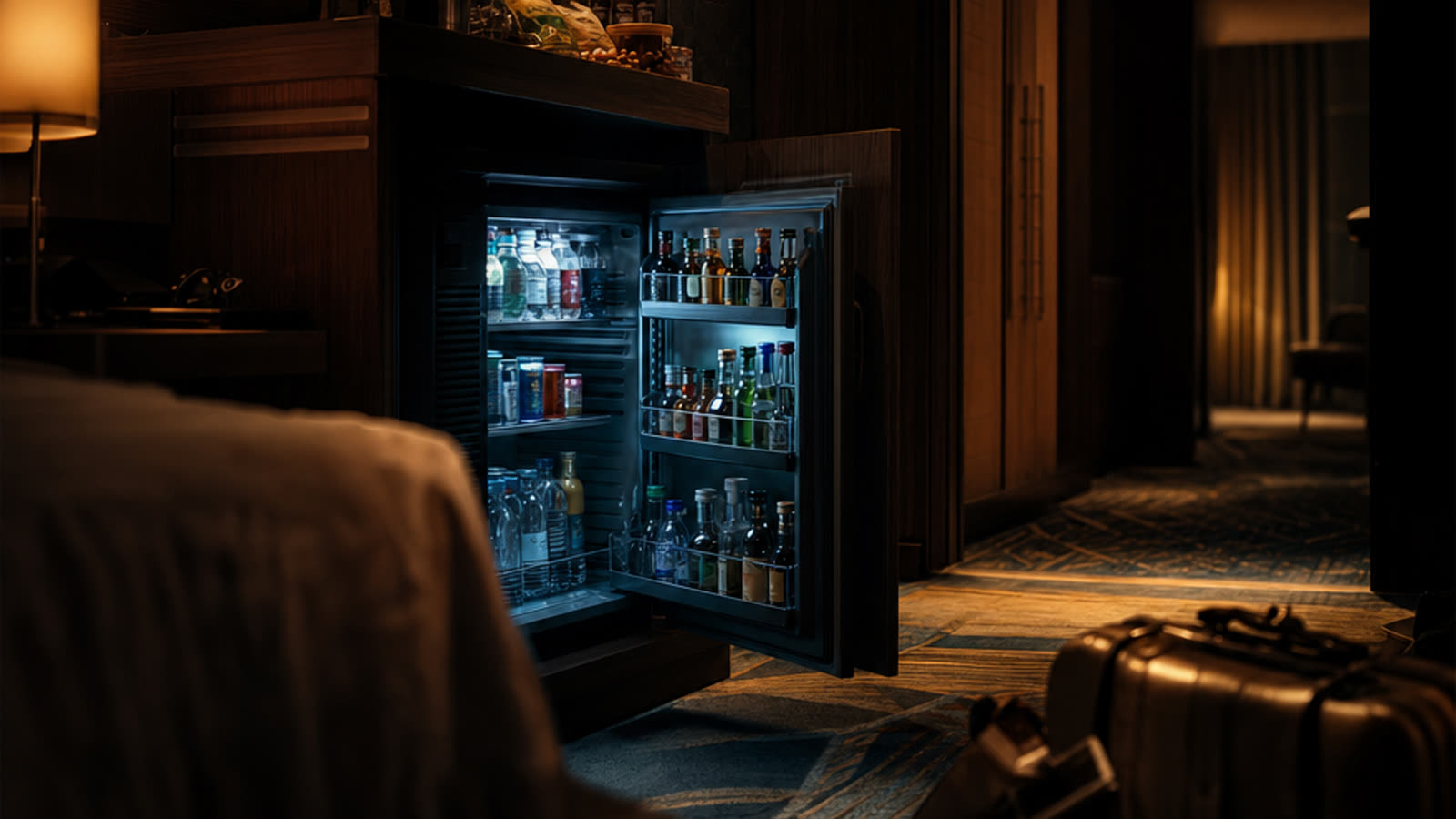
The minibar is perhaps the only retail concept that operates on the assumption customers will feel too embarrassed to complain about being robbed. A small bottle of water for eight dollars. Pringles at prices that would make a stadium vendor blush. A Toblerone positioned as if it were a controlled substance. And yet the minibar endures, outlasting the fax machine, the wake-up call, and the concierge who actually knows the city.
This persistence is not rational. It is not even particularly profitable. But it tells us something true about the psychology of travel and the strange economics of captive audiences.
The business case that barely exists
Hotel operators will tell you, off the record, that minibars are a headache. The logistics are punishing: inventory must be checked, restocked, and reconciled against guest folios that are frequently disputed. Spoilage is constant. Theft is endemic. Labor costs often exceed revenue. One hospitality consultant estimated that after accounting for all operational friction, the typical minibar generates a profit margin in the low single digits — when it generates profit at all.
So why keep them? Partly inertia, partly brand expectation. A four-star hotel without a minibar feels incomplete, like a luxury car without leather seats. The minibar has become a signifier rather than a service, a checkbox on the amenity list that guests expect to see even if they never open the door.
The psychology of the captive traveler
The minibar exploits a specific mental state: the traveler who has already spent a small fortune on the room, who is tired, who does not want to get dressed again, who has lost all normal price sensitivity. In this condition, paying six dollars for a tiny bottle of mediocre wine feels not like extortion but like self-care. The minibar is a convenience tax on exhaustion.
There is also the transgressive pleasure of it. Raiding the minibar at midnight carries a faint whiff of misbehavior, of expense-account decadence, of vacation rules that do not apply at home. The markup is part of the experience — you are paying for permission to be foolish.
The delivery app paradox
In theory, the minibar should have been killed by Uber Eats and its competitors. Why pay hotel prices when you can have anything delivered to the lobby in twenty minutes? And yet the minibar persists, because the delivery app requires effort, decision-making, waiting. The minibar requires only reaching out your arm. In the attention economy, the three feet between bed and refrigerator is the most valuable real estate in the room.
Our take
The minibar is a monument to human irrationality, and that is precisely why it survives. It does not need to make economic sense; it needs only to be there when you are tired and slightly drunk and willing to pay whatever it costs to avoid putting on pants. Hotels understand this. They have always understood this. The minibar is not a product — it is a tax on the gap between who we are and who we pretend to be when we pack our suitcases.