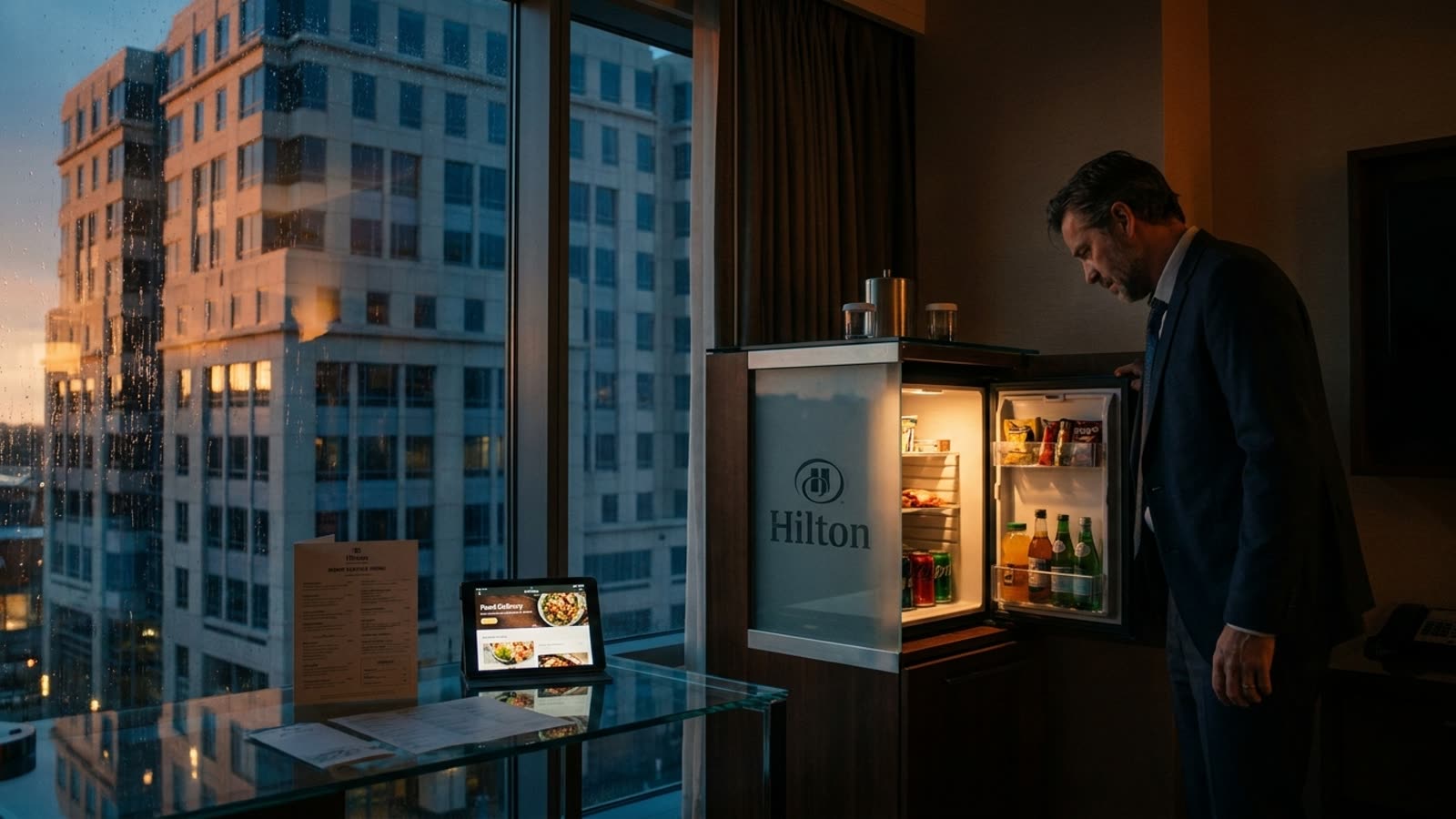
The minibar is, by any rational measure, an absurdity. A tiny refrigerator stocked with goods marked up several hundred percent, monitored by sensors that charge guests for merely lifting a bottle to read its label, offering a selection that hasn't meaningfully evolved since the concept debuted in Hong Kong's Hilton in 1974. And yet it persists, humming quietly in hotel rooms from São Paulo to Stockholm, generating billions in annual revenue for an industry that could easily replace it with something more efficient.
This persistence is not an accident. It is a masterclass in the economics of friction, desire, and the particular vulnerability of the business traveler at midnight.
The captive audience premium
Hotels understand something that most retailers cannot exploit: context transforms value. A bottle of water that costs pennies at a supermarket becomes worth several dollars when the alternative is getting dressed, finding your keycard, and navigating an unfamiliar lobby at an inconvenient hour. The minibar doesn't compete with the convenience store down the street; it competes with the effort required to reach it.
This is why minibar pricing has remained stubbornly immune to the disruptions that reshaped other hospitality revenue streams. Room service menus have been digitized, breakfast buffets have been optimized, but the minibar maintains its vintage pricing model because the calculus hasn't changed. The guest who reaches for that small bag of cashews at 11 PM is not comparison shopping. They are buying the absence of effort.
The theater of abundance
Luxury hotels have discovered a parallel function for the minibar: signaling. A well-curated selection—local craft spirits, single-origin chocolate, artisanal snacks—communicates that the property understands taste. Some boutique hotels now treat the minibar as a loss leader, offering complimentary items that reinforce brand identity. The minibar becomes less transaction than gesture, a small refrigerator performing the role of concierge.
This bifurcation explains why the minibar hasn't simply disappeared. Budget properties have largely abandoned it, recognizing that guests resent the charges and the sensors create maintenance headaches. But premium properties have doubled down, understanding that the minibar's contents are a canvas for expressing what the hotel believes its guests deserve.
Our take
The minibar endures because it occupies a peculiar niche in consumer psychology—too small to trigger serious price resistance, too convenient to resist at the moment of weakness. It is a relic that has outlasted the logic of its existence by exploiting something timeless: the gap between what we intend to do and what we actually do when tired, alone, and far from home. Every overpriced chocolate bar sold at 2 AM is a small monument to human nature.