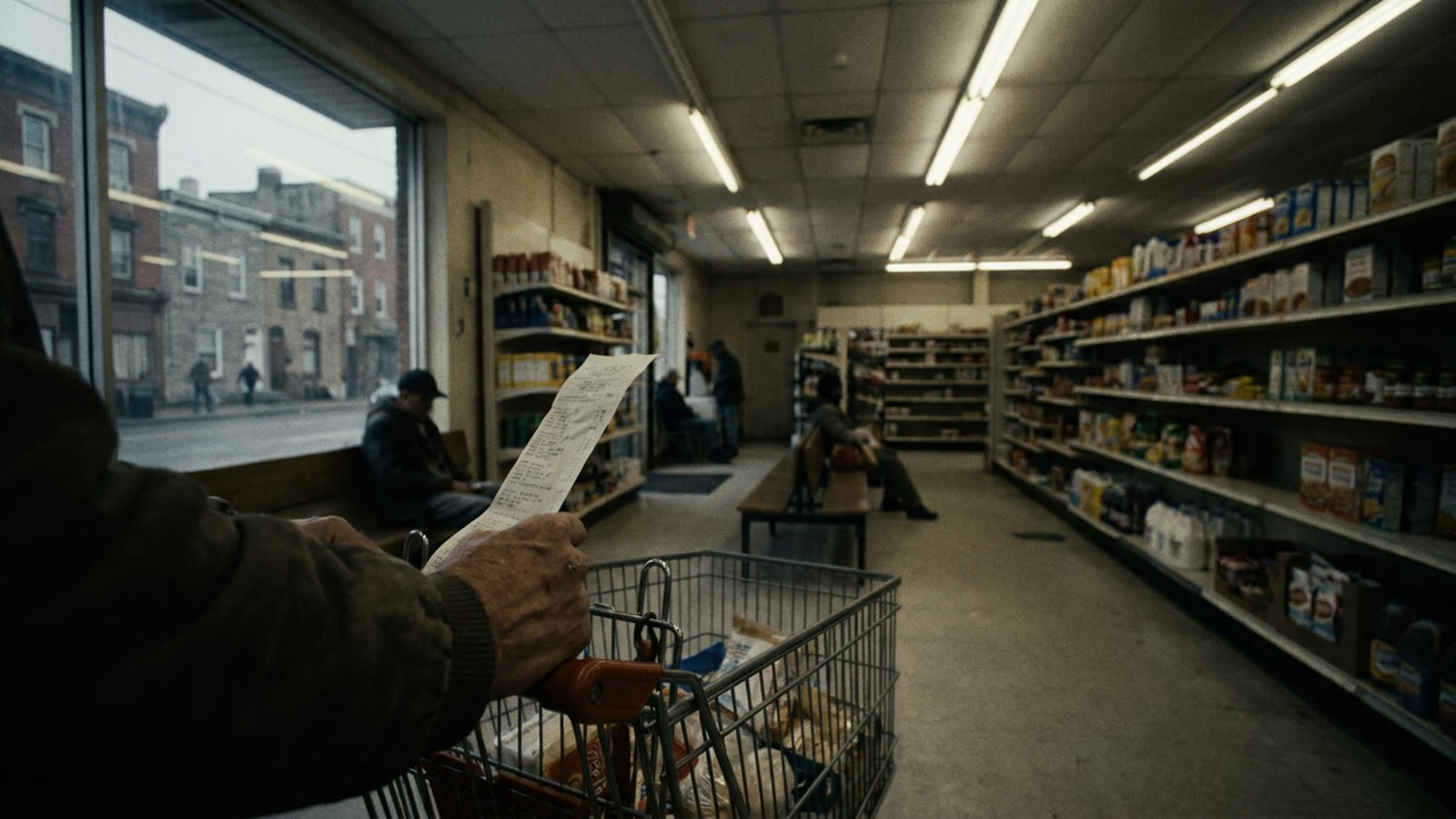
When central bankers announce that inflation has cooled to target, millions of people pushing shopping carts through supermarket aisles experience something closer to cognitive dissonance than relief. The gap between official price statistics and lived economic experience has become one of the defining tensions of contemporary economic discourse — and understanding why it exists is more useful than simply dismissing one side as wrong.
The divergence is real, measurable, and largely explicable. It stems not from statistical malpractice but from a fundamental mismatch between what price indices are designed to capture and what human psychology actually notices.
The substitution problem
Modern inflation measurement assumes consumers are rational optimizers who seamlessly switch from beef to chicken when relative prices shift. The indices are weighted to reflect this behavior, which makes sense for tracking the abstract purchasing power of a currency. But actual households don't experience their budgets as optimization problems. They experience them as a series of small defeats — the realization that the brand they've bought for years now costs enough to trigger hesitation, the quiet downgrade from organic to conventional, the restaurant meal that becomes takeout that becomes cooking at home.
These substitutions register in the statistics as stable purchasing power. They register in human consciousness as declining living standards. Both interpretations are defensible; neither is complete.
Frequency bias and the visibility of pain
Behavioral economists have documented that people weight frequent, visible purchases far more heavily than infrequent ones when forming impressions of price levels. Groceries, gasoline, and coffee dominate perception not because they dominate budgets but because they dominate attention. Meanwhile, the categories where prices have fallen most dramatically — consumer electronics, telecommunications, many manufactured goods — are purchased rarely enough to fade from the mental ledger.
A smartphone that costs the same as it did years ago while delivering vastly more capability represents genuine deflation in quality-adjusted terms. But no one feels richer because their phone has a better camera. The gains are invisible; the losses are confronted three times a week at the checkout counter.
The housing distortion
Perhaps no category better illustrates the measurement-versus-experience gap than shelter. Official indices use a concept called owners' equivalent rent — essentially asking homeowners what they think their house would rent for. This smooths out the volatility of actual housing markets but can dramatically understate the sticker shock facing anyone trying to buy a home or sign a new lease. Someone who locked in a mortgage years ago experiences stable housing costs while their neighbor, identical in every other respect, faces a transformed market. The index captures an average; individual circumstances vary enormously.
Our take
The instinct to accuse statisticians of cooking the books is understandable but misplaced. Price indices do what they're designed to do — track a specific, well-defined concept of aggregate purchasing power over time. The problem is that this concept, however technically rigorous, fails to capture what people actually mean when they say life has gotten more expensive. Both the data and the discontent are valid. The useful response is not to pick a side but to recognize that economic wellbeing has dimensions that no single number can summarize — and that policy built solely on headline inflation figures may be solving for the wrong variable.