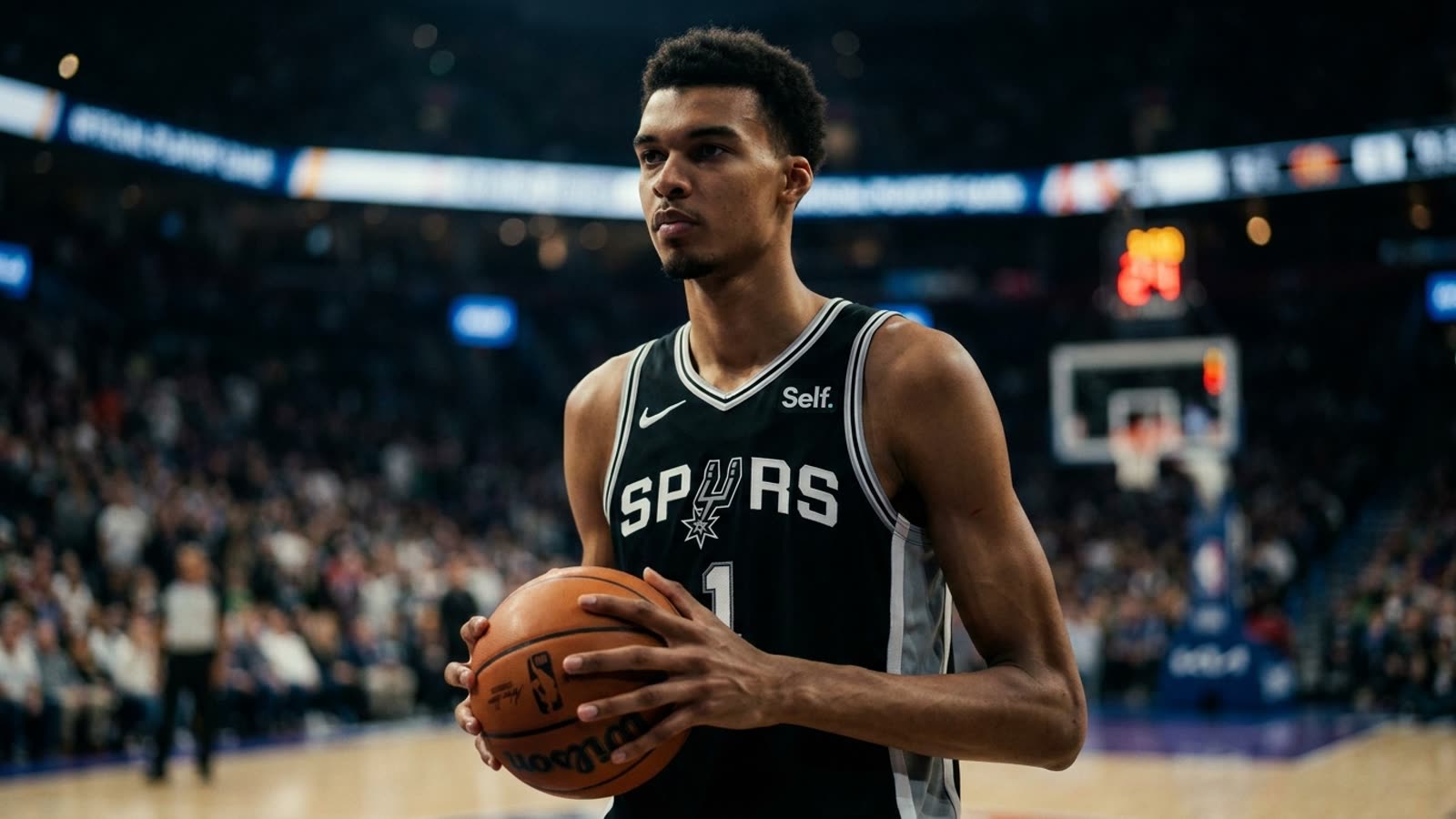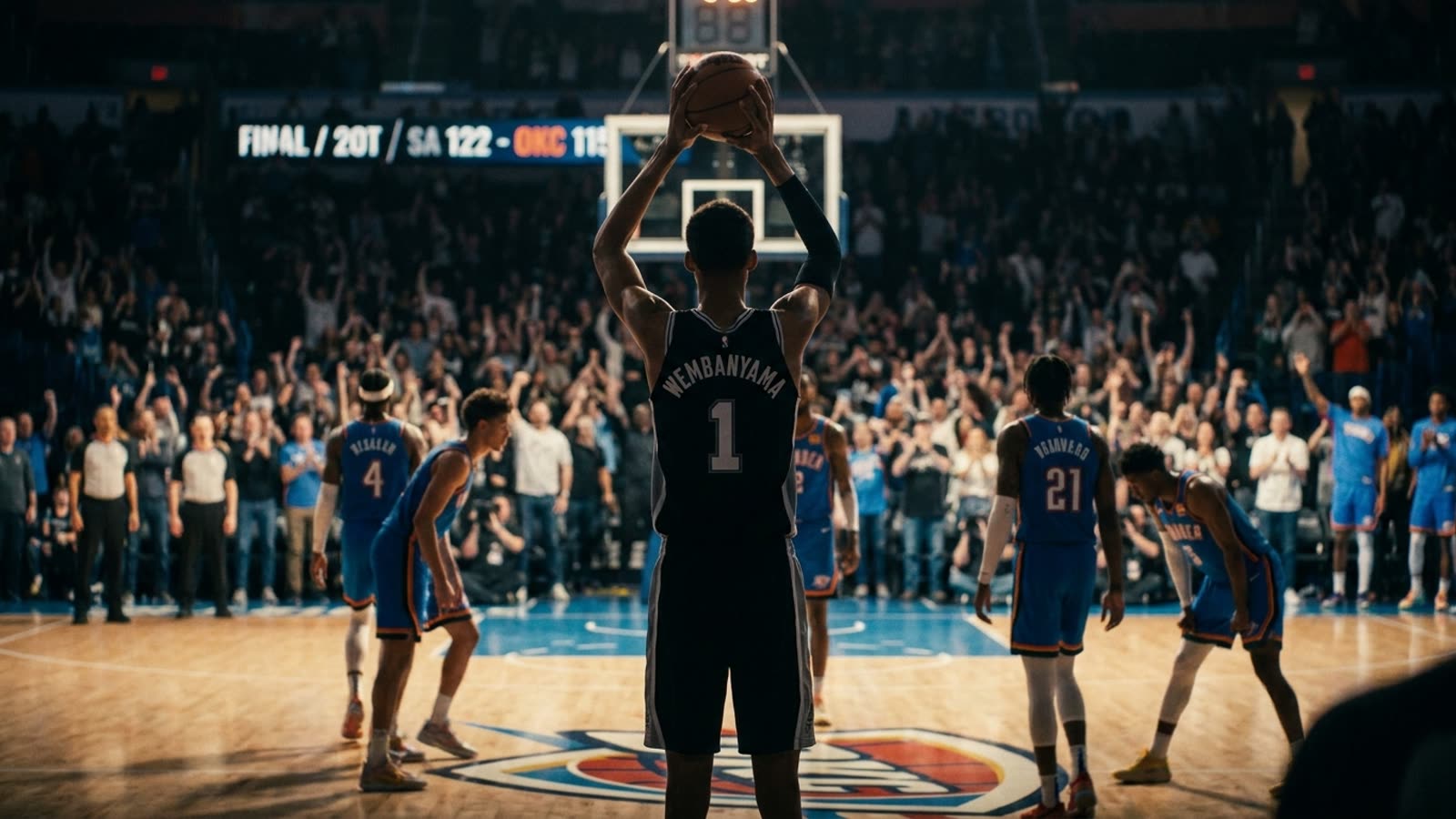
Late Monday night in Oklahoma City, Victor Wembanyama did the thing that Victor Wembanyama keeps doing — he exceeded a set of expectations that already sat somewhere near the ceiling of plausibility. The San Antonio Spurs beat the defending champion Thunder 122-115 in double overtime in Game 1 of the Western Conference Finals, and they did it because their 22-year-old center delivered 41 points, 24 rebounds, three assists and three blocks across 49 minutes of basketball that, by the end, no longer felt entirely real.
The Spurs have not been to the NBA Finals since 2014. They are now three wins from getting there. And Game 1 was not a fluke or a coin flip. It was Wembanyama, on the road, against the reigning MVP, in the deepest stretch of the postseason, deciding that the result was not going to be left up to anyone else.
The numbers and what they mean
This was the first double-overtime game in the Western Conference Finals since 1976. Wembanyama shot 14 of 25 from the field, set new playoff career-highs in scoring, rebounds, and minutes, and became the youngest player in NBA history to record a 40-point, 20-rebound game in the playoffs. He is the first player since Charles Barkley in 1993 to put up a 40-and-20 line in the conference finals or later. He joined David Robinson as the only Spur in franchise history with a 40-20 playoff game. The list of players with 40 points, 20 rebounds and three blocks in the conference finals or later — since blocks became an official statistic in 1973-74 — now has exactly three names: Kareem Abdul-Jabbar in 1974, Shaquille O'Neal in 2000, and Wembanyama in 2026.
That is the kind of historical company a player accumulates after a decade of dominance. Wembanyama is in his third NBA season.
The defining stretch
The Spurs led by double digits early in the fourth quarter. With De'Aaron Fox sidelined, they lost the thread. Oklahoma City's defense, which had not lost a single game in the first two rounds, tightened around the perimeter and forced San Antonio to throw the ball to Wembanyama and let him solve everything. He did.
In the closing seconds of regulation, he caught the ball near the free-throw line, absorbed contact from Jalen Williams, and spun into a runner that rattled in. It looked, briefly, like a game-winner. Shai Gilgeous-Alexander answered with a layup to force overtime.
In the first overtime, the Thunder ripped off a 7-0 run capped by a Gilgeous-Alexander dunk to take a three-point lead with under a minute left. Wembanyama responded with a 27-foot pull-up three to tie the game — a shot the NBA's tracking system officially measured at 27 feet, though it appeared considerably further from the basket than that. It was the same side of the floor where Stephen Curry hit his iconic 37-foot game-winner against the Thunder in 2016. The geometry of the moment was not lost on anyone watching.
In the second overtime, Wembanyama scored nine of San Antonio's 14 points. He outscored the Thunder by himself. The defining sequence came with under 90 seconds remaining: he sealed Alex Caruso, caught a feed from Dylan Harper, and threw down a one-handed and-one slam over Chet Holmgren that effectively ended the game. Wembanyama and Holmgren have a history. The dunk landed with the appropriate weight.
What it means for the series
The Thunder are the reigning champions. They went undefeated through the first two rounds. Gilgeous-Alexander just won his second consecutive MVP award. They were the heavy favorites coming into this series, and they remain dangerous opponents capable of winning four of the next six.
But they have now lost home-court advantage, and they have done so in a manner that exposes a structural problem. They do not have an answer for Wembanyama at the rim, on the boards, or behind the arc. Holmgren is a fine defender. He cannot guard this. Nobody on the Oklahoma City roster can.
Wembanyama, asked about his performance during his walk-off interview, said the obvious thing: "Winning one game means something, but it doesn't mean everything." That is true. It is also true that a player who delivers a 40-20-3 in Game 1 of the conference finals is announcing something about the next decade of professional basketball.
Our take
The "best player in the world" debate is a tired exercise that media tends to settle prematurely and then re-litigate every two years. But the conversation right now genuinely involves three names — Nikola Jokic, Shai Gilgeous-Alexander, and Victor Wembanyama — and after Monday night the youngest of the three has made a case that the others cannot easily counter. He played 49 minutes in a double-overtime road game against the defending champions and looked, by the end, like the most physically and technically complete basketball player on the floor. He is 22 years old. The Spurs are three wins from the Finals. The rest of the league should probably start preparing for a problem it does not yet know how to solve.