The autonomous vehicle industry has spent the better part of fifteen years promising a revolution that never quite arrives. Volvo, the Swedish automaker now owned by China's Geely, is making a different kind of bet: that the path to genuine hands-free, point-to-point driving runs not through flashy robotaxi startups but through a deepening alliance with the company that has quietly become the backbone of AI infrastructure everywhere.
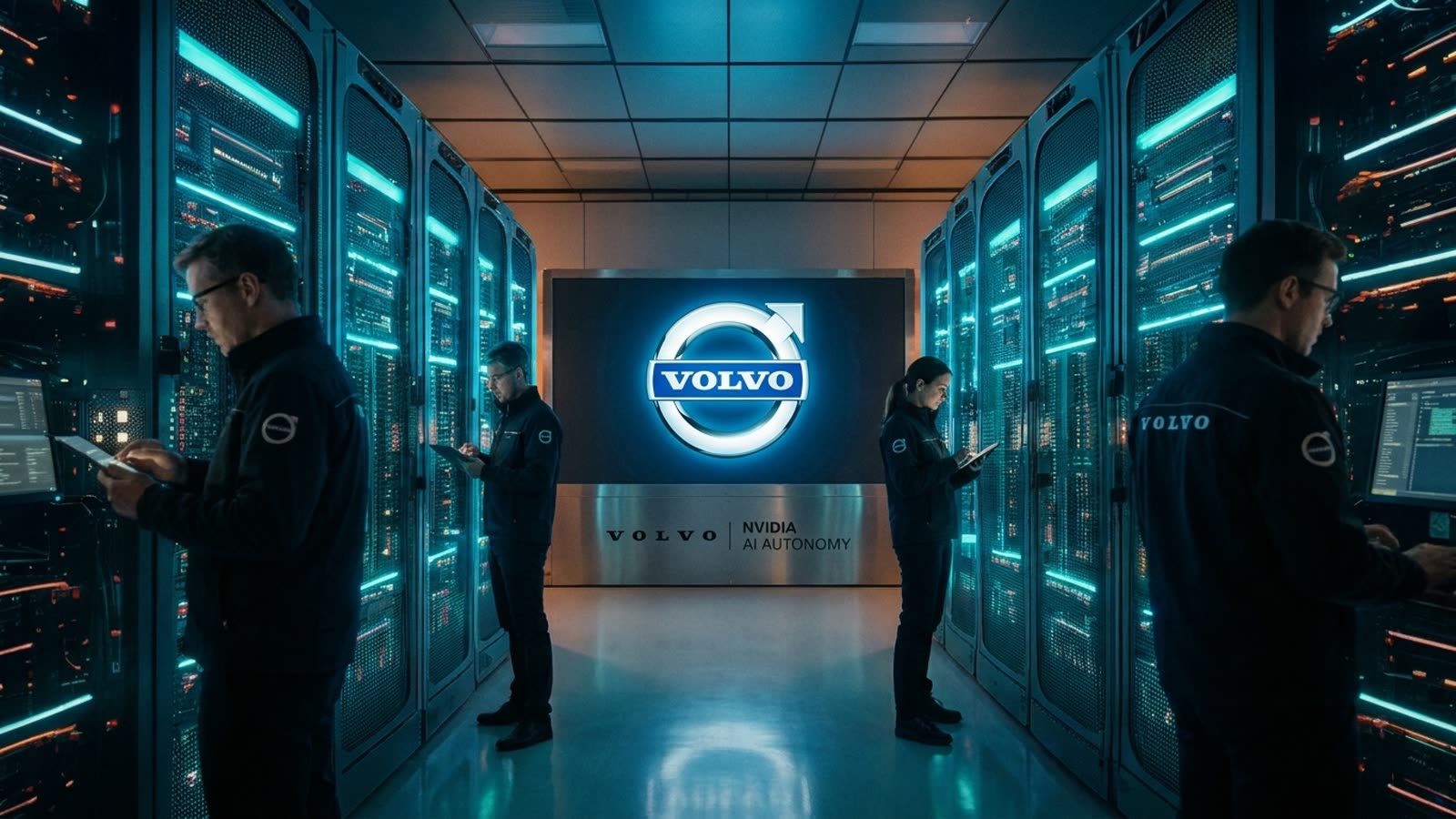
The expanded partnership, announced Thursday, will see Volvo integrate Nvidia's latest autonomous driving stack across its vehicle lineup, with the goal of delivering true hands-free driving by 2030. This is not another vaporware announcement. Volvo and Nvidia have been working together for nearly a decade, and this extension represents the kind of slow, methodical progress that actually gets cars certified for public roads.
Why Nvidia keeps winning the autonomy race it isn't running
Nvidia has never tried to build its own autonomous vehicles. Instead, it has positioned itself as the essential supplier to everyone who does. The company's Drive platform now powers development programs at Mercedes-Benz, Jaguar Land Rover, BYD, and a growing list of Chinese EV makers. Volvo's expanded commitment is significant because it represents a full-stack adoption—not just chips, but Nvidia's entire software and simulation ecosystem.
The timing matters. Tesla's Full Self-Driving remains stuck in perpetual beta. Waymo operates in a handful of geofenced American cities. Cruise is still rebuilding after its 2023 San Francisco incident. Meanwhile, Nvidia has been quietly assembling the picks-and-shovels business of autonomy, selling the infrastructure that every serious player needs regardless of their ultimate approach.
The Geely factor
Volvo's Chinese ownership adds an interesting dimension. Geely has been aggressive about electrification and autonomy across its brands, which include Polestar and Lotus. A successful Nvidia-powered autonomy system at Volvo could quickly proliferate across the Geely empire, giving Nvidia an even larger footprint in the world's biggest car market.
This is the kind of strategic leverage that makes Nvidia's automotive business—still a small fraction of its data center revenue—potentially transformative over the next decade. The company is not just selling chips; it is becoming the operating system layer for the entire autonomous vehicle industry.
Our take
The autonomous vehicle story has been plagued by companies that confused demonstration with deployment. Volvo's approach—boring, incremental, deeply integrated with a proven technology partner—is exactly what the industry needs. If hands-free driving actually arrives by 2030, it will probably look less like a Tesla software update and more like a Volvo safety feature: thoroughly tested, conservatively marketed, and built on Nvidia silicon.