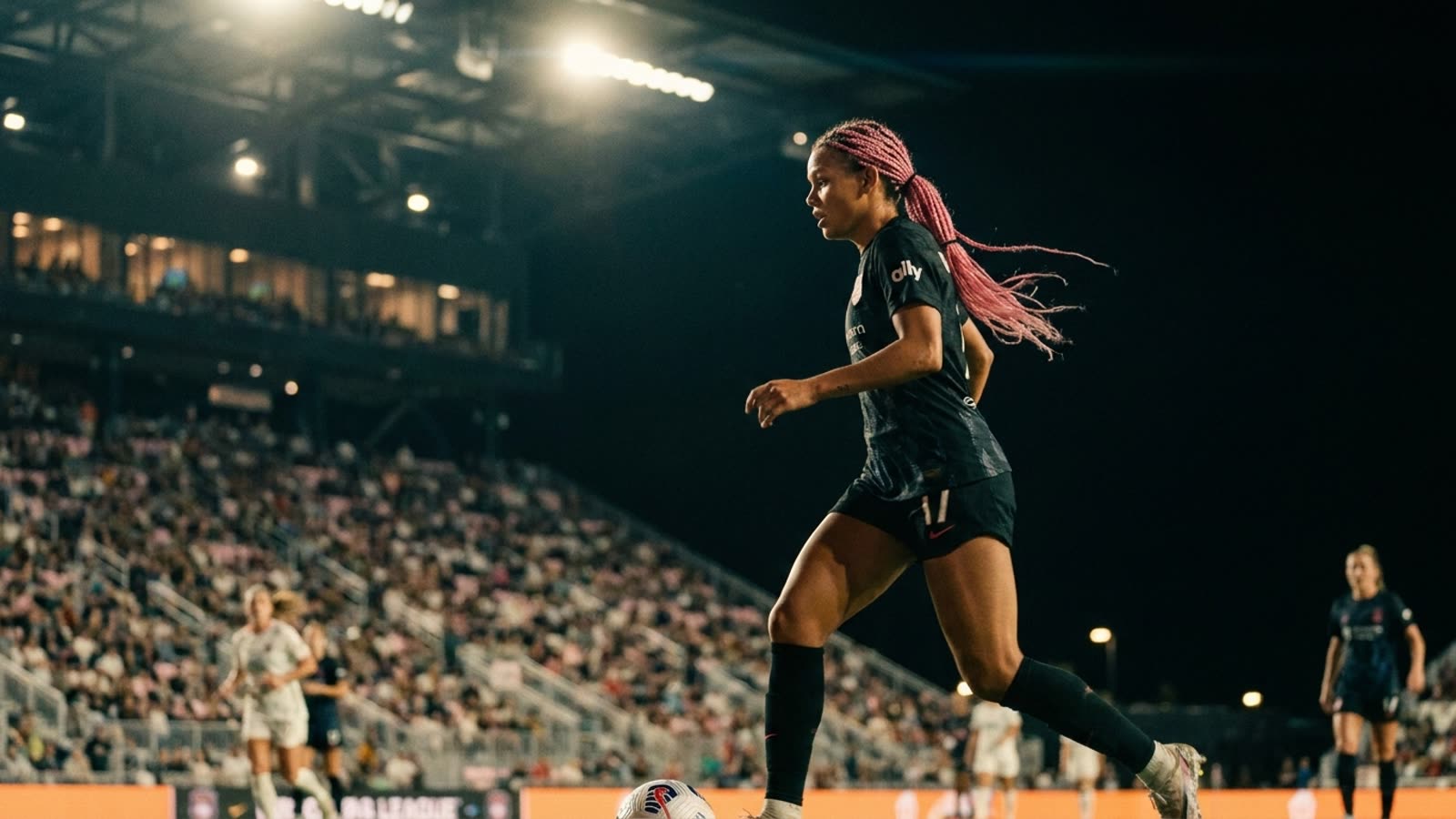
Somewhere between Gigi Hadid's practiced strut and the $50 million Fantasy Bra that dominated the headlines, the most compelling moment of Sunday's Victoria's Secret Fashion Show walked right past most observers. Trinity Rodman—daughter of Dennis, Olympic gold medalist, Washington Spirit forward, and one of the highest-paid players in NWSL history—stepped onto the Sony Pictures Studios runway in Los Angeles wearing wings and not much else. She looked, by all accounts, like she belonged there.
This was not a stunt casting. Or rather, it was a stunt casting that worked.
The athlete-model pipeline matures
Victoria's Secret has spent the past several years in reputation triage, attempting to shed its Angels-era image of unattainable, homogeneous beauty for something more contemporary. The brand brought back its fashion show in 2024 after a six-year hiatus, and has since been methodically expanding its definition of who belongs on the runway. Athletes have featured before—but typically in the front row, not walking.
Rodman represents something different: a genuine crossover talent whose athletic celebrity now rivals her modeling potential. At 24, she has already won an Olympic gold medal, become the youngest player ever signed to the NWSL, and negotiated a contract that made her one of the league's top earners. Her father's fame opened doors; her own achievements have kept them open.
The lingerie runway is an unusual venue for a professional athlete still in her competitive prime. But Rodman's participation suggests the old boundaries between sports stardom and fashion modeling have become essentially theoretical. The question is no longer whether athletes can model—it's whether modeling can keep up with athletes.
What Victoria's Secret actually needs
The brand's challenges remain substantial. Relevance in the intimates market now requires competing with Savage X Fenty's inclusive casting, Skims' celebrity-industrial complex, and a generation of consumers who find the entire concept of "Angels" vaguely embarrassing. Bringing in Rodman—and, separately, featuring Kobe Bryant's daughter Natalia on the carpet—reads as an attempt to borrow credibility from women whose achievements exist entirely outside the fashion ecosystem.
Whether this works depends on execution. A one-off appearance generates headlines; sustained relationships with athletes who genuinely wear and endorse the product might actually move merchandise. Rodman's social media following skews younger and more sports-focused than the typical Victoria's Secret customer. That's either a demographic expansion opportunity or a mismatch.
Our take
The most telling detail of Rodman's runway debut wasn't her walk—it was how unremarkable the whole thing felt. A decade ago, a professional soccer player strutting in lingerie would have been treated as either a novelty or a controversy. Now it registers as logical brand strategy. Victoria's Secret needs athletes more than athletes need Victoria's Secret, and everyone involved seems to understand the terms. Rodman gets a cultural footprint expansion; the brand gets a borrowed halo of athletic legitimacy. The transaction is transparent, mutually beneficial, and almost boringly professional. Which, for a company that spent years being criticized for its casting, might be exactly the point.