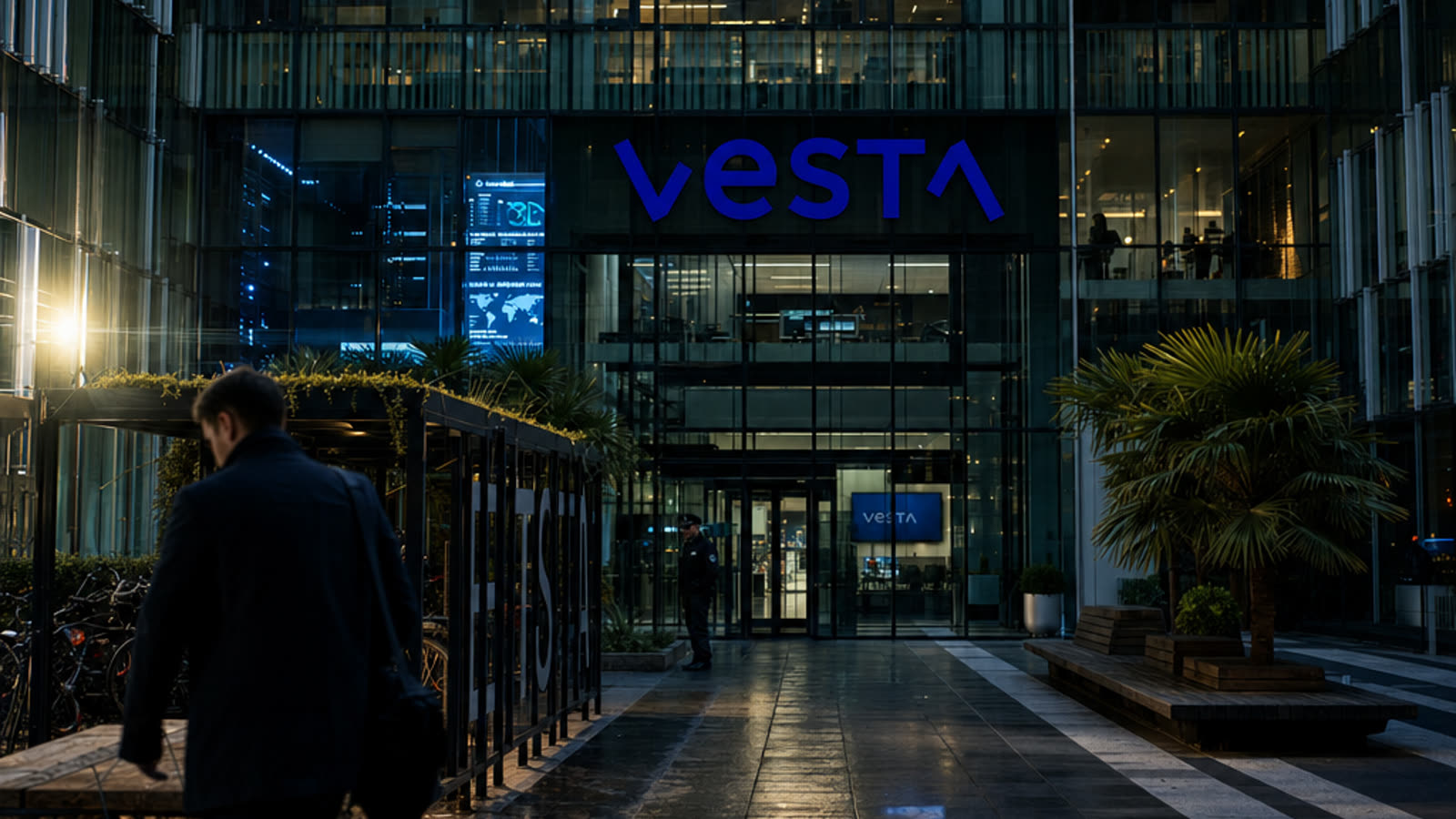
The American mortgage industry employs roughly 300,000 people to shuffle paper, chase documents, and triple-check income statements — work that is tedious, error-prone, and astonishingly expensive. Vesta, a Los Angeles-based fintech, just closed a $30 million Series A on the thesis that most of those jobs can be replaced by coordinated swarms of AI agents working in parallel, around the clock, for a fraction of the cost.
The round, led by Andreessen Horowitz with participation from several unnamed mortgage industry strategics, values Vesta at approximately $150 million. That is a steep multiple for a company with limited production volume, but investors are betting on timing: mortgage origination costs have ballooned past $13,000 per loan, margins are razor-thin, and lenders are desperate for efficiency gains that do not require another round of layoffs.
The swarm model
Vesta's architecture differs from the single-agent copilots that have proliferated across financial services. Rather than deploying one AI assistant per underwriter, the company orchestrates dozens of specialized agents — one to verify employment, another to parse bank statements, a third to cross-reference tax returns against IRS transcripts — that work simultaneously on a single loan file. The agents communicate through a central coordinator that flags conflicts, escalates edge cases to human reviewers, and learns from every decision.
The result, according to Vesta's internal benchmarks, is a 70 percent reduction in time-to-close for conforming loans and a 40 percent reduction in per-loan labor costs. If those numbers hold at scale, the implications for mortgage servicing employment are stark.
Why lenders are listening
The mortgage business has been in a brutal contraction since the Federal Reserve began raising rates in 2022. Origination volume collapsed, and lenders responded with wave after wave of layoffs — an estimated 100,000 jobs lost industry-wide by late 2024. Now, with rates stabilizing but not falling, surviving lenders are under pressure to rebuild capacity without rehiring. Automation is no longer a nice-to-have; it is the only path to profitability.
Vesta's pitch is that its agent swarms can handle the surge when rates eventually drop, without the lender needing to recruit and train thousands of processors. The technology is essentially infinitely scalable; the humans are not.
Our take
Mortgage processing is precisely the kind of high-volume, rule-bound, document-heavy work that AI agents are built to devour. Vesta is not the only company chasing this market, but its swarm architecture is more ambitious than most, and the Andreessen imprimatur will open doors. The real question is not whether the technology works — early indications suggest it does — but whether lenders will trust it enough to let the agents run unsupervised. If they do, the back office of American homebuying will never look the same.