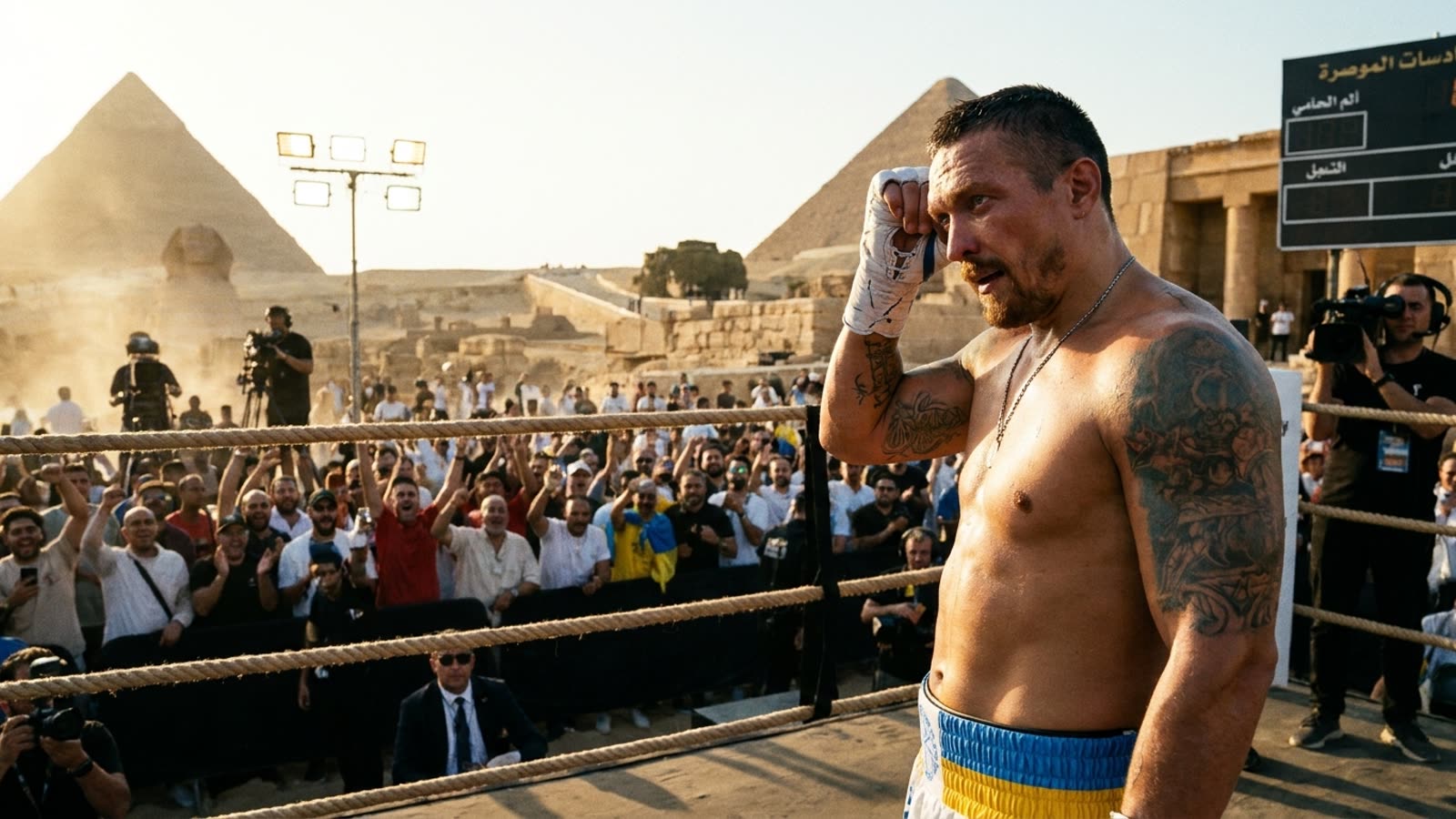
The Pyramids of Giza have stood for four and a half millennia, monuments to ambition and spectacle. On Saturday night, they served as the backdrop for something rather less eternal: a world heavyweight championship fight between the sport's best pound-for-pound boxer and a kickboxer making his second professional start.
Oleksandr Usyk stopped Rico Verhoeven by TKO in the eleventh round, improving to 25-0 and retaining his WBC heavyweight title. The result was never really in doubt. The legitimacy of the entire enterprise very much was.
The fight that shouldn't have been
Verhoeven is a genuine combat sports legend — perhaps the greatest heavyweight kickboxer of his generation, a Glory champion who dominated his discipline for years. But kickboxing is not boxing, and two professional fights do not make a boxer. That the WBC sanctioned this as a title defense tells you everything about where the sport's priorities now lie.
Usyk, at 39, looked every bit his age. The Ukrainian master still possesses the footwork and ring intelligence that made him undisputed champion, but Verhoeven — a novice by boxing standards — pushed him further than anyone anticipated. When the stoppage finally came, it was greeted with boos and immediate controversy. The BBC called it "highly controversial." Social media was less diplomatic.
The spectacle economy
This fight exists because of Jason Statham. The actor, friends with both fighters, helped broker the matchup. Egypt's government invested heavily in the production, positioning Giza as a rival to Saudi Arabia's combat sports ambitions. The Pyramids looked magnificent on camera. The boxing was secondary to the content.
This is the logical endpoint of a trajectory that began with Floyd Mayweather fighting Conor McGregor and accelerated through the Paul brothers, KSI, and Misfits Boxing. The difference is that those events never pretended to be real championship fights. The WBC just put its belt — the same belt held by Ali, Tyson, and Lewis — on the line against a man who had boxed professionally once before.
What it means for heavyweight boxing
The division is suddenly interesting again, though not for reasons the sport should celebrate. Daniel Dubois holds the WBO title after stopping Fabio Wardley. Anthony Joshua remains dangerous. Tyson Fury's retirement status remains characteristically ambiguous. And Usyk, the man who unified the division, just struggled to put away a kickboxer in front of the Sphinx.
At 39, Usyk's window is closing. Saturday's performance — the rounds he needed, the controversy of the finish, the opponent he chose — suggests he knows it. A fight against Dubois or a Joshua rematch would tell us where he truly stands. Instead, he defended his title against a man whose boxing experience could be measured in minutes.
Our take
Boxing has always been part sport, part carnival. The Pyramids fight was honest about which part it prioritized. The problem is not that spectacle events exist — they always have, and they generate the money that funds the sport. The problem is that sanctioning bodies have stopped pretending there is a difference between entertainment and competition. When a world title can be defended against someone's second opponent, the title means nothing. Usyk remains a brilliant fighter. But on Saturday, he participated in something that diminished both his legacy and the sport he has mastered. The Pyramids will endure. Boxing's credibility is rather more fragile.