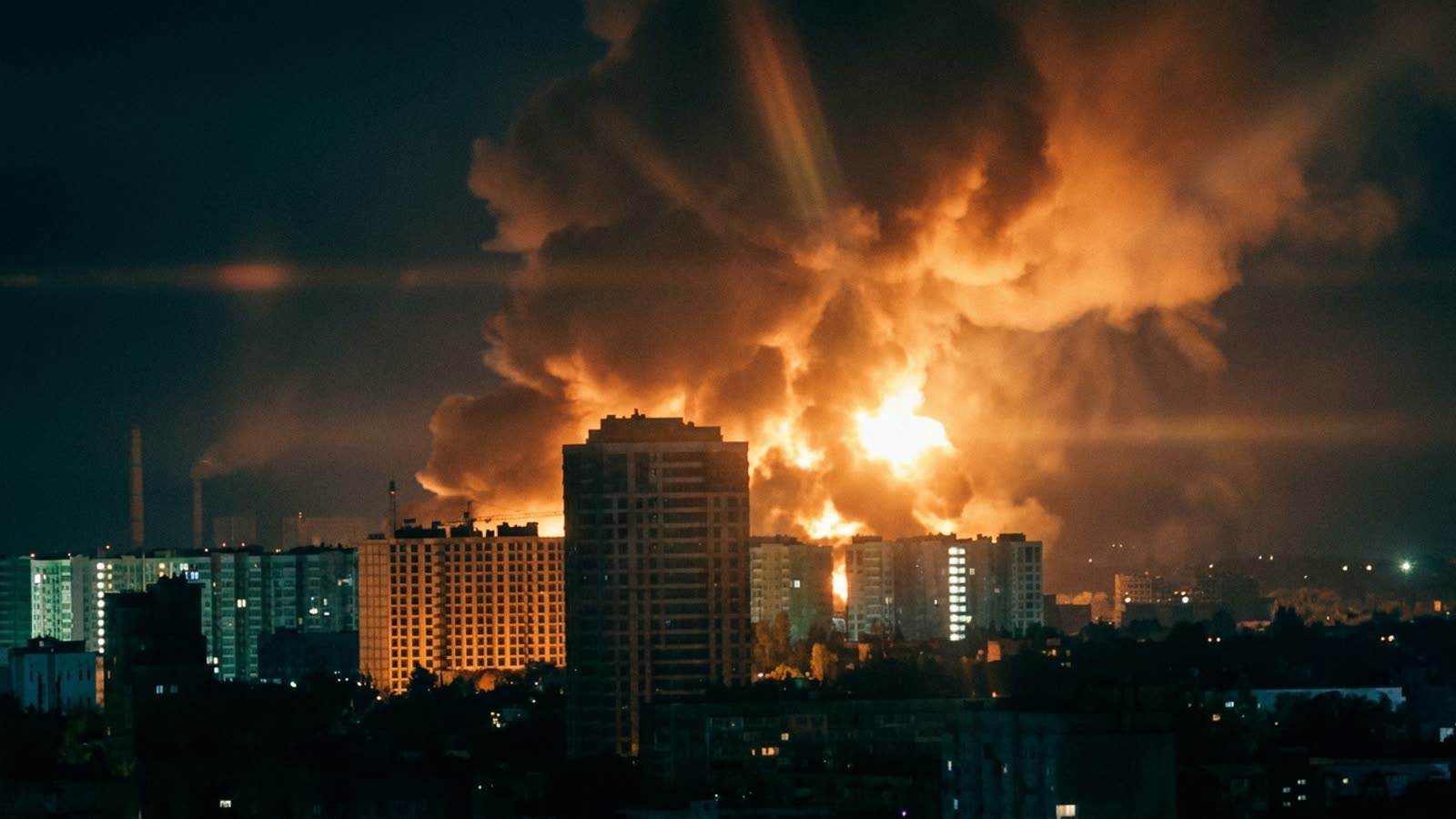
For more than four years, Russia's war against Ukraine has existed in a peculiar bifurcation: brutal, grinding, existential for Ukrainians; abstract, distant, deniable for the residents of Moscow, St. Petersburg, and other major Russian cities. That arrangement is now under sustained assault from Ukrainian drones and missiles, and the political consequences may prove more significant than the military ones.
Kyiv's recent campaign of long-range strikes has reached deeper into Russia than at any point since the full-scale invasion began in February 2022. St. Petersburg, Russia's second city and cultural capital, has been hit in what Russian officials are calling an "unprecedented" attack. The Kremlin can spin battlefield setbacks in Donbas; it cannot easily explain explosions audible from Nevsky Prospekt.
The strategic logic
Ukraine's calculus is straightforward: if the Russian public experiences the war as an inconvenience rather than an abstraction, domestic pressure on the Kremlin increases. The strategy borrows from the logic of strategic bombing campaigns throughout history—imperfect, often brutal, but grounded in the theory that populations will eventually demand their governments seek peace. Whether this works against an authoritarian state with extensive media control is the trillion-ruble question.
The strikes also serve a more immediate military purpose. Targeting Russian air defense systems, fuel depots, and military infrastructure in rear areas degrades Moscow's ability to sustain operations in Ukraine. Every S-400 battery repositioned to protect St. Petersburg is one fewer battery threatening Ukrainian forces near Kharkiv.
The Kremlin's dilemma
Putin's social contract with the Russian middle class has always been implicit: stay out of politics, and the state will deliver stability and rising living standards. The war strained this bargain—sanctions, conscription anxiety, the Prigozhin mutiny—but never quite broke it. Air raid sirens in major cities represent a qualitatively different intrusion.
The regime's options are unappealing. Escalation risks further Western involvement and stretches already-taxed military resources. De-escalation looks like weakness. The most likely response is more of the same: rhetorical bluster, missile strikes on Ukrainian civilian infrastructure, and hope that Western resolve cracks before Russian patience does.
Our take
Ukraine is playing a weak hand with considerable skill. These strikes won't end the war, but they demolish the fiction that Russia can wage indefinite aggression while its citizens sip coffee on the Fontanka. The Kremlin built its domestic legitimacy on projecting strength abroad while maintaining comfort at home. Kyiv is now forcing Moscow to choose which promise to break.