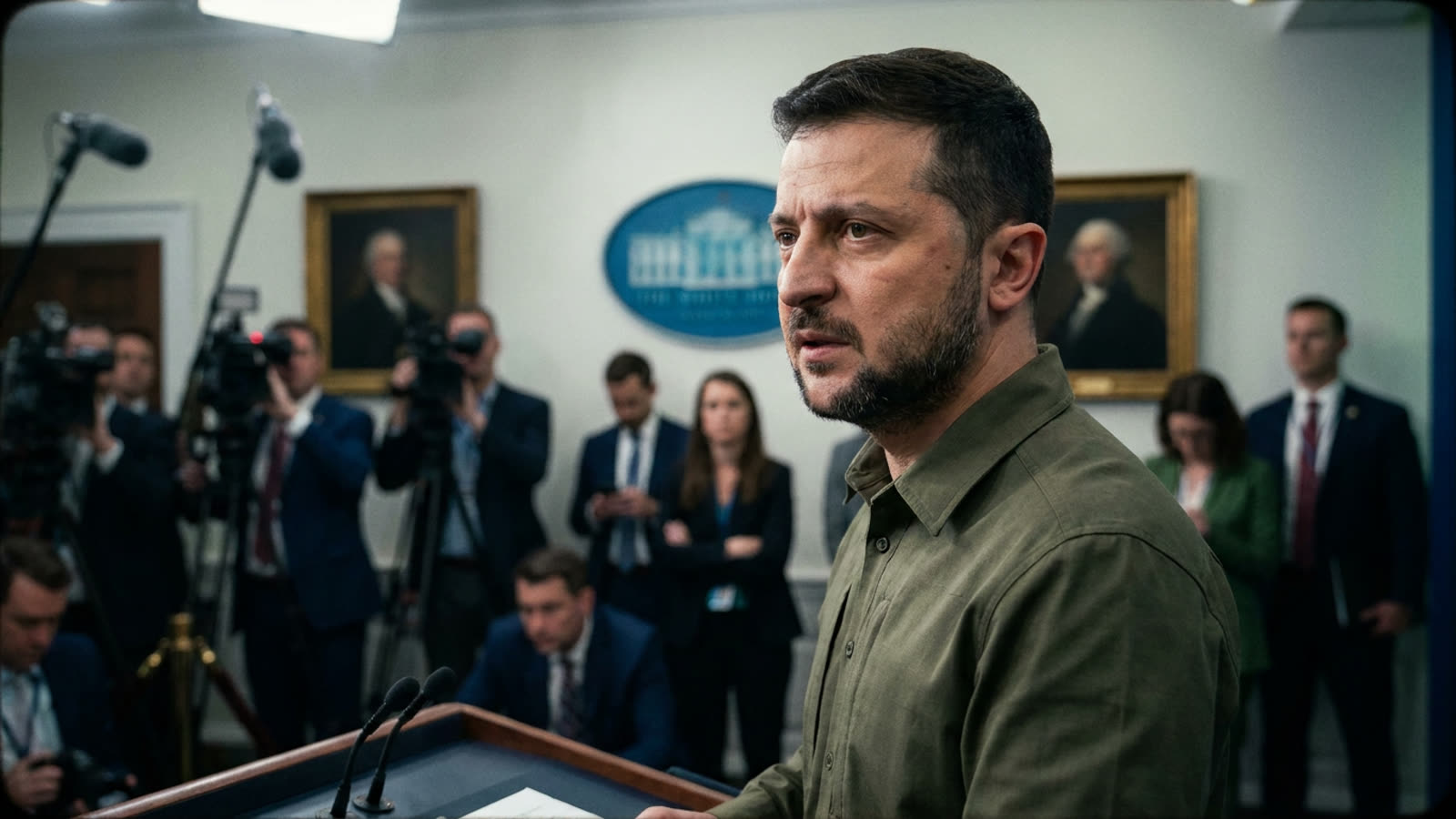
The American president spent much of 2025 insisting that Ukraine had no leverage—that Volodymyr Zelensky would have to accept whatever terms Moscow offered because Kyiv was, in Trump's memorable formulation, playing without cards. That assessment, delivered with characteristic certainty in multiple press conferences and Truth Social posts, now looks considerably less certain.
Ukrainian officials this week signaled that they believe their negotiating position has materially improved, a claim that would have seemed delusional six months ago but now carries weight. The shift reflects not wishful thinking but a convergence of factors that have quietly rebalanced the equation while Washington focused on Iran.
The battlefield math changed
Ukraine's long-range drone program, which American intelligence initially dismissed as a nuisance capability, has evolved into something more strategically significant. Strikes deep inside Russian territory have disrupted logistics, embarrassed Moscow's air defenses, and—crucially—demonstrated that Ukraine can impose costs without American permission or American weapons. The psychological effect on Russian domestic opinion has been measurable in independent polling, even as the Kremlin insists everything is proceeding according to plan.
Meanwhile, European defense commitments have hardened rather than softened. The anticipated collapse of EU unity never materialized; if anything, Trump's transactional approach pushed European capitals toward deeper bilateral arrangements with Kyiv that don't depend on American approval. Germany's latest aid package, announced without fanfare last week, included capabilities that Washington had explicitly declined to provide.
Moscow's patience isn't infinite
The Kremlin's own position has deteriorated in ways that don't make headlines but matter enormously. Sanctions have not collapsed the Russian economy, but they have created persistent friction that compounds over time. The ruble's managed stability requires constant intervention. Military recruitment remains a political liability that limits Putin's options. The much-discussed Chinese lifeline has proven less generous than Moscow hoped—Beijing has its own reasons for not wanting Russia to win too decisively or too quickly.
Russian officials continue to insist they will accept nothing less than Ukrainian capitulation, but the tone has shifted subtly. Back channels that were dormant have reopened. Intermediaries report more flexibility on territorial questions than the public posture suggests. None of this means a deal is imminent, but it does mean the "Ukraine has no cards" framing was always more assertion than analysis.
Our take
Trump's original assessment wasn't unreasonable given the information available in late 2024, but it hardened into dogma precisely when flexibility was required. The administration now faces an awkward choice: acknowledge that Kyiv's position has improved and adjust accordingly, or maintain the fiction that nothing has changed and watch as events overtake the policy. The president has never been comfortable admitting miscalculation, which suggests the second option is more likely. That's a problem, because the window for American-brokered negotiations may be narrower than anyone in Washington wants to admit—and Ukraine now has alternatives.