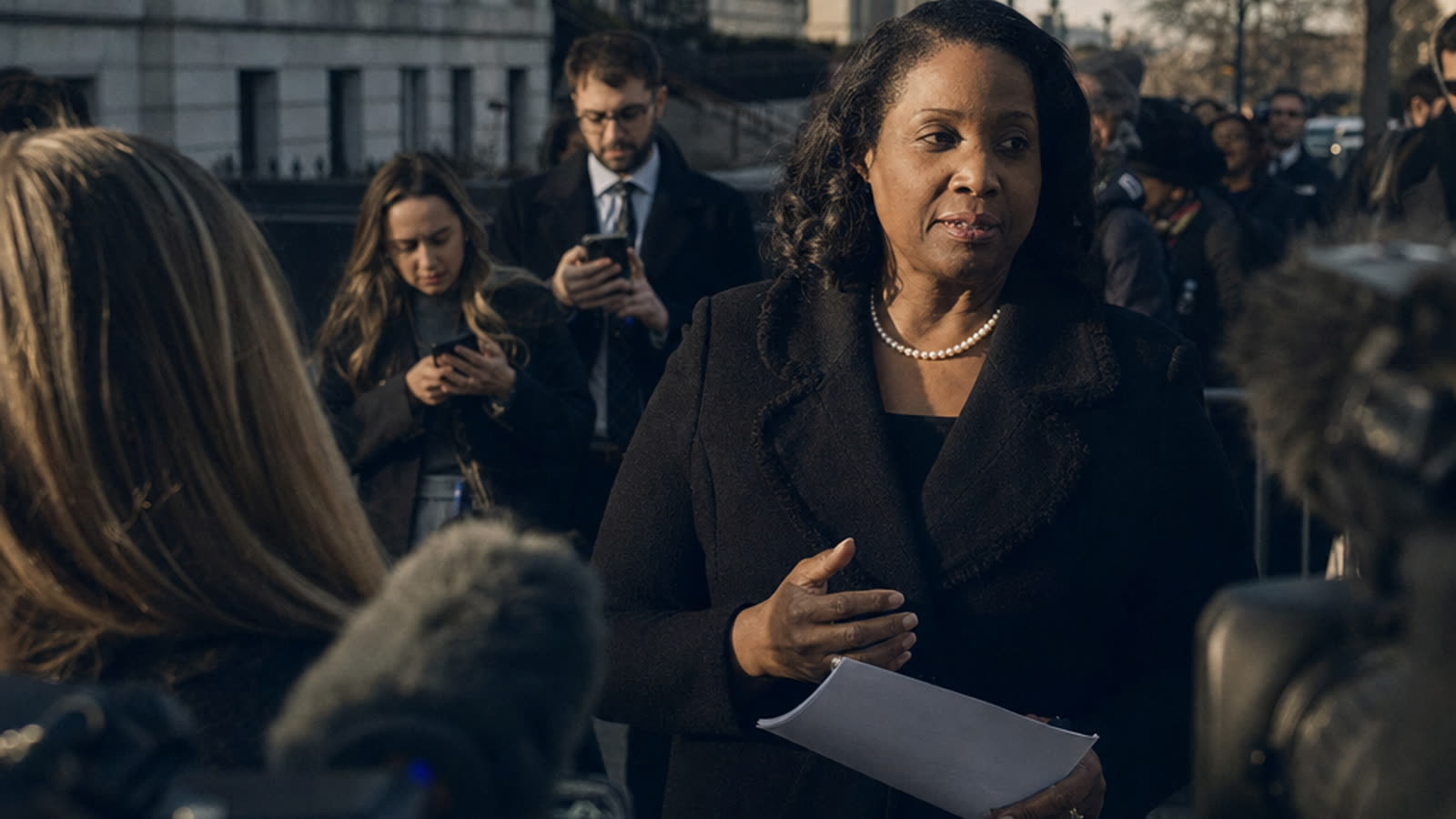
The White House has launched a formal effort to remove Federal Reserve Governor Lisa Cook from her position, marking the first time in modern history that a president has moved to oust a sitting Fed board member. The action transforms what had been theoretical chatter about central bank independence into an immediate constitutional and economic crisis.
Cook, an economist who joined the Fed's Board of Governors in 2022, has been a reliable vote for the institution's consensus approach to fighting inflation while attempting a soft landing. She is not an outlier. She is not a rogue actor. She is, by any reasonable measure, a mainstream central banker doing mainstream central banking. That appears to be the problem.
The legal architecture
Federal Reserve governors serve 14-year terms precisely to insulate them from political pressure. The Federal Reserve Act permits removal only "for cause" — a phrase courts have historically interpreted to mean malfeasance or incapacity, not policy disagreement. No president has successfully removed a Fed governor against their will, and the Supreme Court has never directly ruled on whether the "for cause" protection applies to the Fed board the same way it does to other independent agencies.
The administration's legal theory, reportedly developed over months, argues that recent Supreme Court decisions limiting the independence of other regulatory bodies have weakened the precedent protecting the Fed. This is not frivolous — the Court's 2020 ruling in Seila Law v. CFPB did narrow removal protections for single-director agencies — but extending that logic to the Fed would require the justices to overturn decades of assumed constitutional settlement.
Market implications
The immediate market reaction has been muted, in part because traders have learned to discount presidential Fed commentary as noise. But this is not commentary. This is a formal legal action, and if it proceeds, it will force courts to decide whether a president can fire central bankers who decline to cut rates on command.
The long-term implications are more severe. Foreign holders of U.S. Treasuries — who own roughly $8 trillion in American government debt — price that debt partly on the assumption that the Fed will manage inflation without political interference. If that assumption cracks, the risk premium on American sovereign debt rises, borrowing costs increase, and the dollar's reserve currency status faces pressure it has not experienced since the Nixon shock.
The precedent problem
Even if the legal challenge fails, the attempt itself damages the Fed's credibility. Central bank independence is not a law of physics; it is a norm maintained by mutual restraint. Once a president demonstrates willingness to test its limits, every future administration inherits a playbook. The question is no longer whether the Fed is independent but how much independence any given president is willing to tolerate.
Our take
The Trump administration is making an explicit bet that voters care more about lower interest rates than about institutional architecture they do not fully understand. That bet may be correct in the short term. But the Federal Reserve's independence is not an abstraction — it is the reason American inflation expectations remain anchored while other democracies struggle with price spirals. Dismantling that independence to win a news cycle is the economic equivalent of selling the furniture to pay the electric bill. You stay warm tonight and freeze next winter.