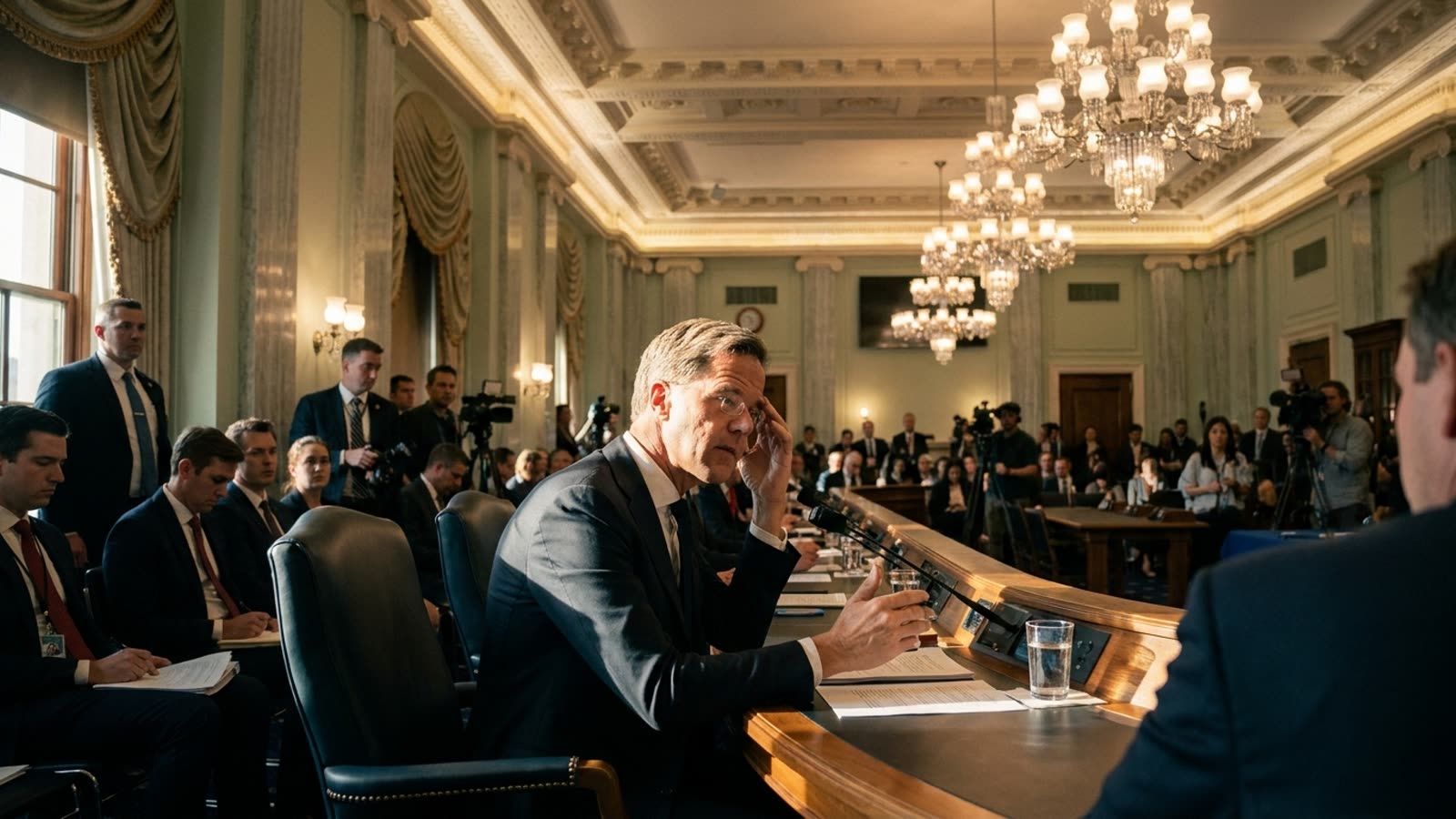
The timing is exquisite in its awkwardness. President Trump will sit down with NATO Secretary General Mark Rutte in Washington this week just hours after both chambers of Congress voted to curtail his authority to wage war against Iran — a conflict that has tested the Atlantic alliance more severely than any crisis since the 2003 Iraq invasion.
The summit arrives at a moment when the transatlantic relationship resembles a marriage where both parties have stopped pretending they enjoy each other's company. European NATO members have offered rhetorical solidarity but precious little else to the American campaign against Tehran. Washington, in turn, has made clear it neither expected nor particularly wanted their help. The question hanging over Rutte's visit is whether NATO can remain coherent when its dominant member treats collective security as an à la carte menu.
The congressional rebuke complicates everything
The Senate's vote to invoke the War Powers Resolution — following the House's action earlier this month — represents the most significant congressional check on presidential war-making authority since the post-Vietnam reforms of the 1970s. The practical effect may be limited; the resolution faces a certain veto, and the votes to override appear absent. But the symbolic weight is considerable. Trump enters his meeting with Rutte as a wartime president whose own legislature has formally declared his war unauthorised.
For European allies already uncomfortable with the Iran campaign, the congressional action provides convenient cover. Why should Berlin or Paris commit resources to a conflict that America's own Congress has deemed illegitimate? The argument writes itself, and several European foreign ministries have already begun making it in background briefings.
Rutte's impossible brief
The Dutch former prime minister took the NATO job understanding that managing Trump would be his primary responsibility. He has cultivated a relationship built on flattery and strategic deference — the same playbook that served him well during Trump's first term. But the Iran situation has exposed the limits of personal diplomacy.
Rutte must somehow affirm alliance unity while most alliance members are actively distancing themselves from American policy. He must reassure Eastern European members terrified that Washington's Middle Eastern distraction leaves them vulnerable to Russian opportunism. And he must do all this while Trump, fresh from a congressional humiliation, will be looking for someone to blame.
The secretary general's public remarks will likely emphasise consultation, burden-sharing, and the enduring strength of transatlantic bonds. The private conversation will be considerably more fraught.
The Iran contradiction at the heart of the talks
Trump has spent recent days making expansive claims about progress in back-channel negotiations with Tehran — claims that Iranian officials have repeatedly and publicly contradicted. This disconnect creates a peculiar dynamic for the NATO summit. Is Rutte meeting with a president winding down a conflict or one escalating it? The answer appears to depend on which hour of the day you ask.
European intelligence services have reportedly concluded that Iran's negotiating posture remains unchanged despite Trump's optimistic pronouncements. If accurate, this suggests the president is either engaged in deliberate misdirection or genuinely misreading signals from Tehran. Neither interpretation is particularly reassuring to allies being asked to maintain solidarity with American policy.
Our take
NATO has survived French withdrawal from military command, German pacifism during the Cold War, and bitter disputes over Iraq. It will survive this. But the alliance that emerges from the Trump era will be fundamentally different from the one that entered it — less a collective defence pact than a loose framework for occasional cooperation among nations with diverging threat perceptions. Rutte's job is to manage that decline gracefully. The summit this week is less about resolving differences than about establishing how openly those differences can be acknowledged. The transatlantic relationship has become a diplomatic exercise in mutual face-saving, and everyone involved knows it.