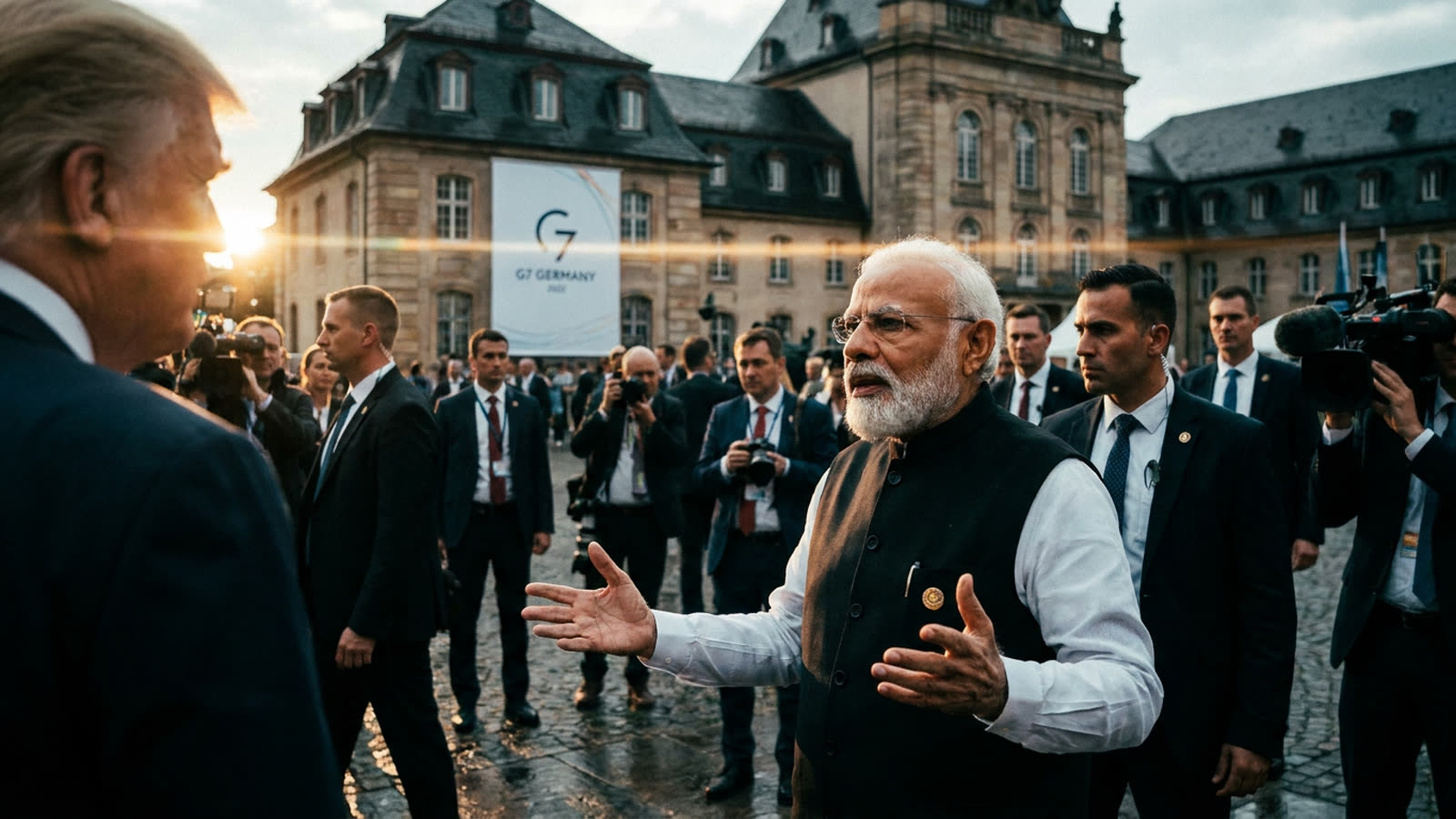
The relationship between Washington and New Delhi has always been more transactional than sentimental, but the meeting between Donald Trump and Narendra Modi at this week's G7 summit arrives at a moment when even the transactional logic is fraying. What was once framed as a partnership of strategic convergence—two nations united against Chinese expansion, eager to deepen defense ties, and rhetorically committed to a "free and open Indo-Pacific"—now looks more like a marriage of convenience where both parties have started seeing other people.
The bilateral sits against a backdrop of mounting irritants. The United States has grown impatient with India's refusal to meaningfully open its markets, its continued purchases of Russian energy, and its foot-dragging on intellectual property protections that American pharmaceutical and tech companies consider essential. India, for its part, bristles at Washington's tightening of H-1B visa rules, its tariff threats, and what New Delhi perceives as American lecturing on democratic backsliding—a sore point for a government that has faced sustained criticism over press freedom and minority rights.
The tariff shadow
Trade remains the most visible fault line. India's average applied tariff rate hovers around 17 percent, among the highest of any major economy, and American exporters—particularly in agriculture and manufacturing—have long complained of a playing field tilted against them. Trump, never one to let a trade grievance go unmentioned, has repeatedly called India a "tariff king" and threatened reciprocal duties that could hit Indian exports hard. New Delhi has responded with a mix of symbolic concessions and quiet defiance, lowering duties on a handful of American goods while protecting its domestic champions in sectors from e-commerce to data localization.
The Harley-Davidson saga, a Trump favorite, has become emblematic: India did reduce motorcycle tariffs after years of American pressure, but the broader structural barriers remain. For Modi, liberalizing too quickly risks alienating domestic industry and the economic nationalists within his own coalition. For Trump, accepting anything less than a headline-grabbing "win" risks looking soft.
The China calculus
Strategically, both nations still share an interest in counterbalancing Beijing. The Quad—the informal grouping of the US, India, Japan, and Australia—continues to hold exercises and issue communiqués about maritime security. American defense sales to India have grown substantially over the past decade, and intelligence-sharing has deepened. But India has resisted the kind of formal alliance structure that Washington would prefer, clinging to its tradition of strategic autonomy even as it leans westward.
Modi's government has also refused to fully abandon Russian arms purchases, a sticking point that predates the current administration but has grown more acute as Washington seeks to isolate Moscow. The S-400 missile system deal, inked years ago, remains a source of friction, with American officials warning of potential sanctions under the Countering America's Adversaries Through Sanctions Act—though enforcement has been conspicuously absent.
Our take
The Trump-Modi meeting will almost certainly produce warm photographs and vague pledges of friendship. Both leaders are skilled performers who understand the value of optics. But the underlying dynamics suggest a relationship that has peaked and is now settling into a more competitive equilibrium. India is too large and too proud to play junior partner; America is too impatient and too distracted to offer the patient courtship that New Delhi's bureaucracy demands. The result is likely to be continued drift—not a rupture, but not the strategic embrace that boosters on both sides once promised. Sometimes the most important thing about a summit is what it reveals about the limits of summitry itself.